
 Stock Analysis
 General
 Library
Many global markets outperformed the U.S. in 2025, helped in part by a falling U.S. dollar. While my portfolio remains U.S.-focused, I’m no longer ignoring global exposure.
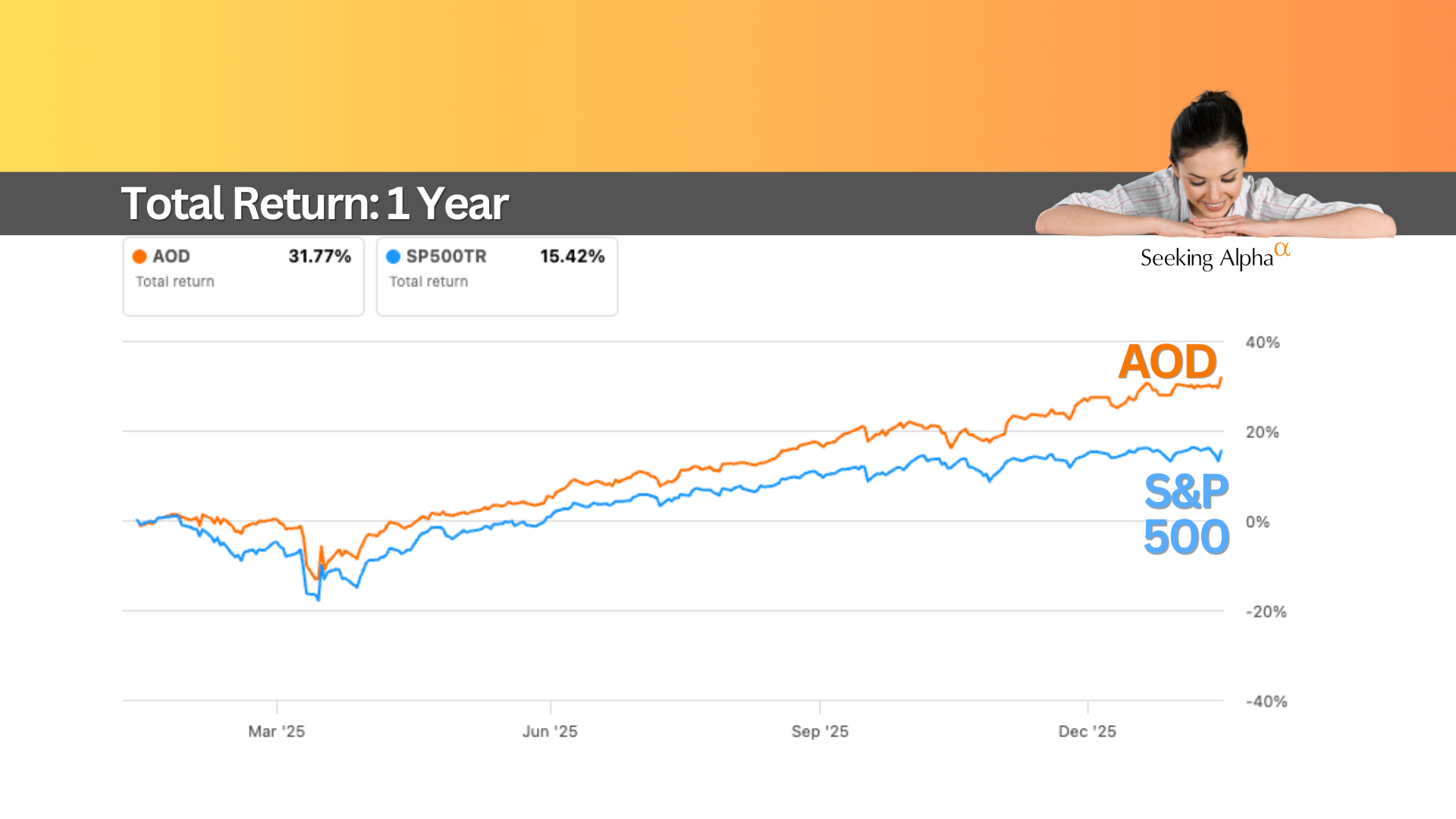
That’s what caught my attention with the abrdn Total Dynamic Dividend Fund (AOD). It’s primarily U.S., but nearly 40% of the portfolio sits outside the United States. That global component helped propel it to roughly double the S&P 500’s return over the past year.
For a fund yielding about 12%, I don’t expect much growth. So that combination made me take a closer look.
Distribution History
AOD’s income history stretches back to 2007. The early years were rough, with three significant distribution cuts that ended in 2013. Since then, no cuts.
In 2024, the fund changed its distribution policy.
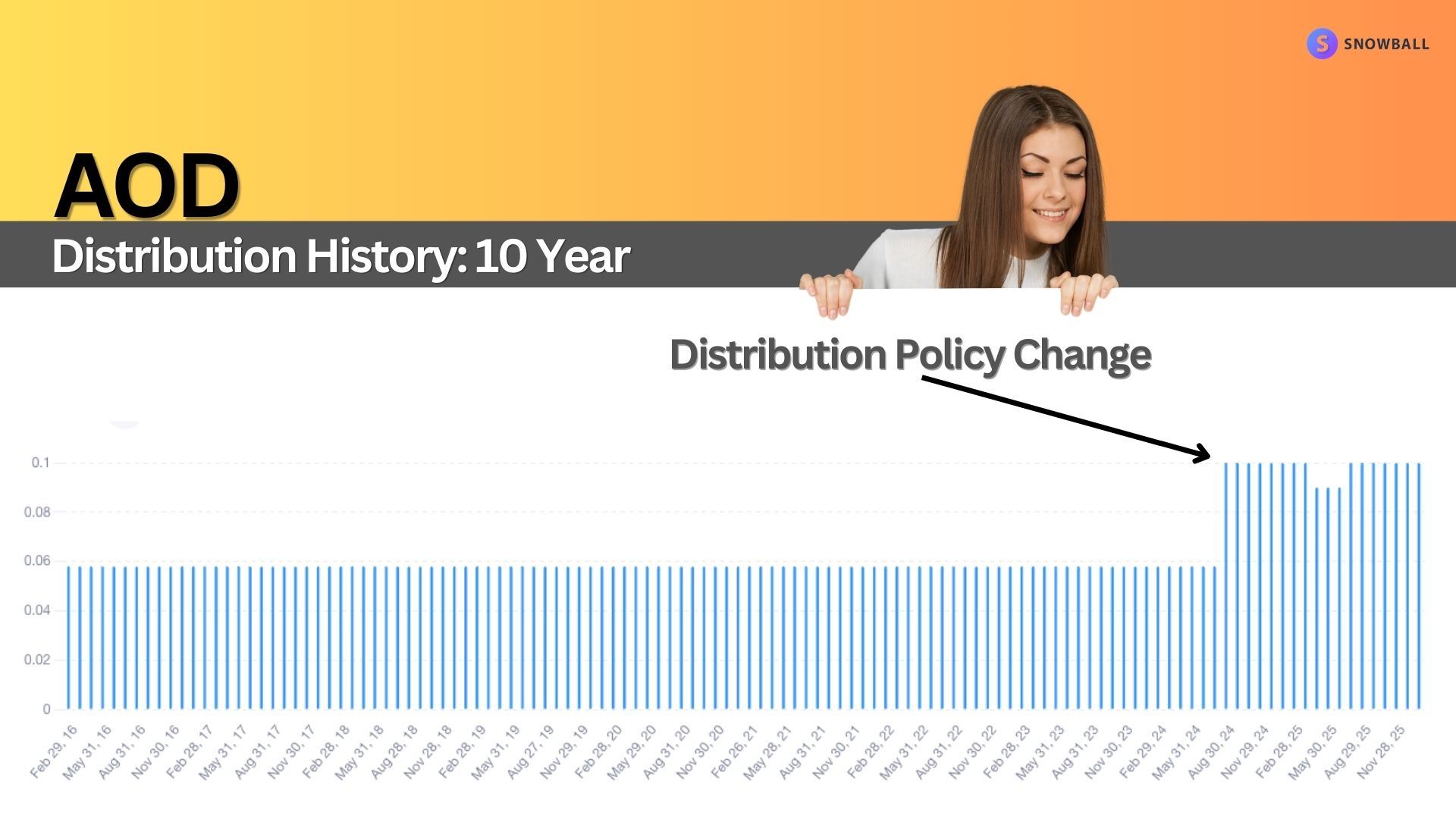
Previously, AOD paid $0.058 per month. Under the new structure, it now targets 12% of Net Asset Value annually — about 1% per month — lifting the payout to around $0.10.
The increase wasn’t driven by a surge in income. It was a structural shift designed to make the yield more attractive to investors.
What’s Inside the Portfolio?
AOD is an equity closed-end fund focused on dividend-paying stocks. It holds roughly 80 to 100 names, weighted mostly toward the U.S., with meaningful exposure to Europe and Asia.
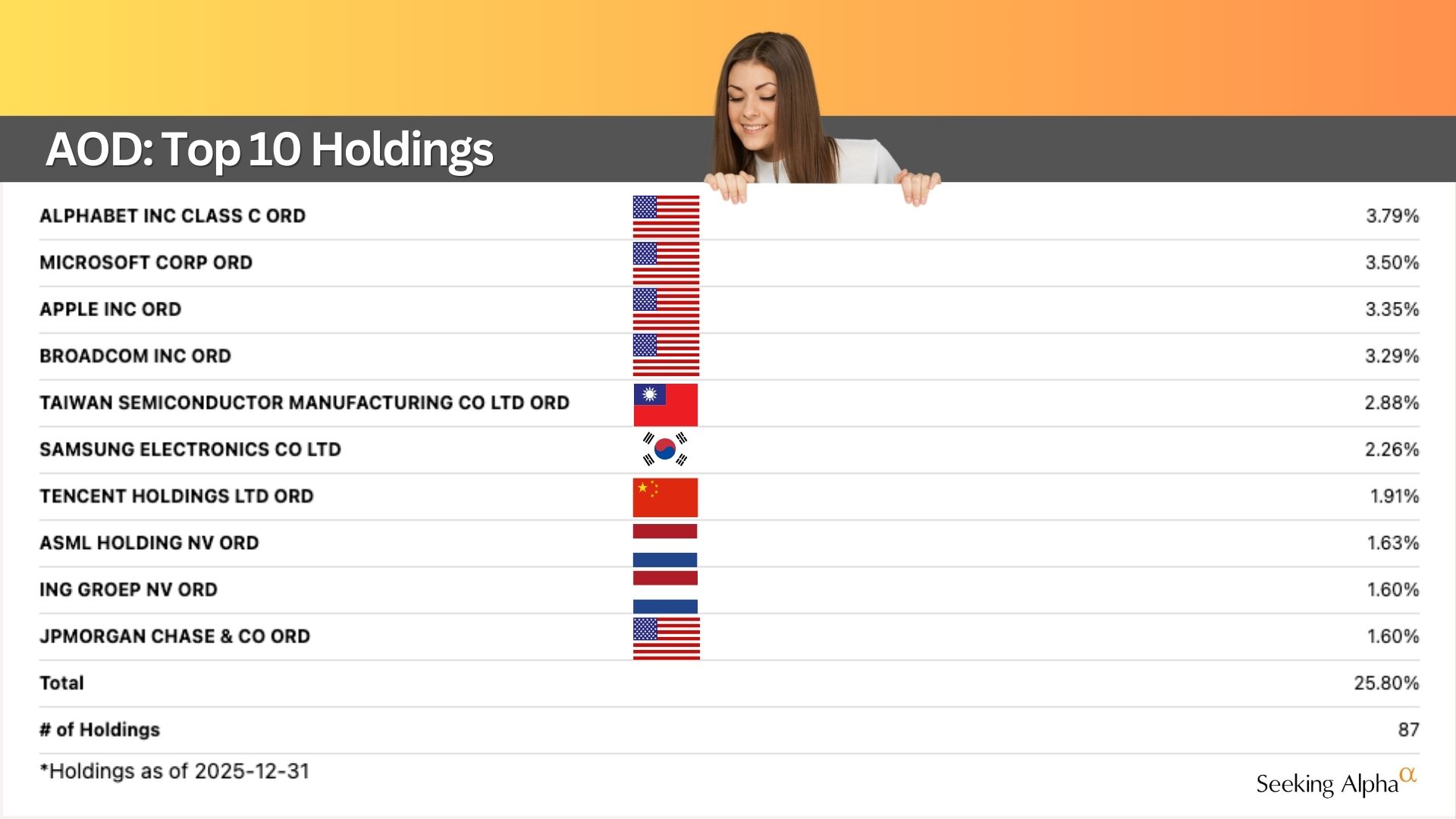
Top holdings include Microsoft, Apple, Broadcom, Taiwan Semiconductor, and Samsung.
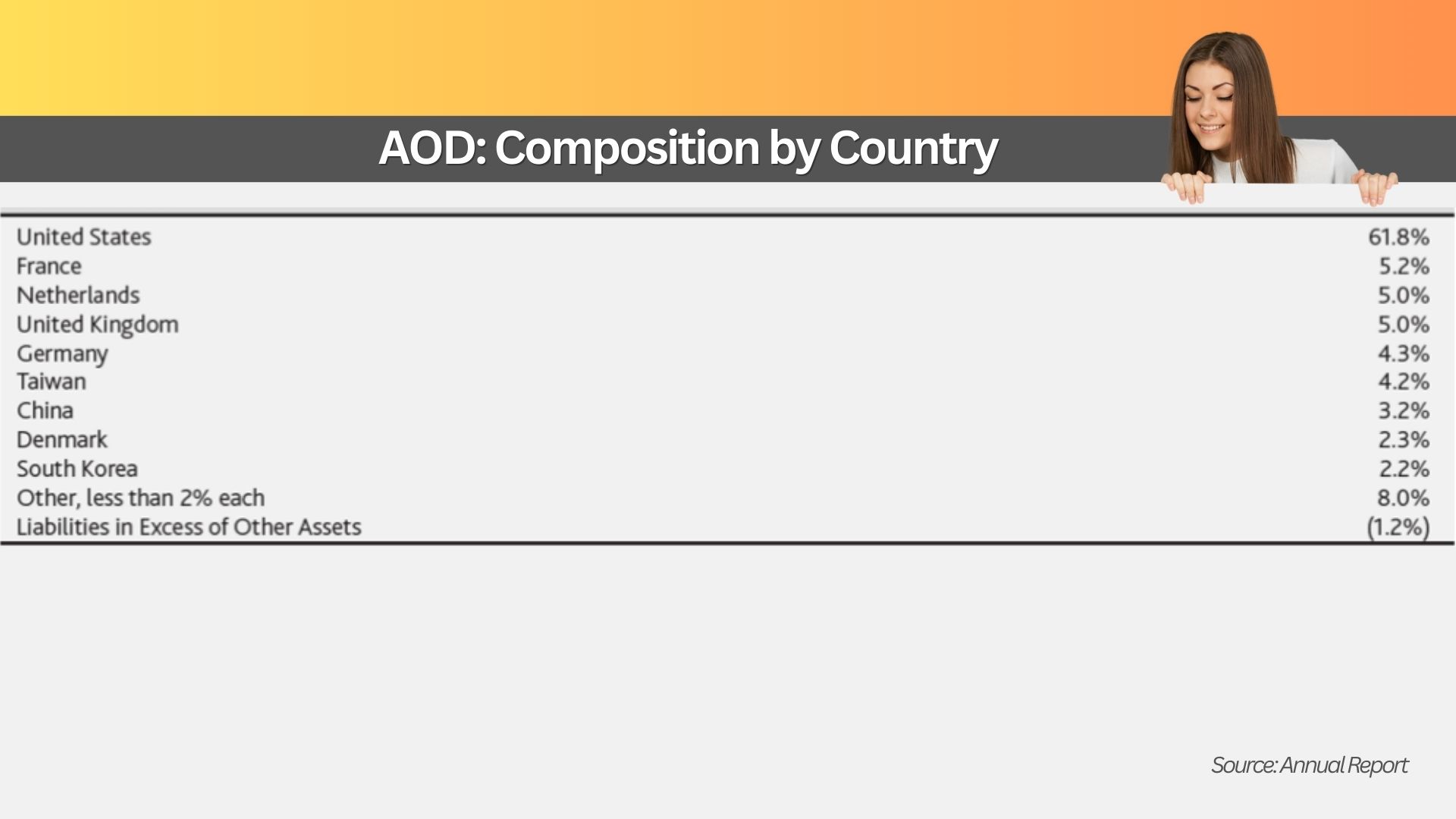
How Does It Generate 12%?
Dividend income alone doesn’t produce 12%. The rest comes from realized capital gains and a dividend capture strategy.
The fund actively buys stocks before they go ex-dividend and sells afterward, attempting to capture additional income. I remain somewhat skeptical of this strategy. In efficient markets, prices typically adjust by the dividend amount. For it to work consistently, prices must recover quickly.
Pricing & Performance
Because AOD is a closed-end fund, price and NAV can diverge.
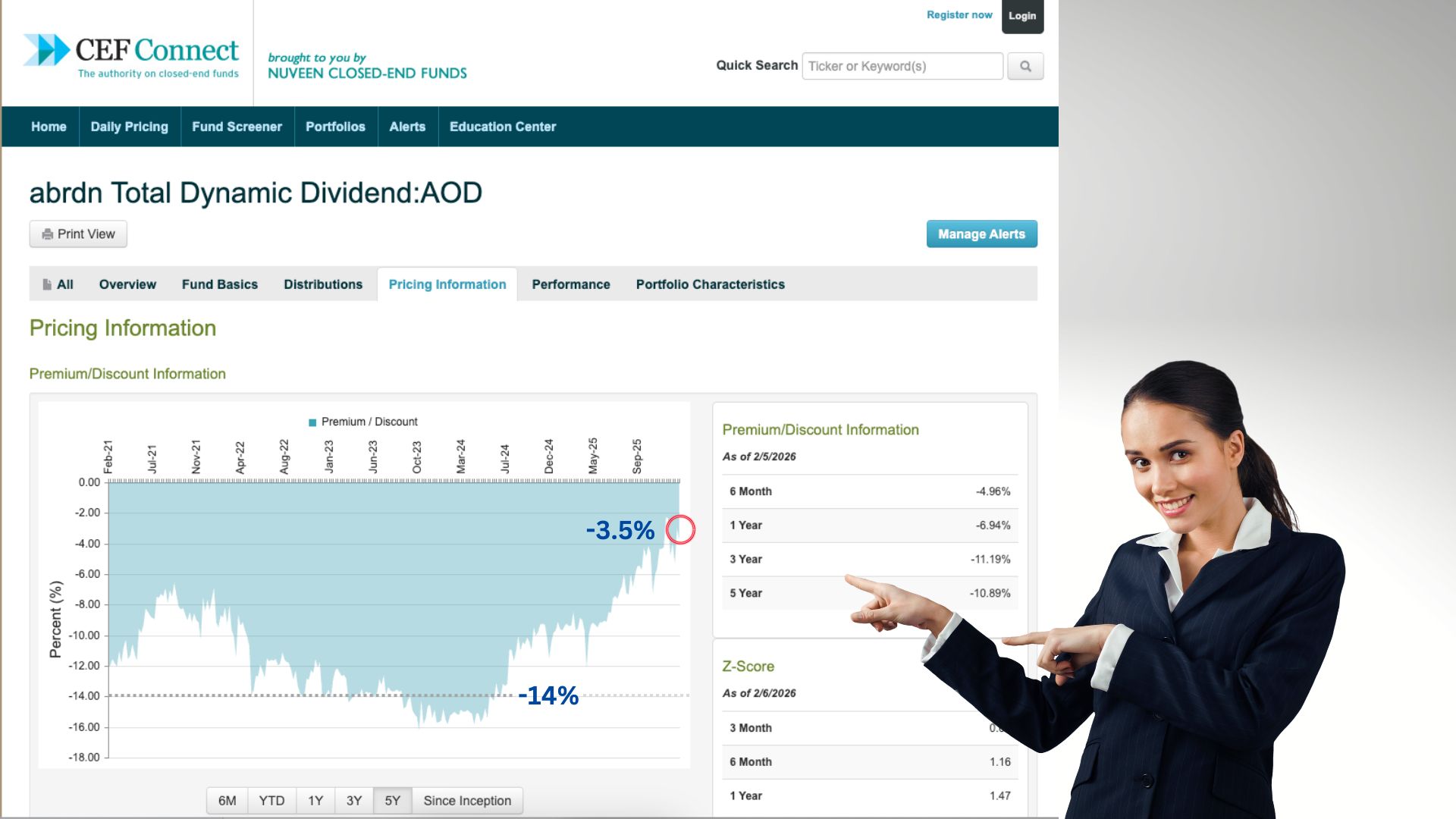
As of now, AOD trades at a modest discount to NAV, far tighter than the double-digit discount seen before the 2024 policy change.
Over the past year and five years, AOD leads competitors like LGI. Over ten years, LGI has the edge.
My Take
AOD has baggage. The early distribution cuts and aggressive 12% payout policy deserve attention. Transparency around the dividend capture strategy is limited.
But the positives are clear: strong income, meaningful global exposure, and impressive recent performance.
I wouldn’t consider AOD a core holding. But if you want high income plus international diversification, it’s worth considering.
To watch the full breakdown, click here.
Want to see how these funds fit into a real-world retirement strategy? I share my full portfolio and monthly updates for free, here: Armchair Insider. If you want to learn from other Income Investors (I do!), check out the Armchair Insider Lounge.