
 Stock Analysis
 General
 Library
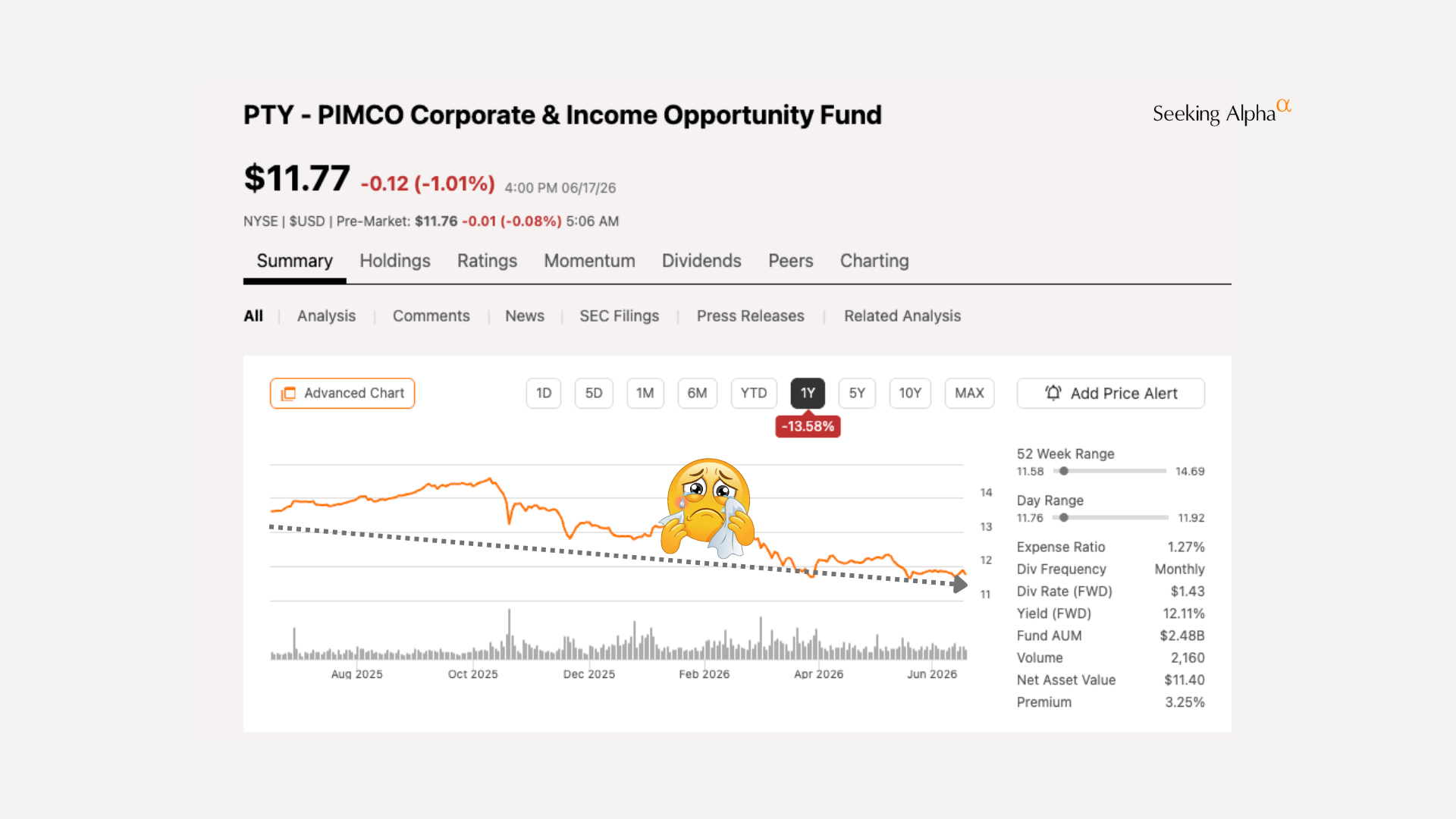
Stocks are up this year, and Pimco funds are down!
PCN is down around 6% over the past year, while PTY and PDI are down closer to double digits. That feels strange because these are fixed income funds, and fixed income is supposed to benefit when interest rates fall.
So what happened?
The Income Is Still the Main Attraction
The first thing to understand is that these funds are not designed to make investors rich overnight. They are designed to generate consistent income.
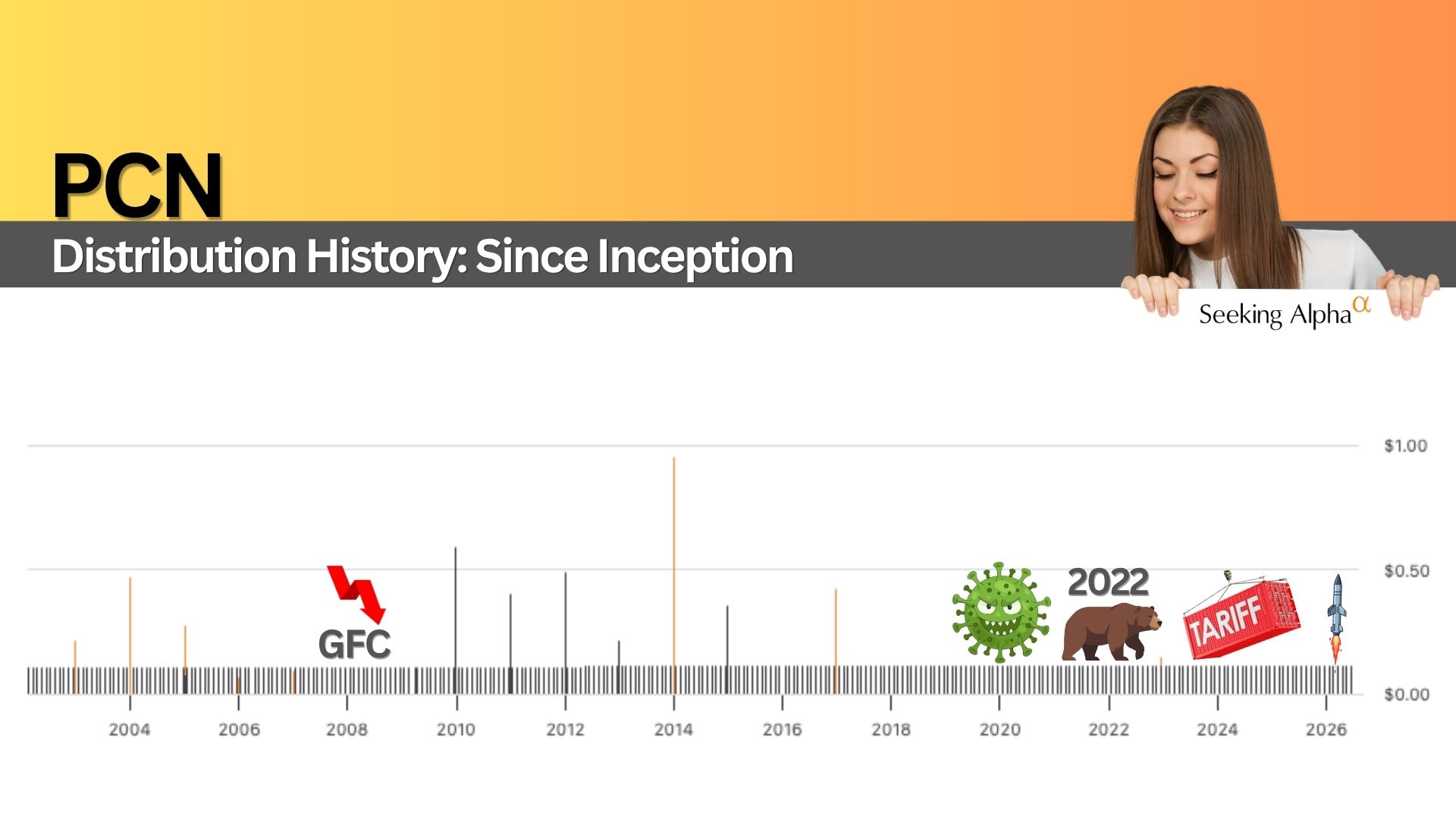
PCN currently yields around 11.5% and has paid a regular monthly distribution since 2002. That kind of consistency is rare. Even during the Global Financial Crisis, the pandemic, the 2022 rate-hike bear market, and recent volatility, PCN investors continued receiving monthly income.
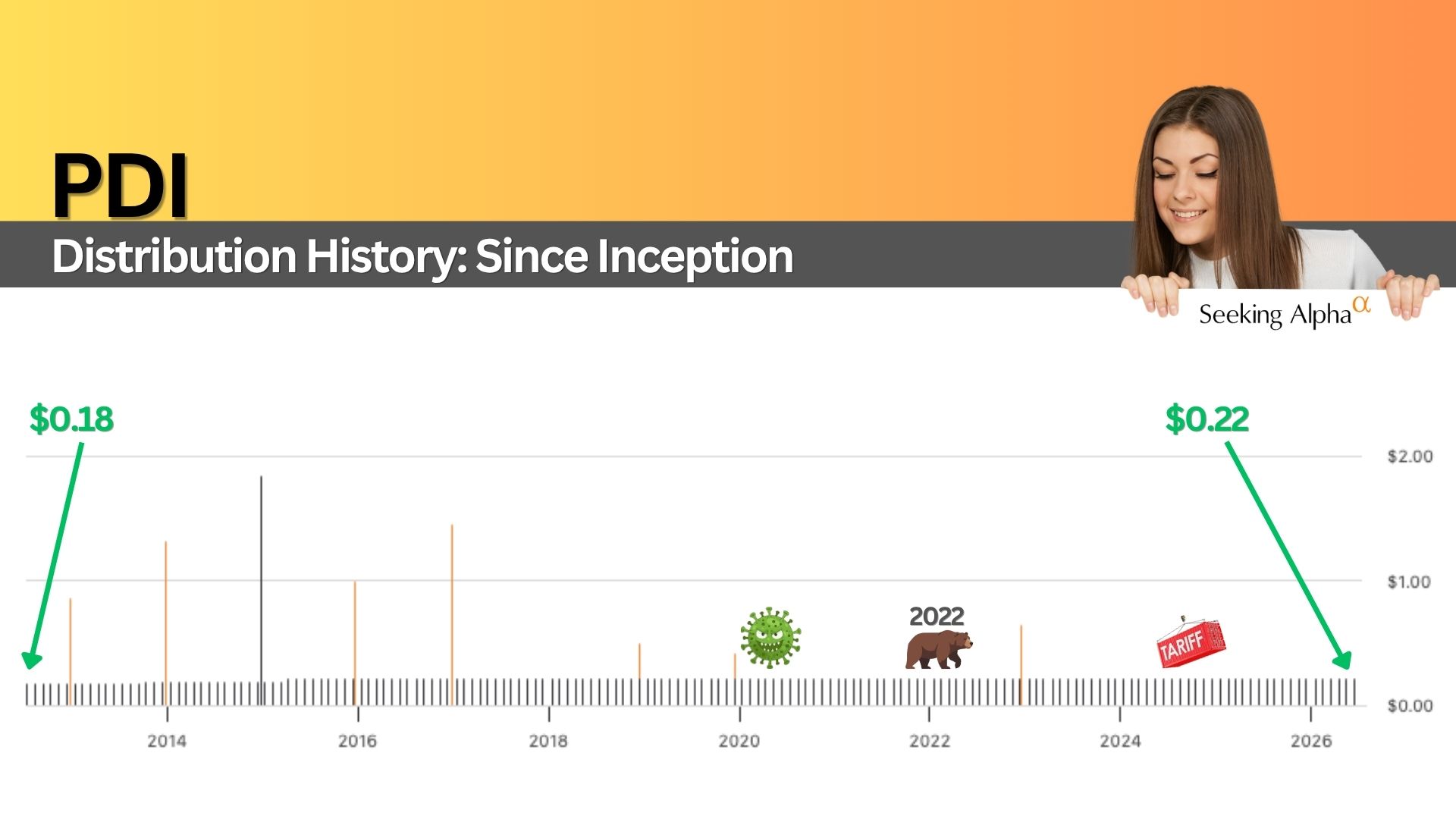
PDI is the youngest of the three, launched in 2012, but it offers the highest yield at roughly 16%. Its distributions have ranged from 18 to 22 cents, with increases rather than cuts. That yield is attractive, but it also comes with more risk.
Why Prices Fell
The biggest issue is interest-rate expectations.
In 2025, falling rates helped fixed income recover. But in 2026, the Fed has paused, and the bond market has started questioning whether more cuts are coming. If rates stay higher or rise again, fixed income becomes less attractive.
Leverage adds another layer. All three Pimco funds borrow money to boost income. When borrowing costs rise, fund profitability can suffer.
The second issue is credit fear. Recent concerns around private credit, defaults, and liquidity have hurt sentiment toward credit-related investments. These Pimco funds are publicly traded and well diversified, but market emotion still matters.
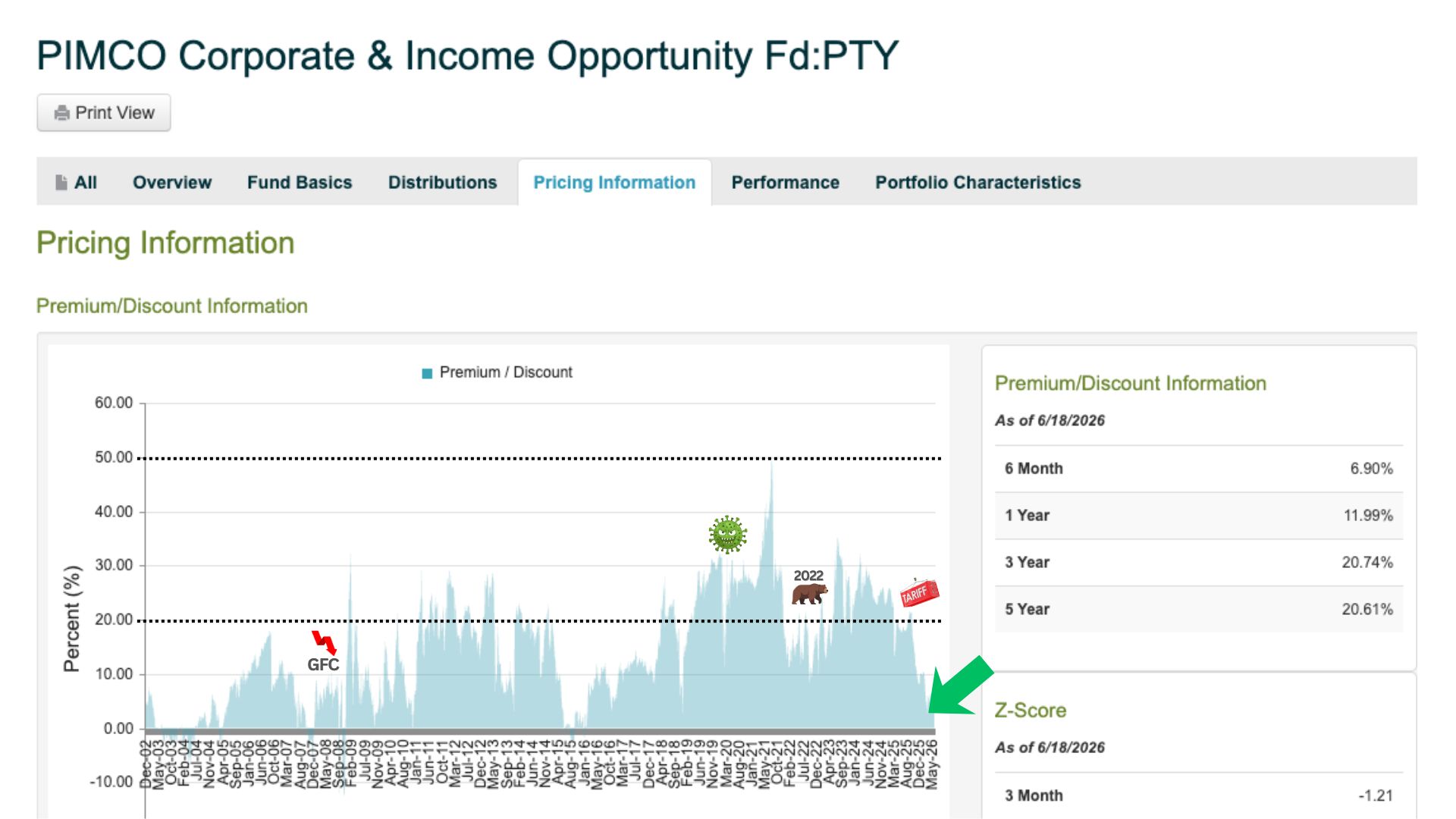
That matters even more because PCN, PTY, and PDI are closed-end funds. Their share prices can move separately from NAV. Over the past year, much of the decline came from shrinking premiums (price premium over Net Asset Value), not collapsing asset values.
My Take
I’m not making a dramatic call on interest rates. I want some investments that benefit from higher rates, like BDCs, and some that benefit from lower rates, like fixed income funds.
Of the three Pimco funds, PDI looks the riskiest because it has the highest yield, highest leverage, and weakest dividend coverage. PCN is steady, but PTY looks like the strongest balance of income, history, and total return.
Now that these funds are cheaper, I like them more than when they were expensive, and my current favorite is PTY.
To learn more, click here for the full Review.
Want to see how these funds fit into a real-world retirement strategy? I share my full portfolio and monthly updates for free, here: Armchair Insider. If you want to learn from other Income Investors (I do!), check out the Armchair Insider Lounge.