
 Stock Analysis
 General
 Library
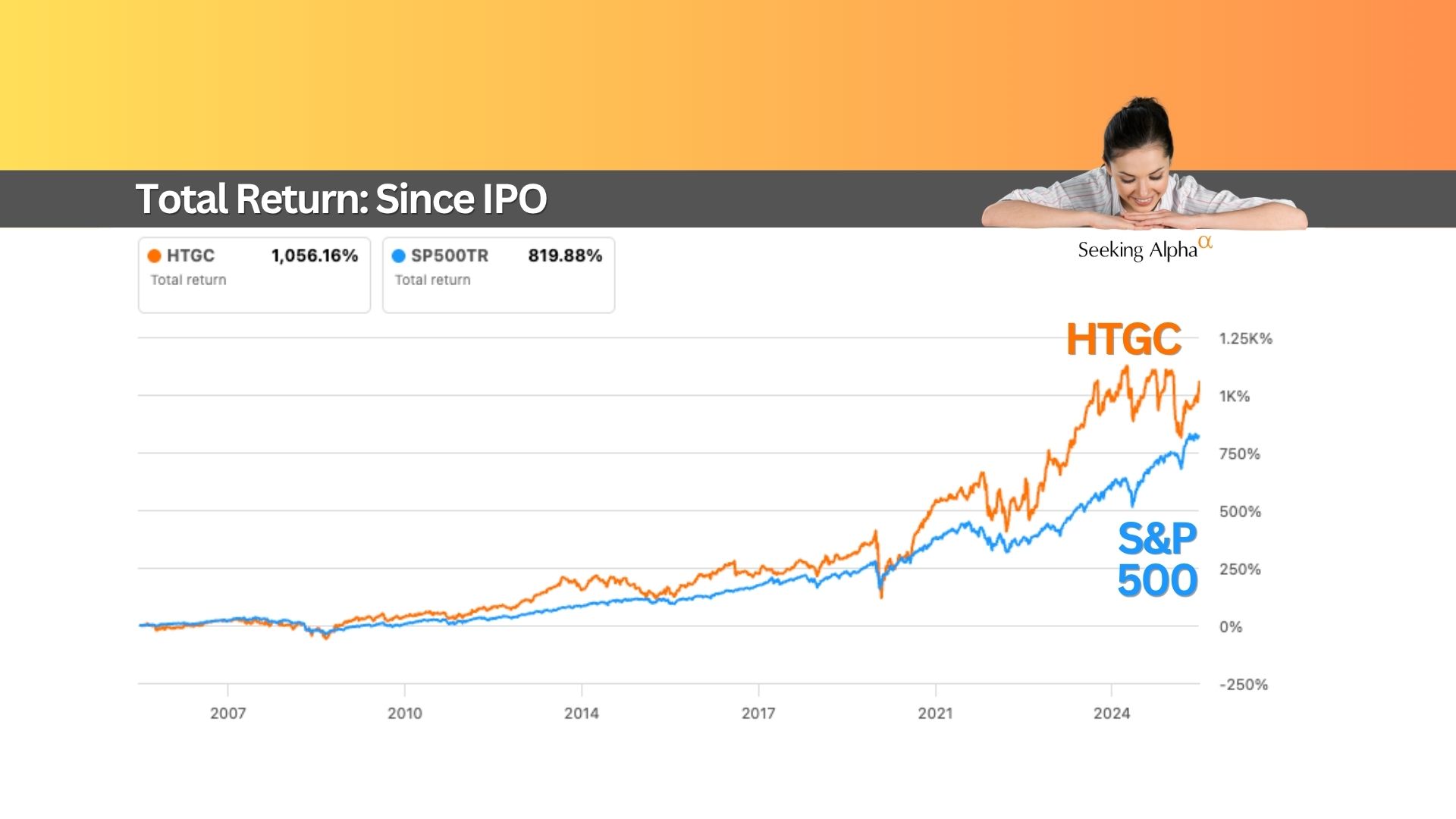
Hercules Capital has been here before.
In 2023, the regional banking crisis pushed HTGC’s share price down, even though the business itself was not directly affected. Three years later, something similar appears to be happening again. The stock price is down, sentiment around credit is weak, and investors are nervous about software exposure.
But underneath the price action, Hercules continues to produce income, grow its asset base, and maintain one of the strongest records in the BDC sector.
Distribution History
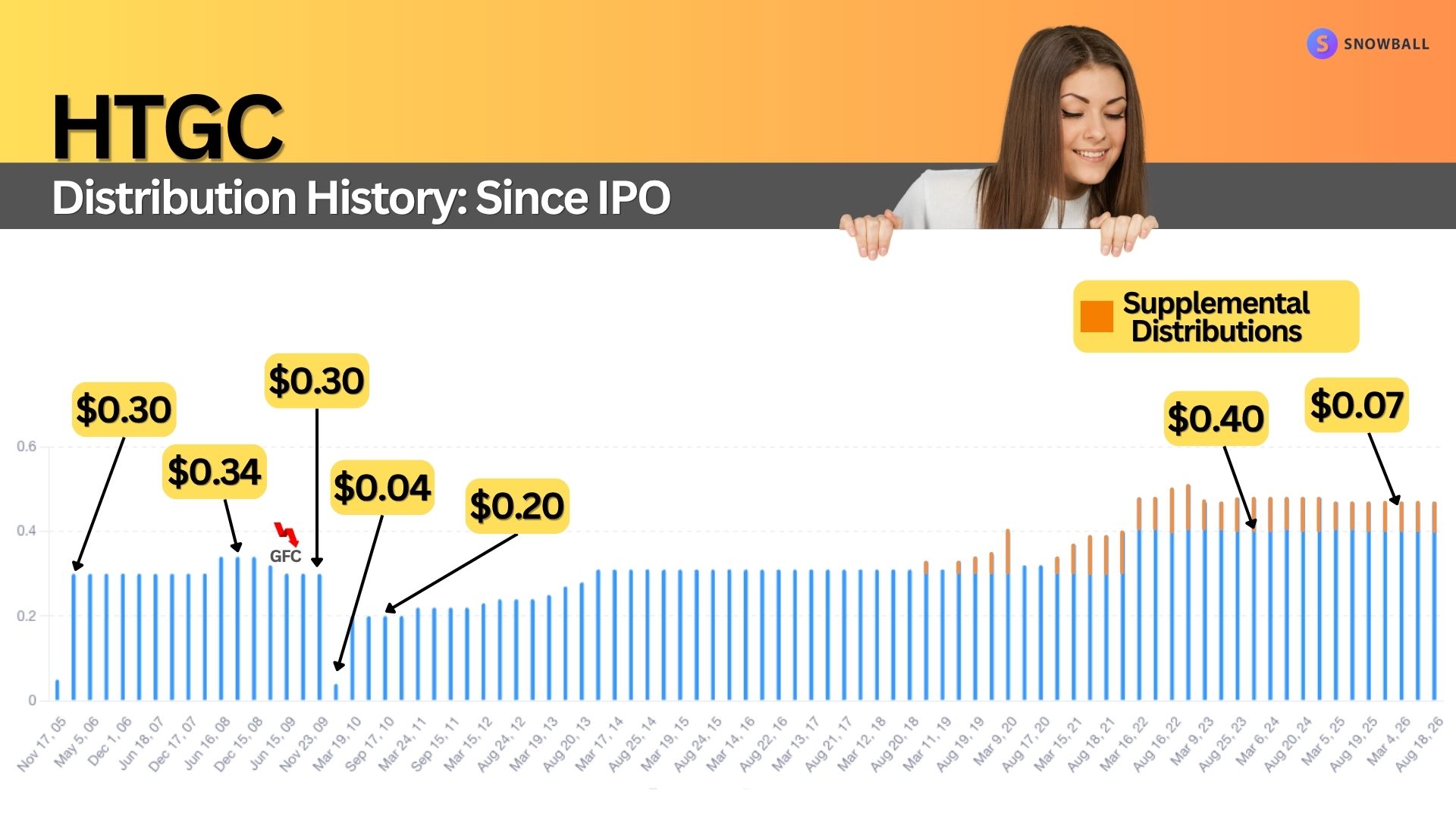
The main reason to own a Business Development Company is income, and HTGC has delivered plenty of it.
The regular dividend started at $0.30 in 2006, was reduced during the Global Financial Crisis, and has since grown from $0.20 to $0.40 per quarter. On top of that, Hercules has paid frequent supplemental distributions, most recently another $0.07.
At today’s price, the regular dividend yields around 9.4%. Including supplemental distributions, the yield rises to roughly 11%, which sits right in my preferred income range.
Why Did the Price Fall?
The price decline appears to come from four main factors.
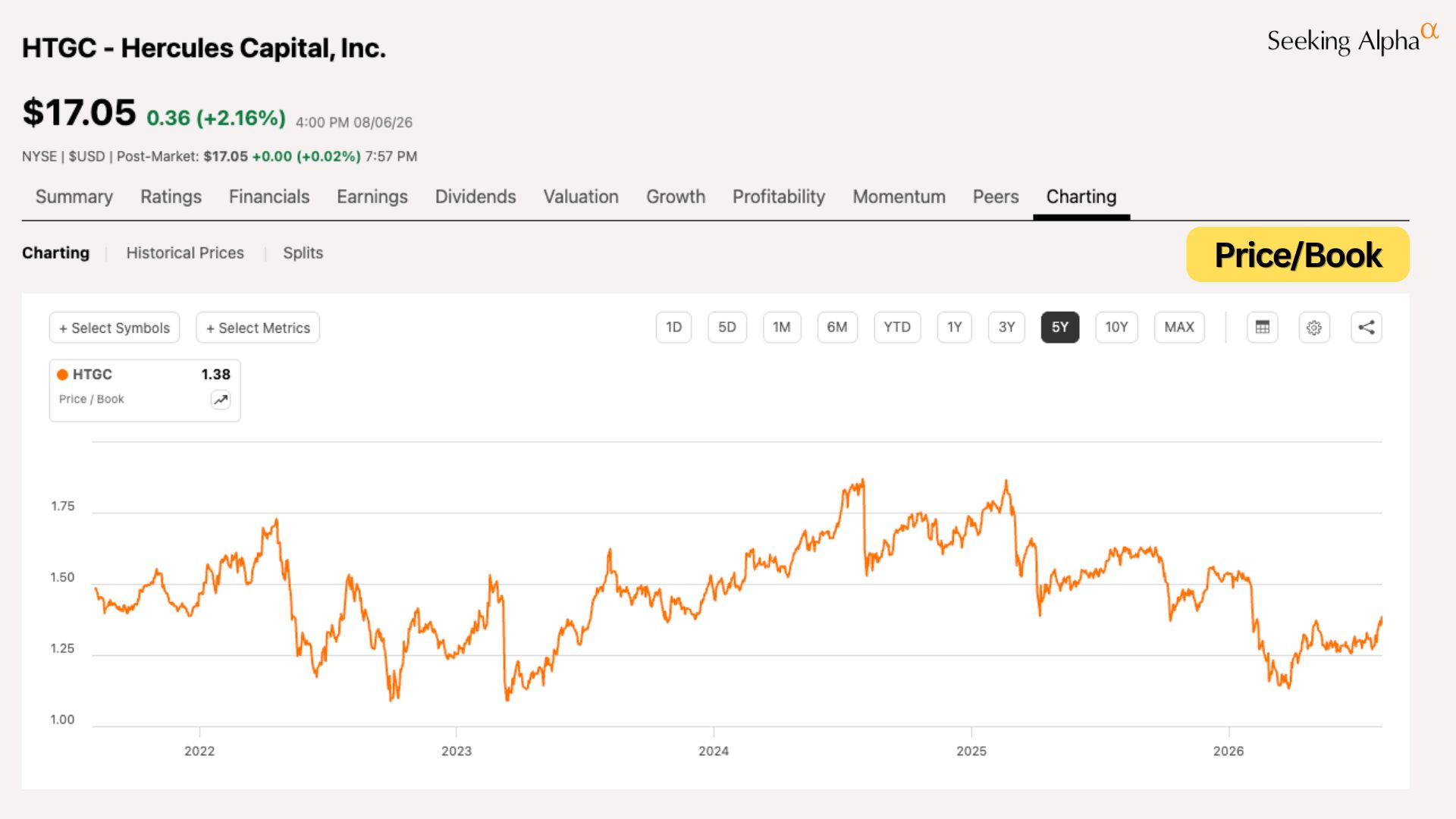
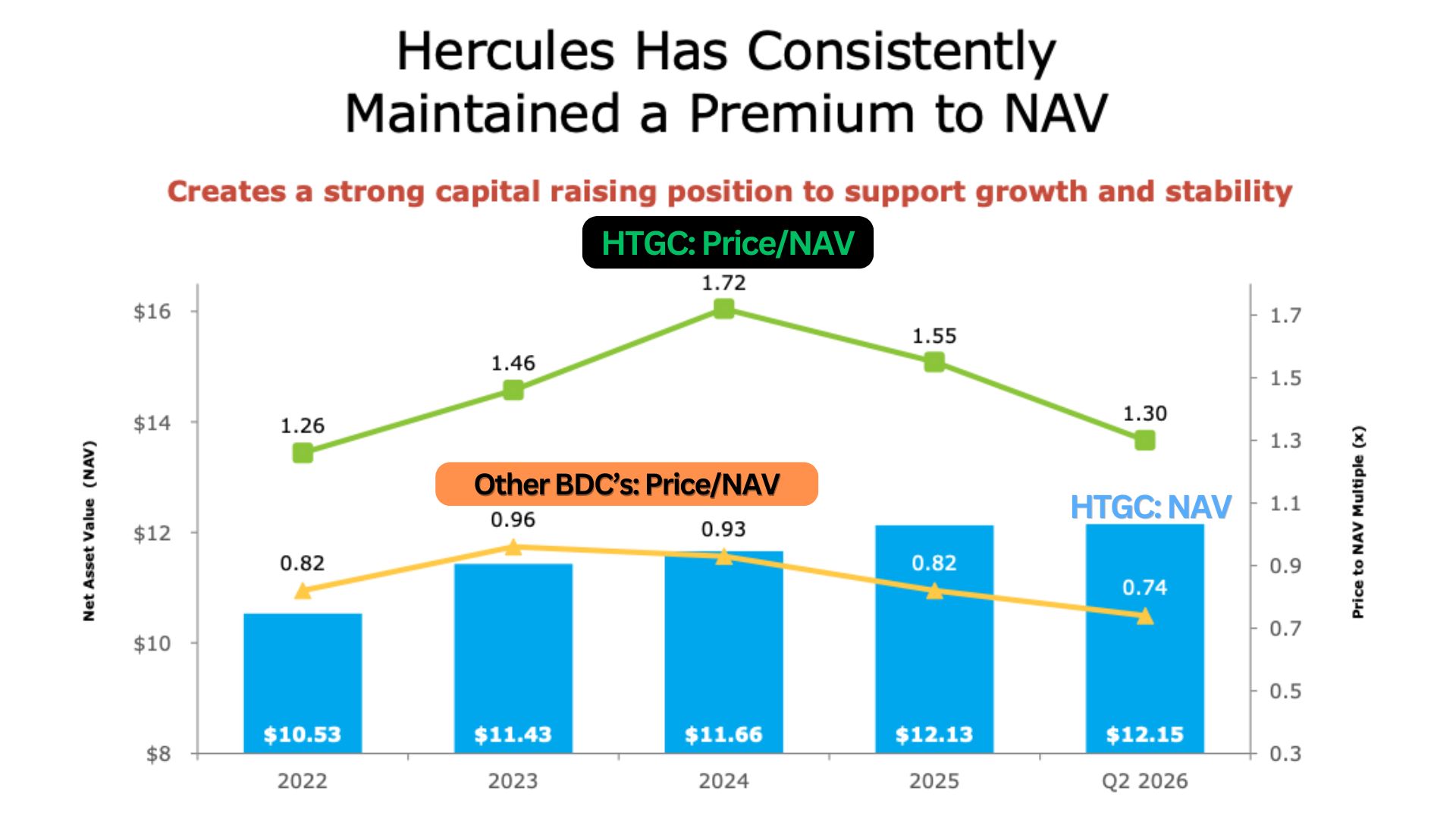
First, HTGC may have been expensive. In 2025, it traded as high as 1.86 times book value, compared with a five-year average closer to 1.47. Today, it is closer to the mid-1.3 range.
Second, Hunterbrook Capital released a short report in February 2026. The market reaction was limited, likely because the arguments were not especially convincing and the author was financially positioned to benefit from a price decline.
Third, falling interest-rate expectations hurt BDC sentiment. BDCs typically lend at variable rates, so lower rates can pressure income over the short term.
Fourth, investors became concerned that AI could hurt software companies, including some Hercules borrowers.
Software Risk and Credit Quality
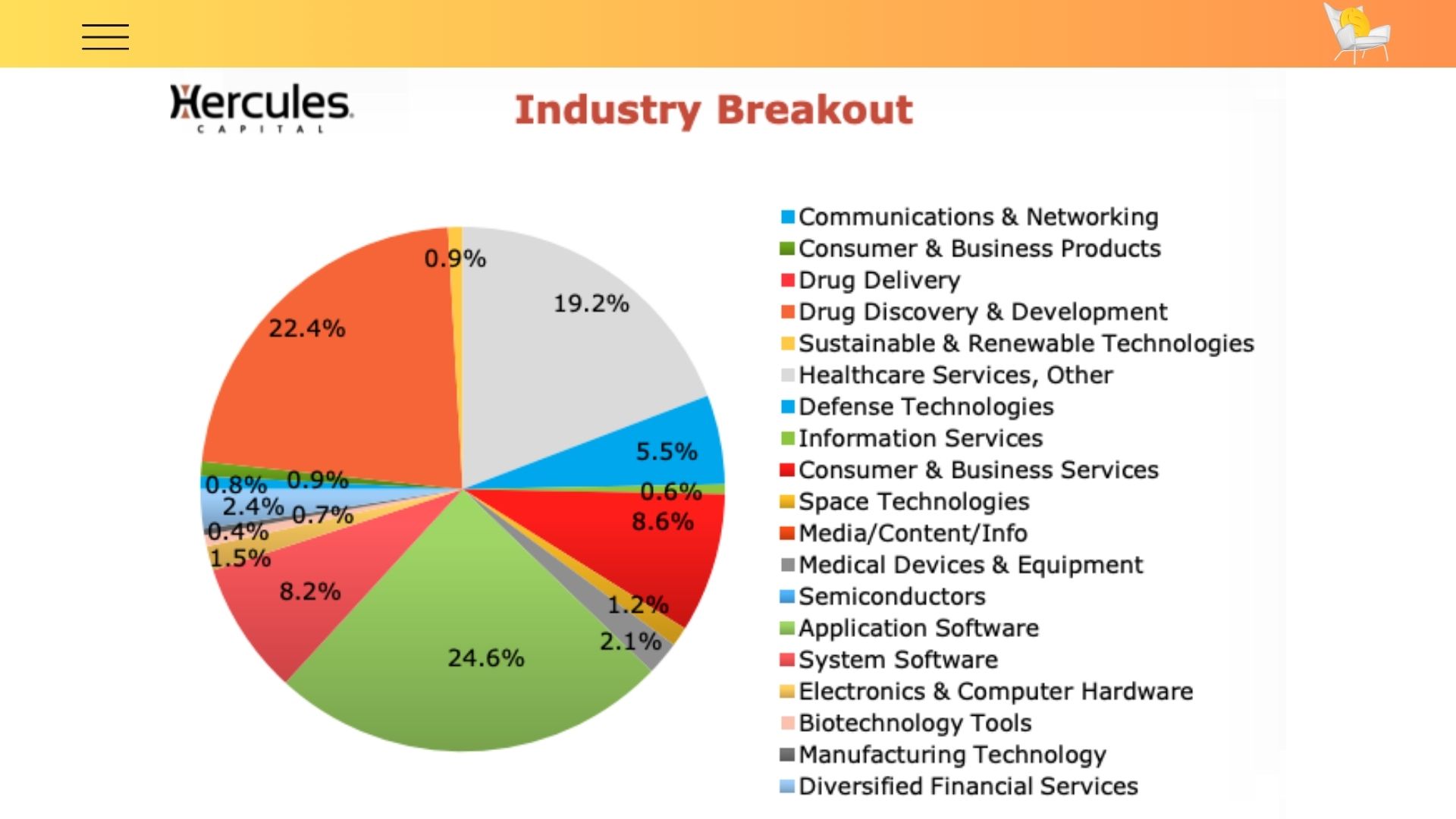
The software concern sounds scary, but it may be too simplistic.
Hercules does lend to software-related companies, but its portfolio also includes healthcare, drug discovery, defense, biotech, semiconductors, and other growth sectors. More importantly, the credit data does not show stress.
How Is the Business Doing?
The business is holding up well.
Despite lower rates and negative sentiment toward BDCs, Hercules’ Q2 2026 numbers suggest Net Investment Income is on track to exceed 2024 and 2025 levels. NAV has also increased, even while the share price has declined.
That is the key disconnect: the market price is weaker, but the underlying business has not shown the same deterioration.
My Take
I already own HTGC directly and indirectly through PBDC, so I am not rushing to make a dramatic move. But if I did not own it, I would be buying it now.
The price is down, but the income remains strong, credit quality looks healthy, and management has shown it can navigate different rate environments.
To learn more, click here for the full Review.
Want to see how these funds fit into a real-world retirement strategy? I share my full portfolio and monthly updates for free, here: Armchair Insider. If you want to learn from other Income Investors (I do!), check out the Armchair Insider Lounge.