
 Stock Analysis
 General
 Library

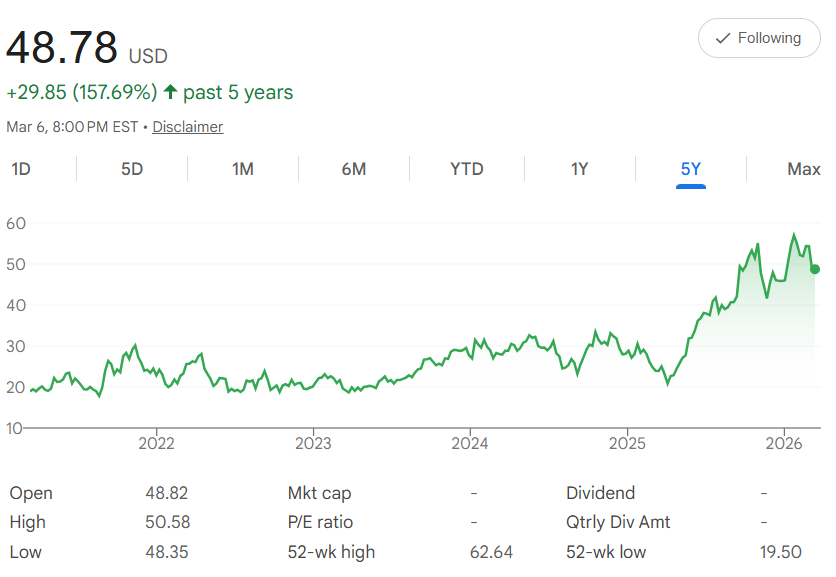
Picture this: Five years ago, the Global X Uranium ETF $URA was trading in the low $20s per share. Today, it closes at $48.78—that's an impressive +158% gain over the period. The chart shows a clear turnaround after flat or down years, followed by strong upward momentum as nuclear energy interest and uranium supply concerns grew.
The 52-week high reached $62.64, well above the current price, showing the ETF has already delivered bigger spikes during favorable stretches.
Keeping it straightforward: The compound annual growth rate (CAGR) based on this price increase is about 21%. That's the average yearly lift—calculated from the ending value over the starting value raised to 1/5 minus 1. In simple terms, if this kind of pace continues, it means meaningful yearly progress that compounds over time.
Now imagine applying dollar-cost averaging (DCA): adding $500 every month for the next five years, no matter the daily price swings.
Build your portfolio, one day at a time.
Get our daily 5-year horizon picks sent to your inbox. Subscribe here.
This adds up to $30,000 total invested from your pocket over 60 months. You naturally buy more shares when prices dip and fewer when they climb, which helps keep your average cost balanced.
If URA follows a similar historical path around that 21% annual growth, your monthly contributions grow for the remaining months each time. By the end of five years, your investment could build to roughly $52,000–$54,000. That translates to a gain of about $22,000–$24,000 beyond your $30,000—a solid 73–80% overall return from consistent, low-effort investing.
Past performance doesn't guarantee future results—uranium prices, nuclear policy shifts, or global energy changes can move the needle. But URA offers broad exposure to uranium miners and related companies, capturing the sector's upside without single-stock risk. Your $500 monthly plan is easy to stick with, giving compounding plenty of room to work.
Nuclear power's role in clean energy discussions keeps drawing attention to uranium. Staying disciplined through any quieter periods is what usually turns regular contributions into stronger long-term growth.
Ready to position yourself for this kind of potential?