

 Stock Analysis
 General
 Library

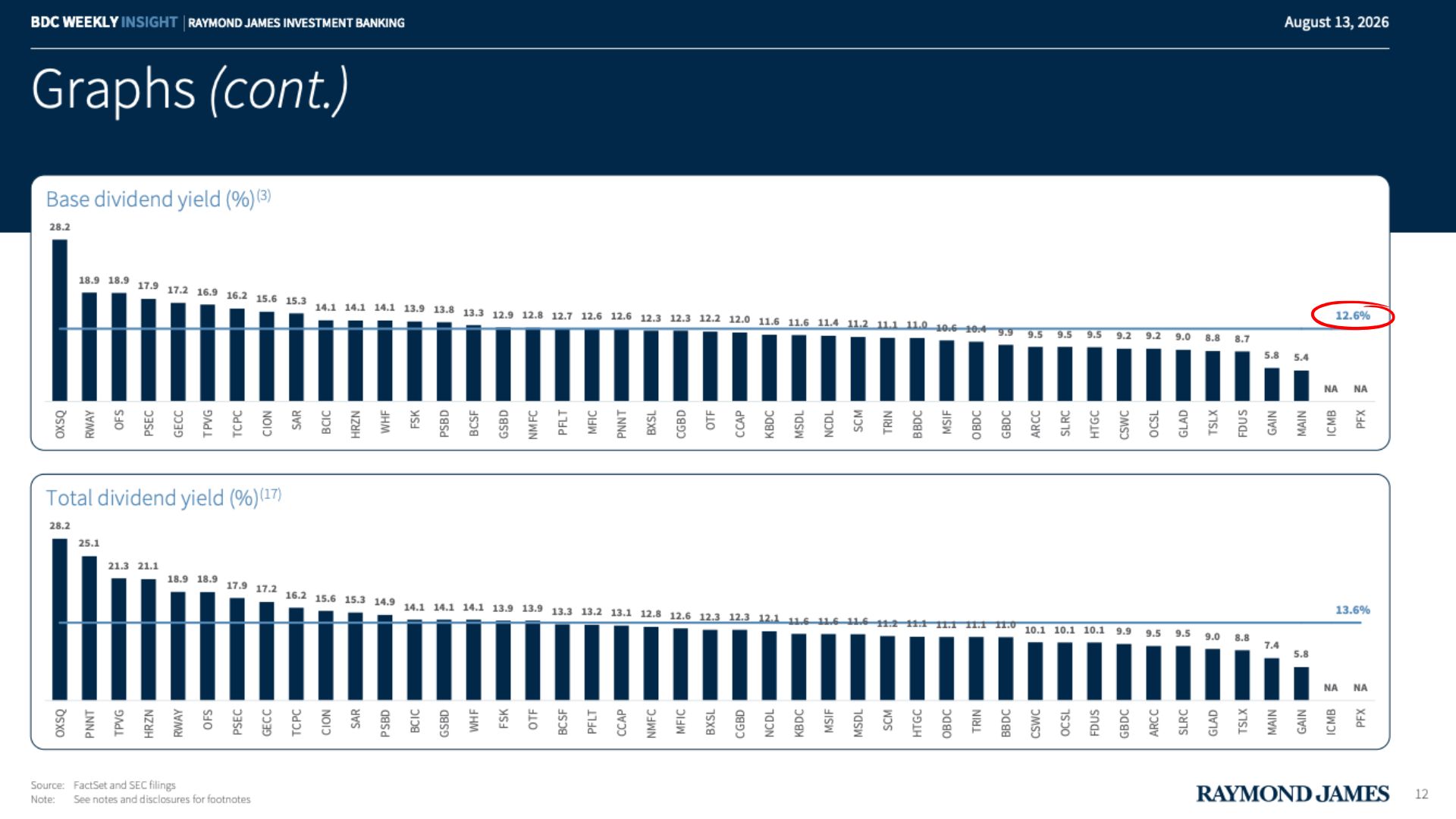
BDC yields around 10% can look suspiciously high if you are unfamiliar with the sector. Yield is not automatically a warning sign. It comes from the structure of Business Development Companies, the floating-rate loans they own, and the premium borrowers pay for flexible private lending.
The bigger question today is whether recent weakness in BDC share prices reflects genuine deterioration in the businesses—or simply negative sentiment around private credit.
Why BDC Yields Are So High
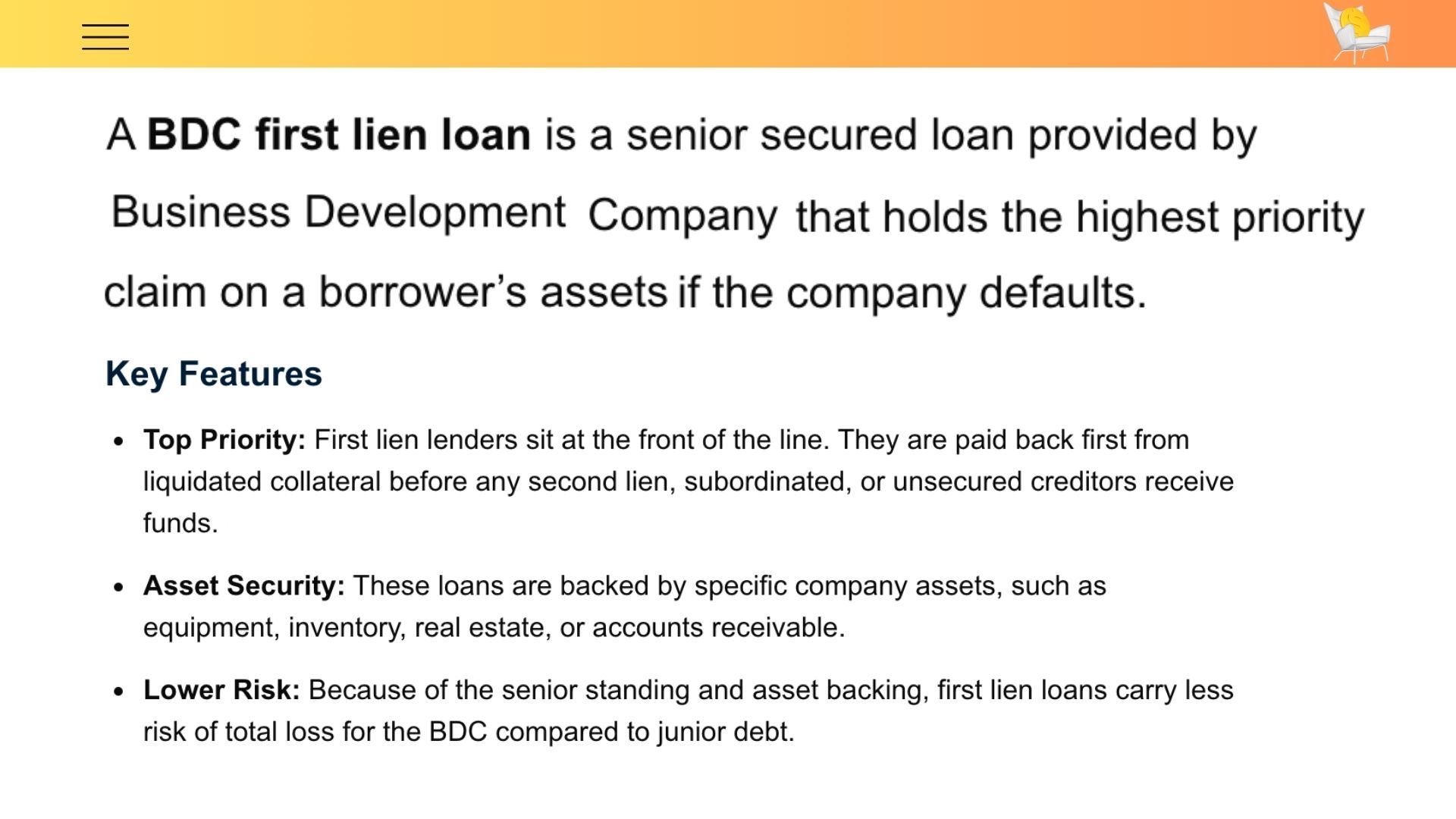
BDCs are pass-through vehicles designed to distribute most of their income to shareholders. Their portfolios are typically made up of loans to middle-market businesses, often secured by company assets and backed by private equity sponsors.
These loans generally earn a floating base rate such as SOFR, plus an additional spread and fees. Add moderate leverage at the BDC level, and double-digit portfolio yields become possible.
Borrowers are willing to pay more than they might in public debt markets because private lenders can offer speed, certainty, and customized terms.
Why Did BDC Prices Fall?
BDC stocks performed strongly in 2023 and 2024, then weakened through 2025 and early 2026. Several issues contributed.
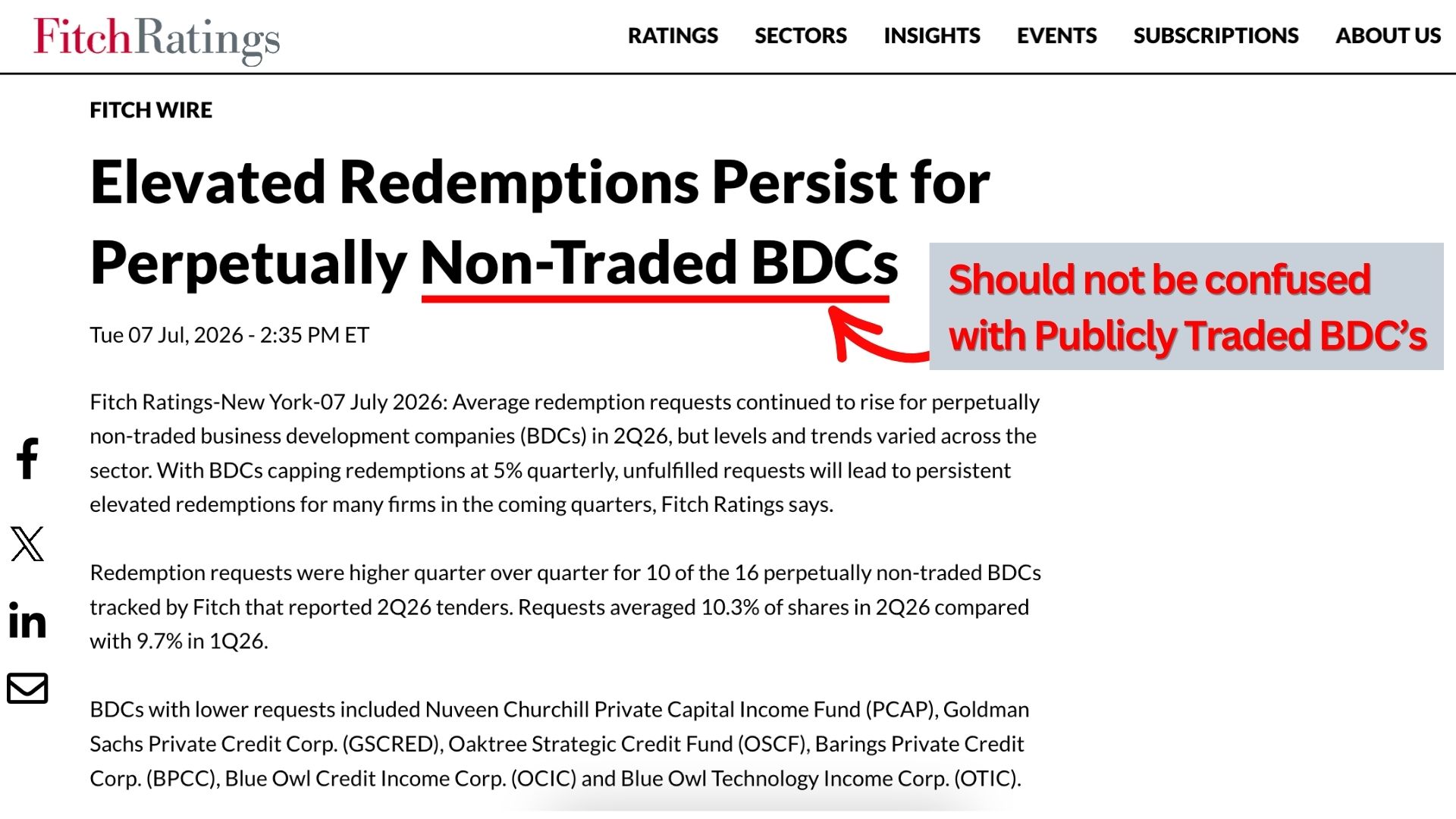
Falling interest rates reduced the income earned on floating-rate loans. High-profile bankruptcies created broader fears around private credit. Concerns that AI could disrupt software companies hurt software-heavy BDC portfolios. And redemption restrictions at non-traded private-credit vehicles generated additional negative headlines.
The important distinction is that publicly traded BDCs such as KBDC, ARCC, and MAIN remain liquid. Investors can buy or sell shares whenever the stock market is open.
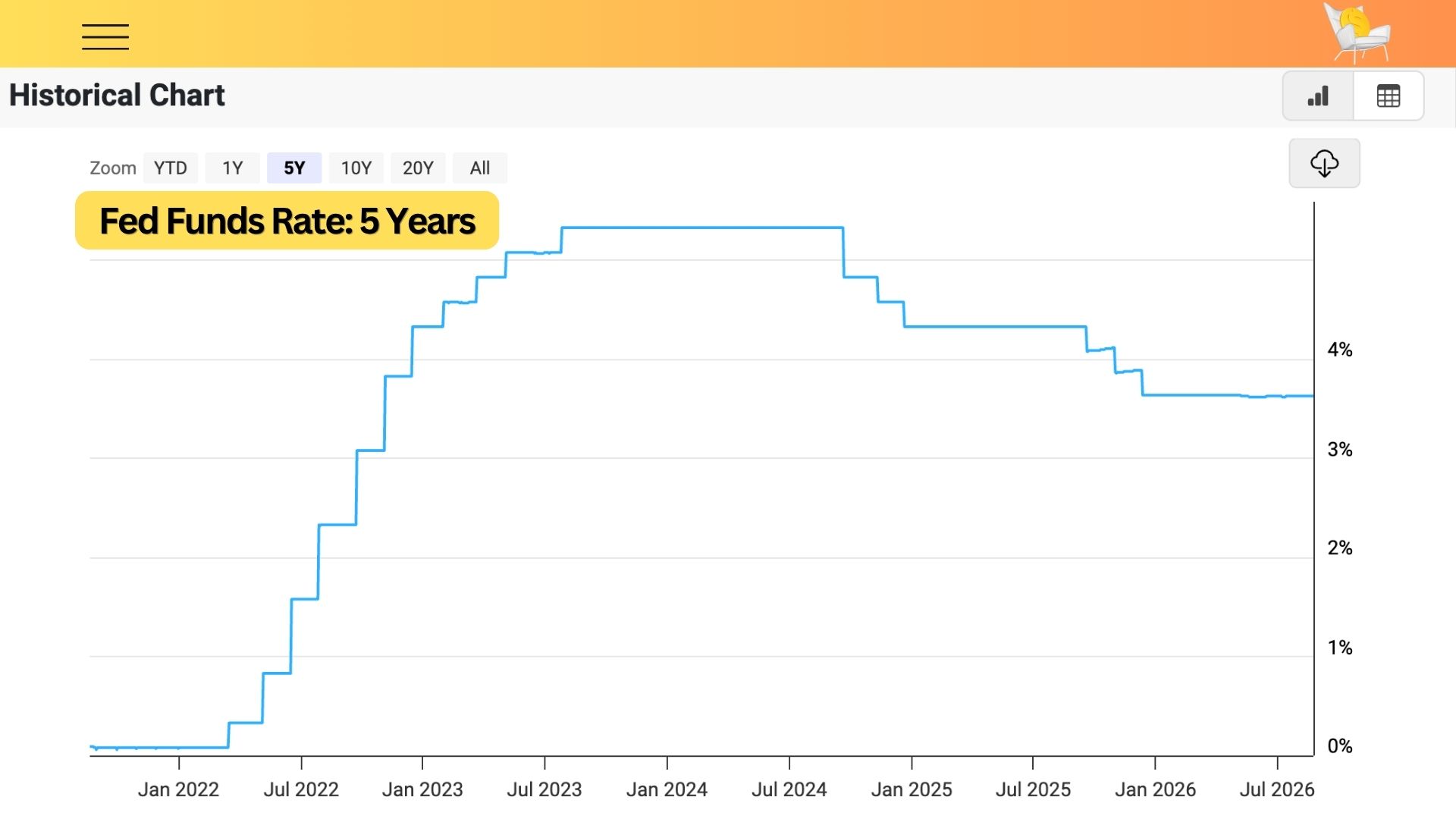
Interest Rates Still Matter
Because BDC loans are largely floating rate, changes in SOFR directly influence investment income. Higher rates generally mean more income, but excessively high rates can also place additional pressure on borrowers and reduce new deal activity.
That creates a “Goldilocks” range: rates high enough to support attractive income, but not so high that they damage borrower finances or freeze mergers and acquisitions.
How Do You Judge BDC Quality?
Two commonly watched warning signs are non-accrual loans and Payment-in-Kind, or PIK, income. Neither number should be judged from a single quarter. Trends over several quarters matter more.
Karl suggested that NAV per share may be one of the most useful long-term measures because it captures changes in the underlying value of the loan portfolio, including restructurings and credit losses.
For income investors, management quality matters too: underwriting discipline, transparency, alignment with shareholders, insider ownership, and a history of maintaining NAV all help separate stronger BDCs from weaker ones.
KBDC’s Income
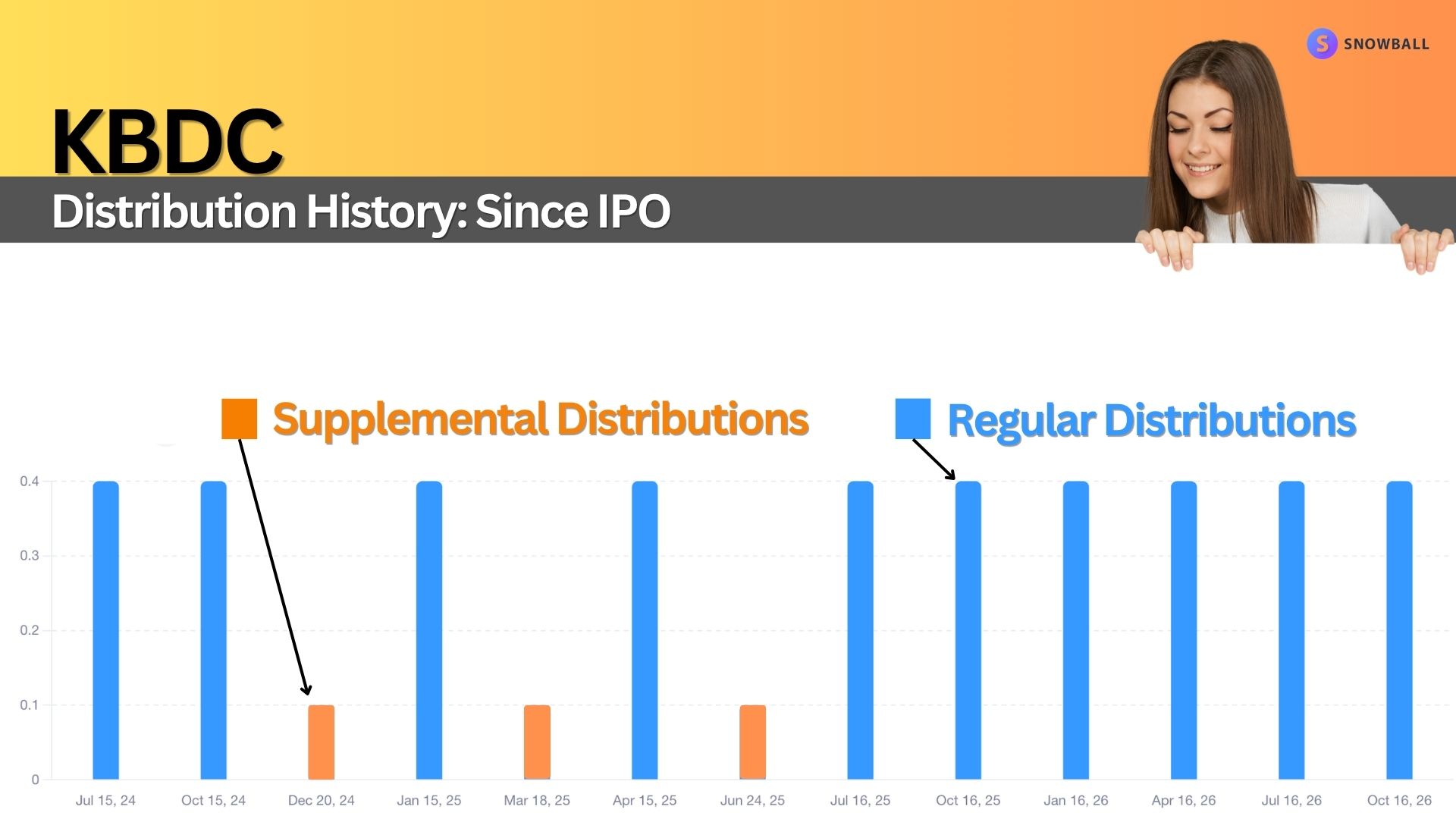
KBDC itself currently offers a high yield and has maintained regular distributions since becoming publicly traded.
My Take
The recent BDC selloff does not mean every fund is a bargain, but it also does not mean private credit is collapsing.
The sector is diverse. Some portfolios may deserve their discounts, while others may have been dragged down by broad negative sentiment.
For me, the lesson is simple: look beyond the share price. Follow NAV, credit quality, non-accruals, PIK income, dividend coverage, and management history before deciding whether a 10% yield represents opportunity—or risk.
To learn more, click here for the full Review.
Want to see how these funds fit into a real-world retirement strategy? I share my full portfolio and monthly updates for free, here: Armchair Insider. If you want to learn from other Income Investors (I do!), check out the Armchair Insider Lounge.