

 Stock Analysis
 General
 Library

One of my favorite income funds just announced a major change.
CEFS, one of my top three “lazy income” investments, is increasing its distribution target from roughly 7%–8.5% to 12% of NAV annually. That's a substantial increase in cash payments, but there's a catch: the fund isn't actually earning more money.
So, is this good news for income investors, or could the higher distribution eventually become a problem?
New Distribution Policy
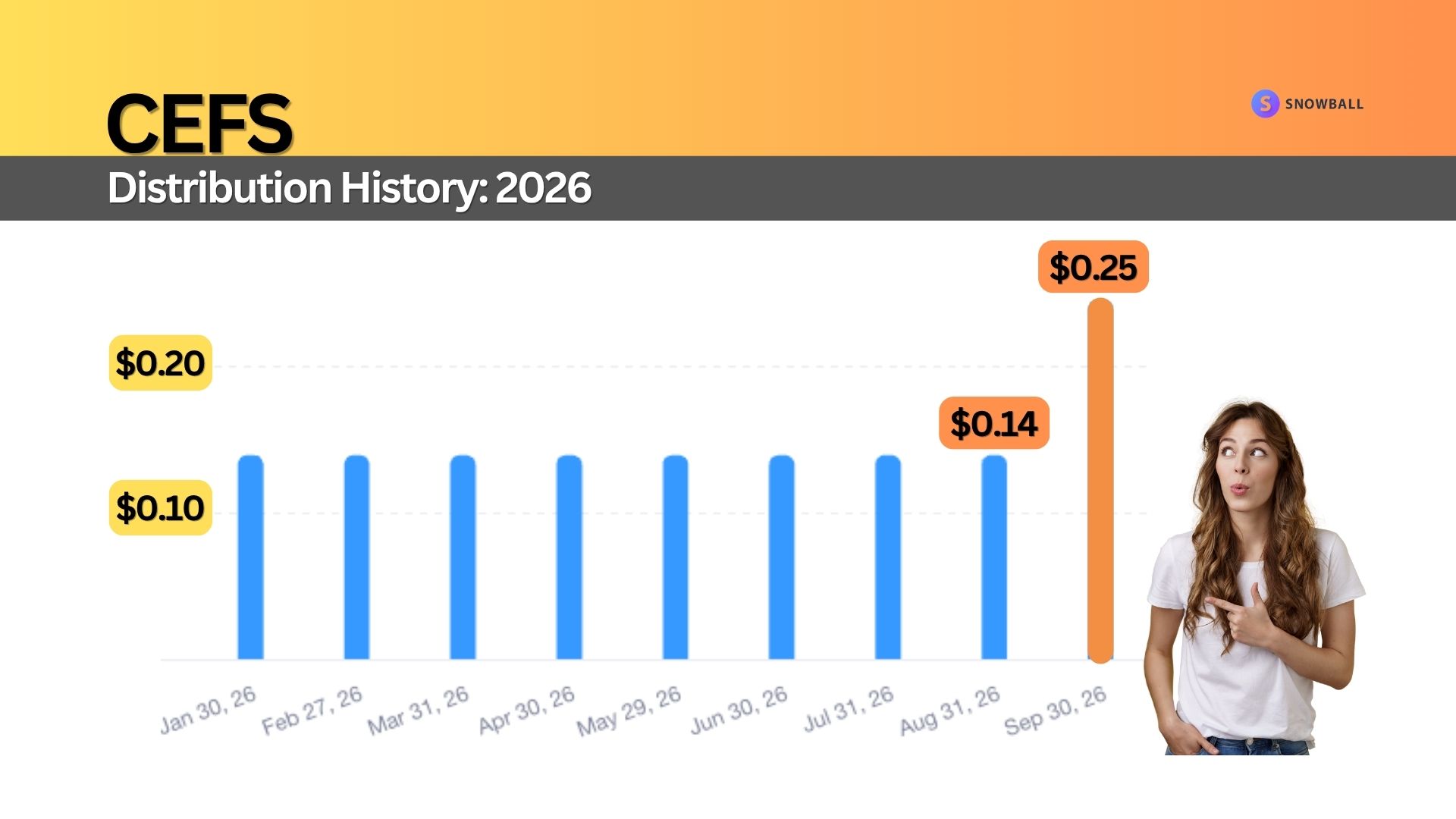
CEFS previously paid $0.14 monthly, plus occasional year-end special distributions. That arrangement provided reasonably consistent income, even during market corrections.
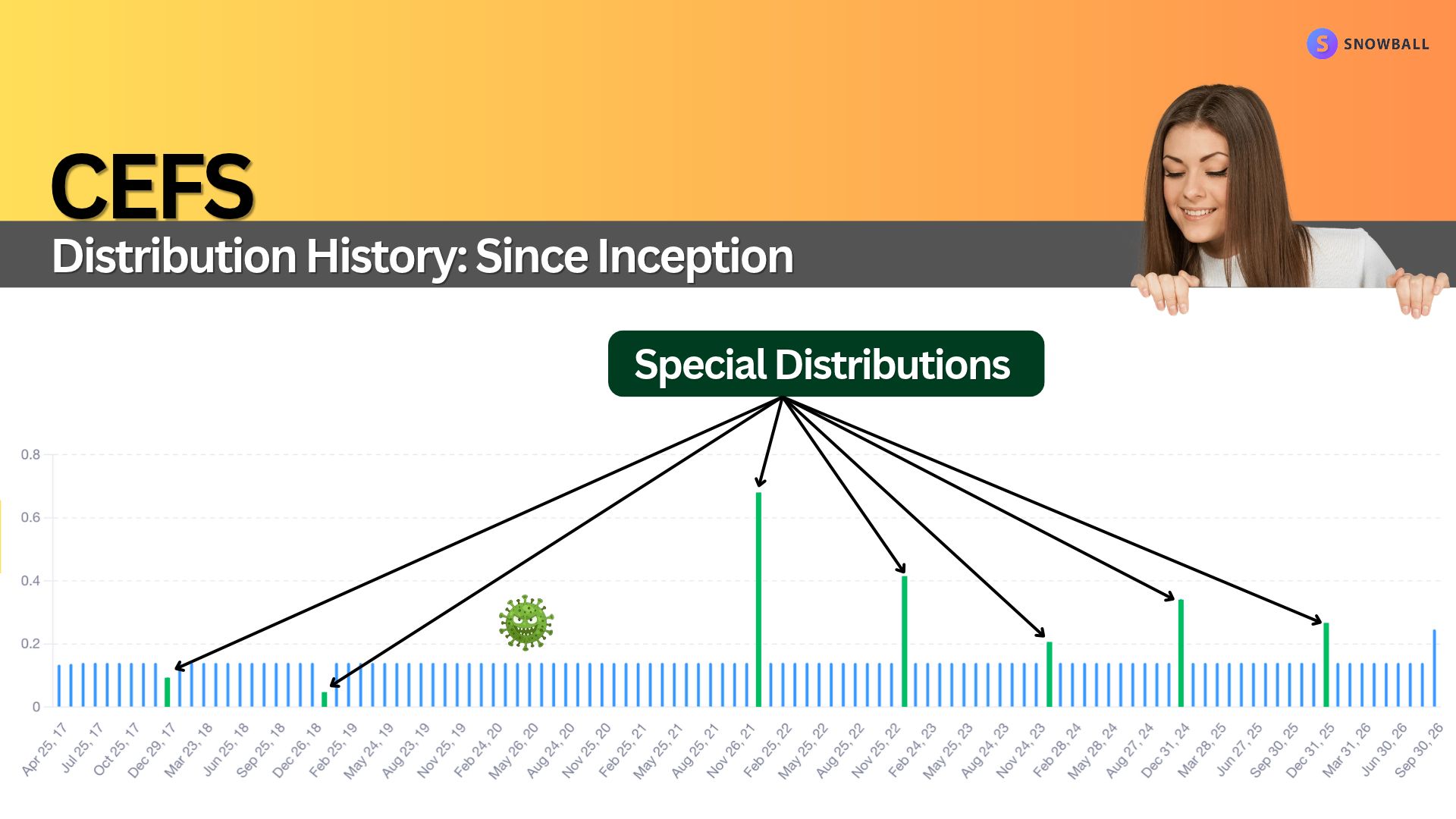
Under the new policy, CEFS will distribute 12% of its NAV annually, paid quarterly. That's approximately 3% of NAV every three months.
The important distinction is that the investment strategy hasn't changed. Instead, more of the fund's total return will be distributed as cash, leaving less available for capital appreciation.
For retirees who prefer income over growth, that might be attractive.
Can CEFS Sustain 12%?
A 12% distribution sounds high, but sustainability depends on total return.
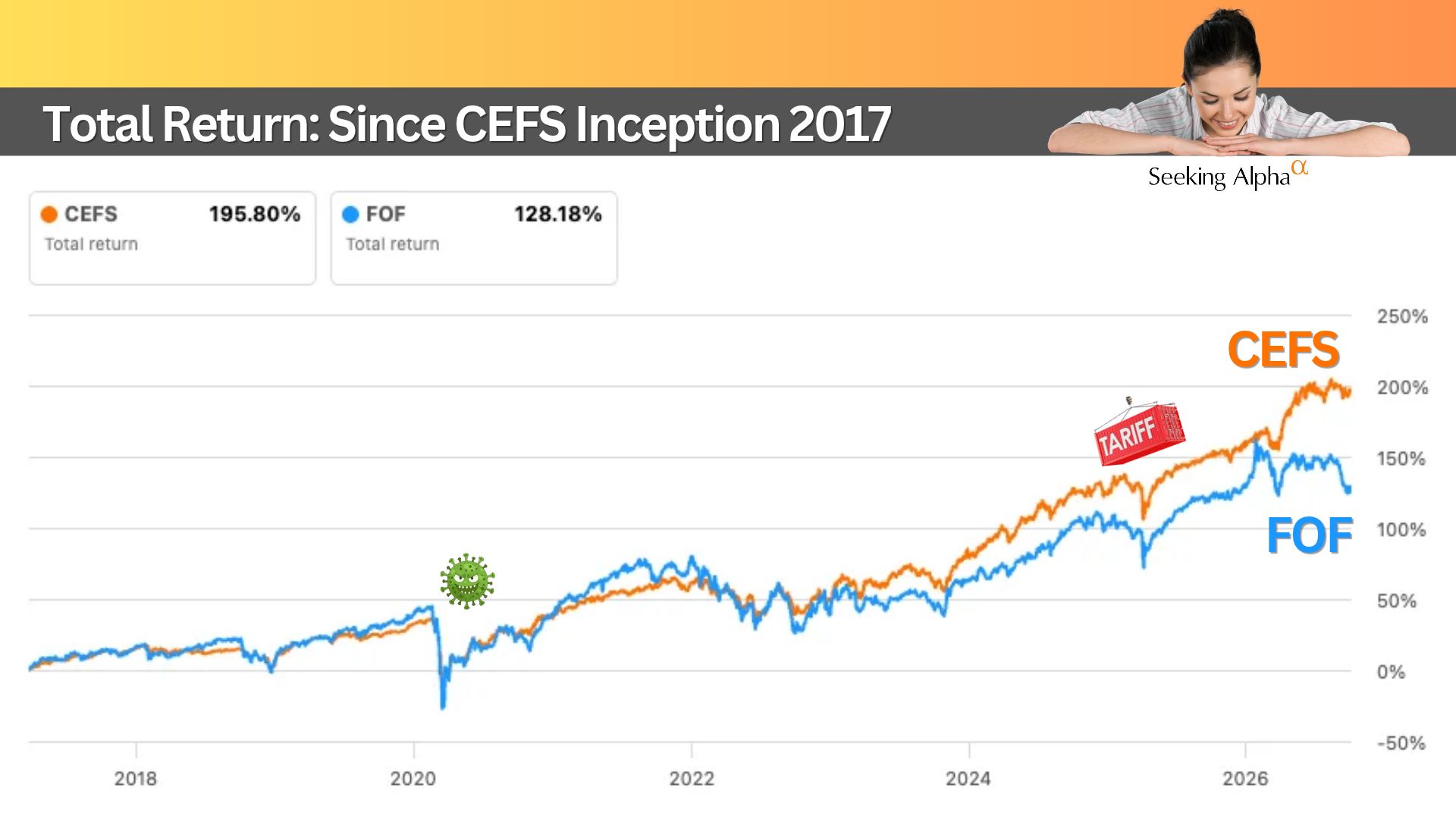
If CEFS consistently generates returns exceeding 12%, the new policy could work well. Its average annual return over the past five years has been around 14%, although future performance is uncertain.
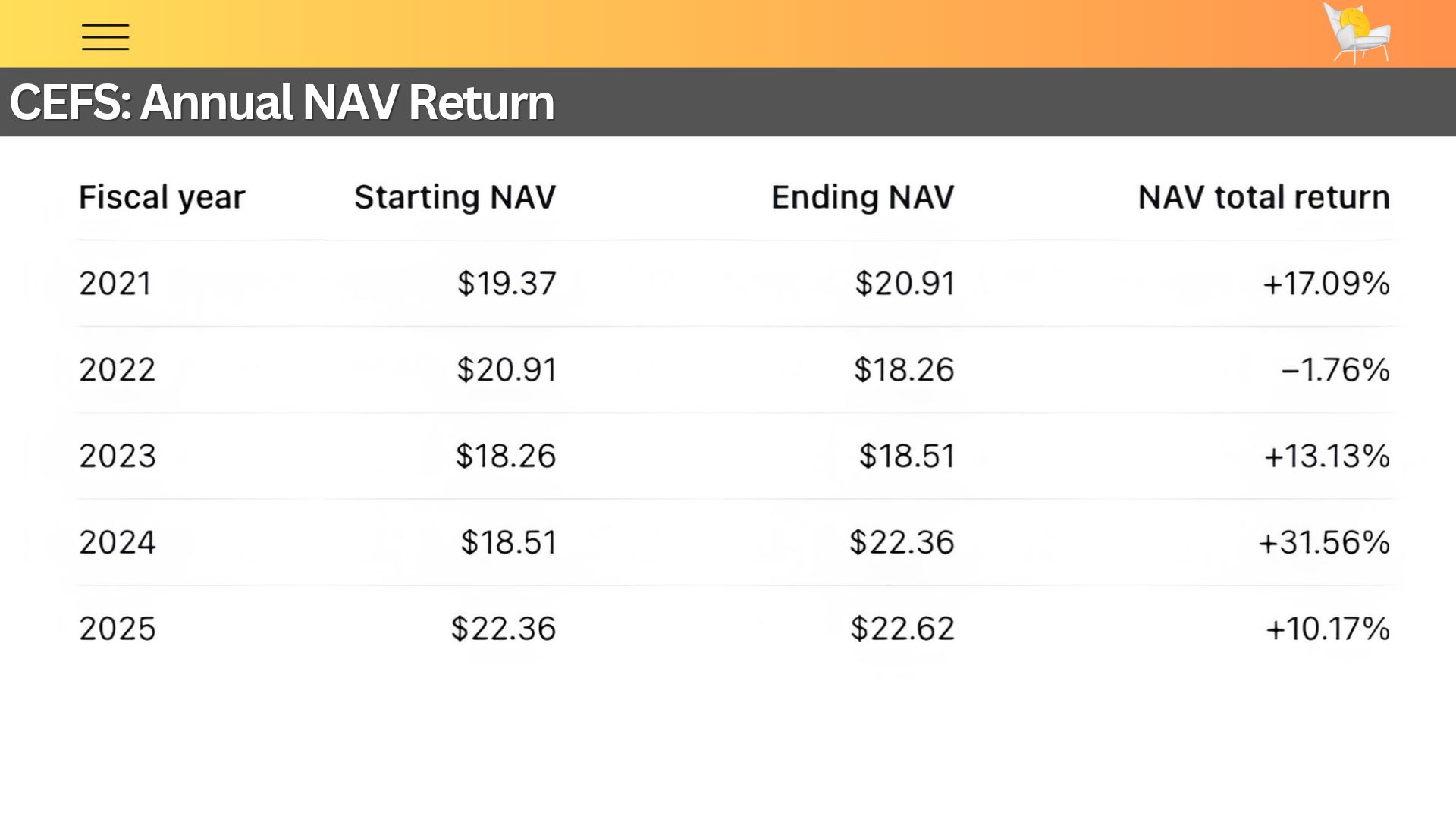
The concern is over-distribution. If returns consistently fall below 12%, NAV could gradually decline.
That doesn't automatically mean trouble during a bear market, but persistent NAV deterioration would deserve attention.
What Makes CEFS Special?
CEFS isn't just another high-yield fund.
It's a fund-of-funds holding more than 50 closed-end funds across technology, precious metals, credit, utilities, convertible securities, and other investments.
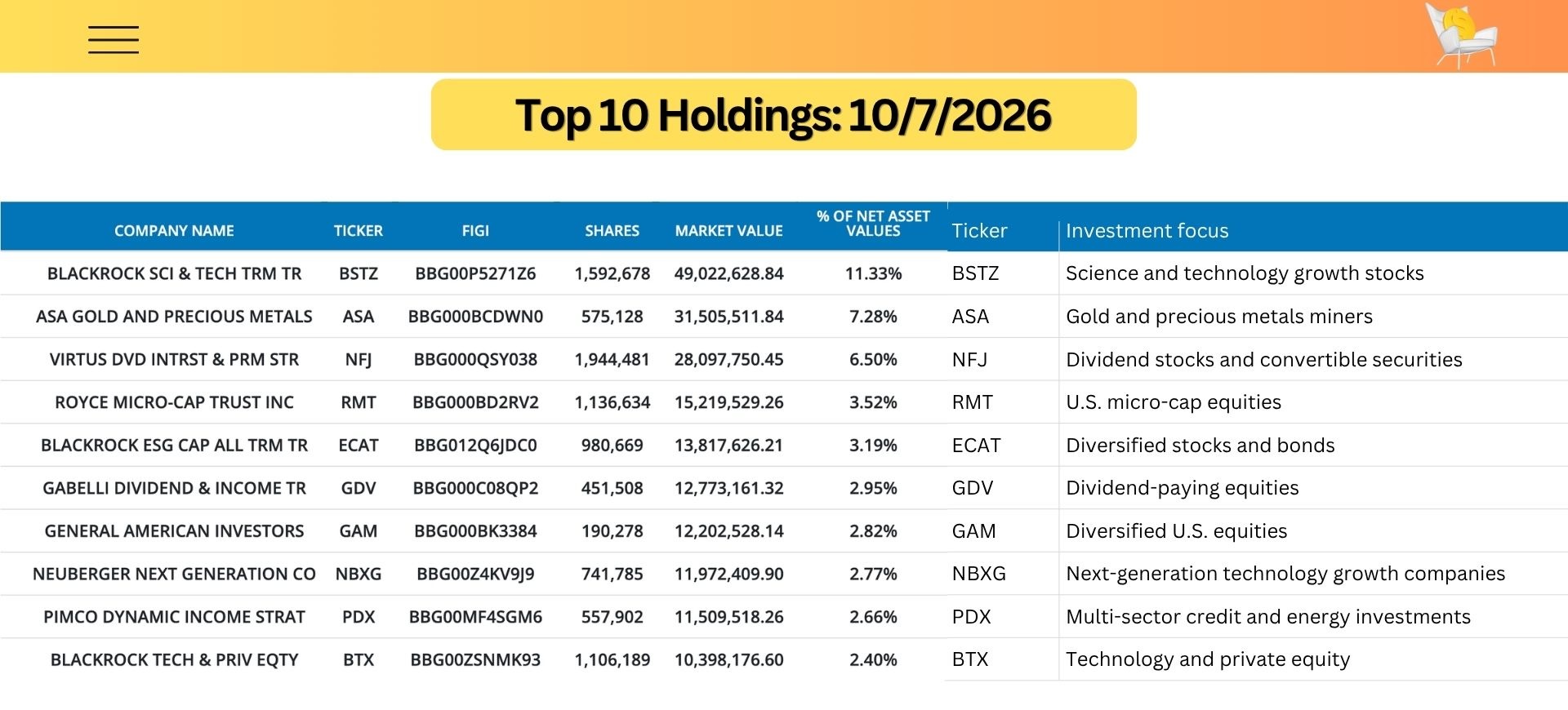
Its second advantage is buying closed-end funds at discounts to NAV, then benefiting when those discounts narrow.
The third is Saba Capital's activist approach. Rather than waiting for discounts to close naturally, Saba pushes for changes such as buybacks, tender offers, or management improvements.
Those three characteristics make CEFS one of my favorite lazy income investments.
Competition
FOF remains CEFS's closest major competitor. Both invest in portfolios of closed-end funds, but their structures differ.
FOF is itself a closed-end fund, meaning its share price can trade above or below NAV. CEFS is an ETF, so its market price generally stays close to NAV.
My Take
Does the new 12% distribution make CEFS a better investment? Not necessarily.
Its underlying strategy hasn't changed, and higher distributions won't magically increase total return.
However, as a retiree, I prefer receiving more cash that I can spend or reinvest elsewhere.
I'll monitor NAV carefully for signs of persistent over-distribution.
For me, the new policy is a modest positive, but diversification, discount investing, and shareholder activism remain the real reasons I own CEFS.
CEFS remains one of my largest allocations and a long-term hold.
To learn more, click here for the full Review.
Want to see how these funds fit into a real-world retirement strategy? I share my full portfolio and monthly updates for free, here: Armchair Insider. If you want to learn from other Income Investors (I do!), check out the Armchair Insider Lounge.