

 Stock Analysis
 General
 Library

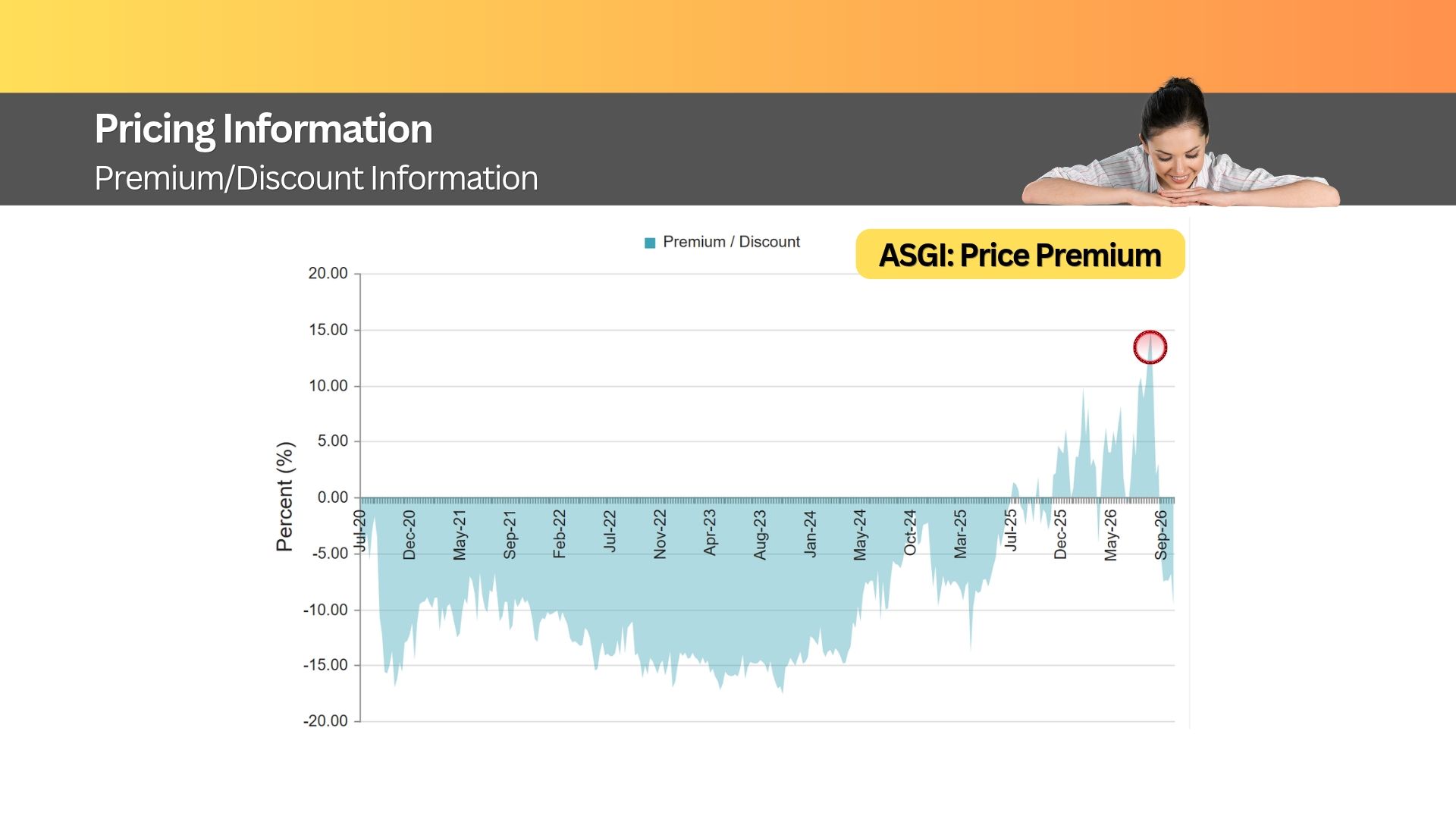
ASGI has gone from market darling to problem child in a matter of months.
Earlier this year, I sold the abrdn Global Infrastructure Income Fund because investors were paying an unusually high premium above Net Asset Value. That turned out to be fortunate timing. Since then, the price has fallen sharply, Aberdeen launched a rights offering, and the yield has climbed from roughly 10–12% to nearly 14%.
At first glance, that looks like a gift for income investors. But the bigger payout comes with a catch: ASGI distributes 12% of NAV annually, and I’m not convinced that is sustainable over the long term.
Distribution Policy: Great Income, Higher Hurdle
ASGI’s income story is really a tale of three policies. It began with a fixed monthly payout during the Covid era, then shifted to a variable 9% of NAV policy, and later increased again to the current 12% of NAV structure.
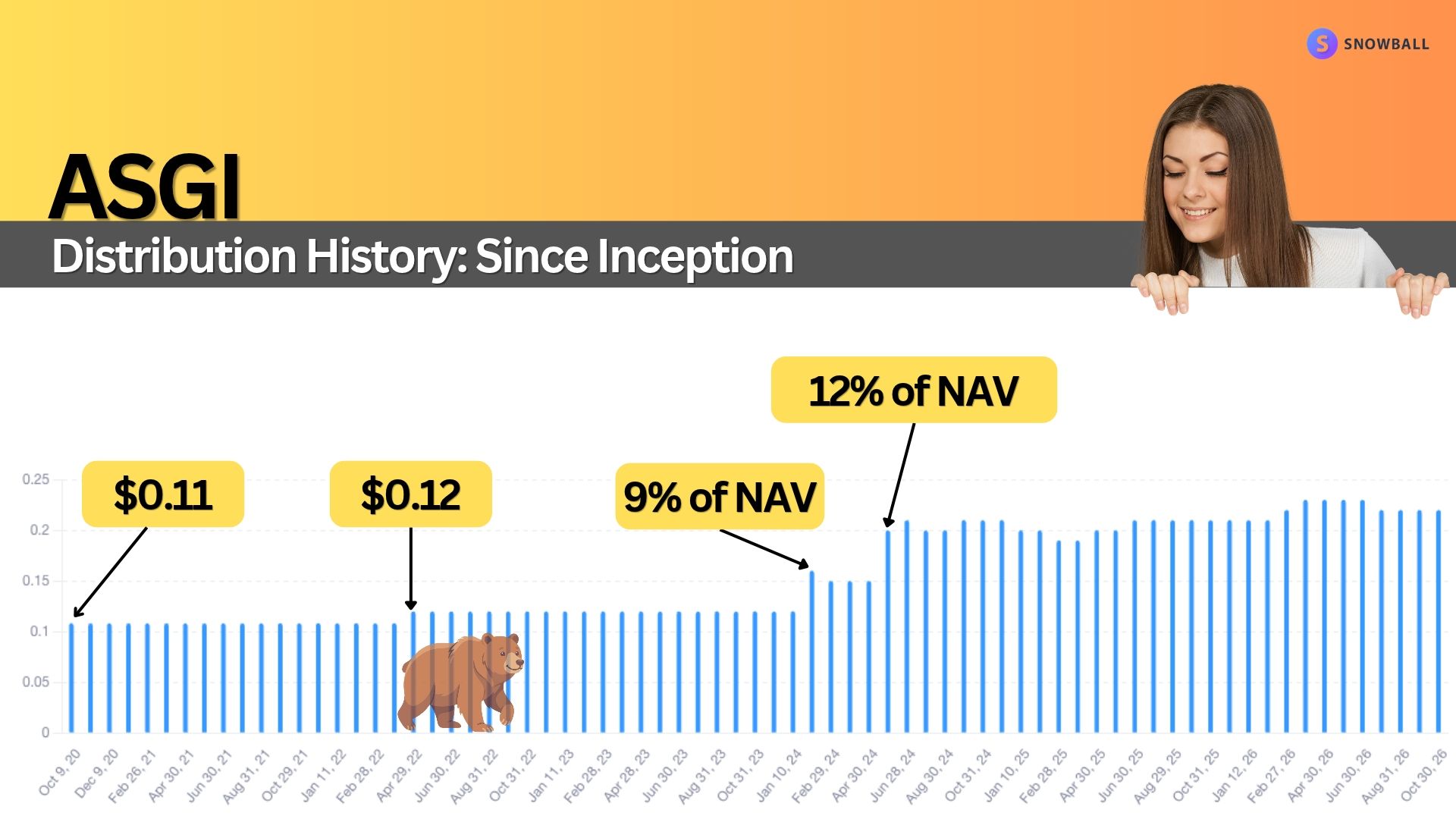
That helps explain why the fund now throws off so much cash. If you buy the shares at a discount to NAV, your yield on market price rises above the 12% being distributed from the portfolio itself. That is attractive, but it also means the fund has to clear a very high bar to maintain NAV over time.
What Caused the Selloff?
The biggest driver was the rights offering. These events often confuse investors, create fear about dilution, and trigger selling pressure even before the new shares are issued. On top of that, utilities and infrastructure names have faced weaker sentiment because of higher interest rates.
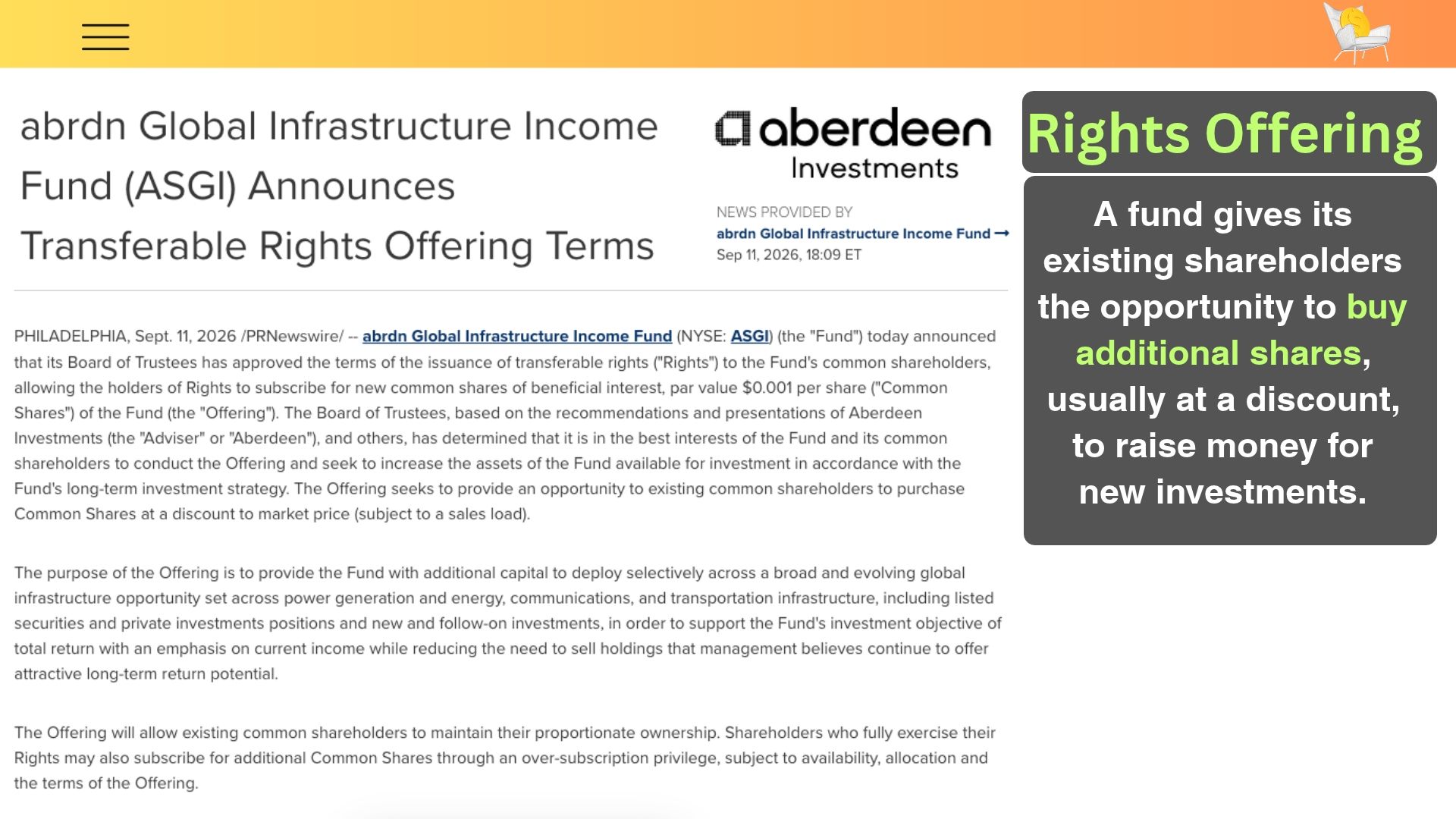
In this case, the dilution looks relatively small. Existing shareholders could also offset it by exercising or selling their rights. The more important question is whether Aberdeen can invest the newly raised capital effectively.
What Makes ASGI Different?
ASGI is a global infrastructure fund, with just over half its exposure in the U.S., followed by Europe and Latin America. It owns the usual infrastructure categories—utilities, midstream energy, toll roads, railroads, and communications—but what makes it stand out is its private placement sleeve.
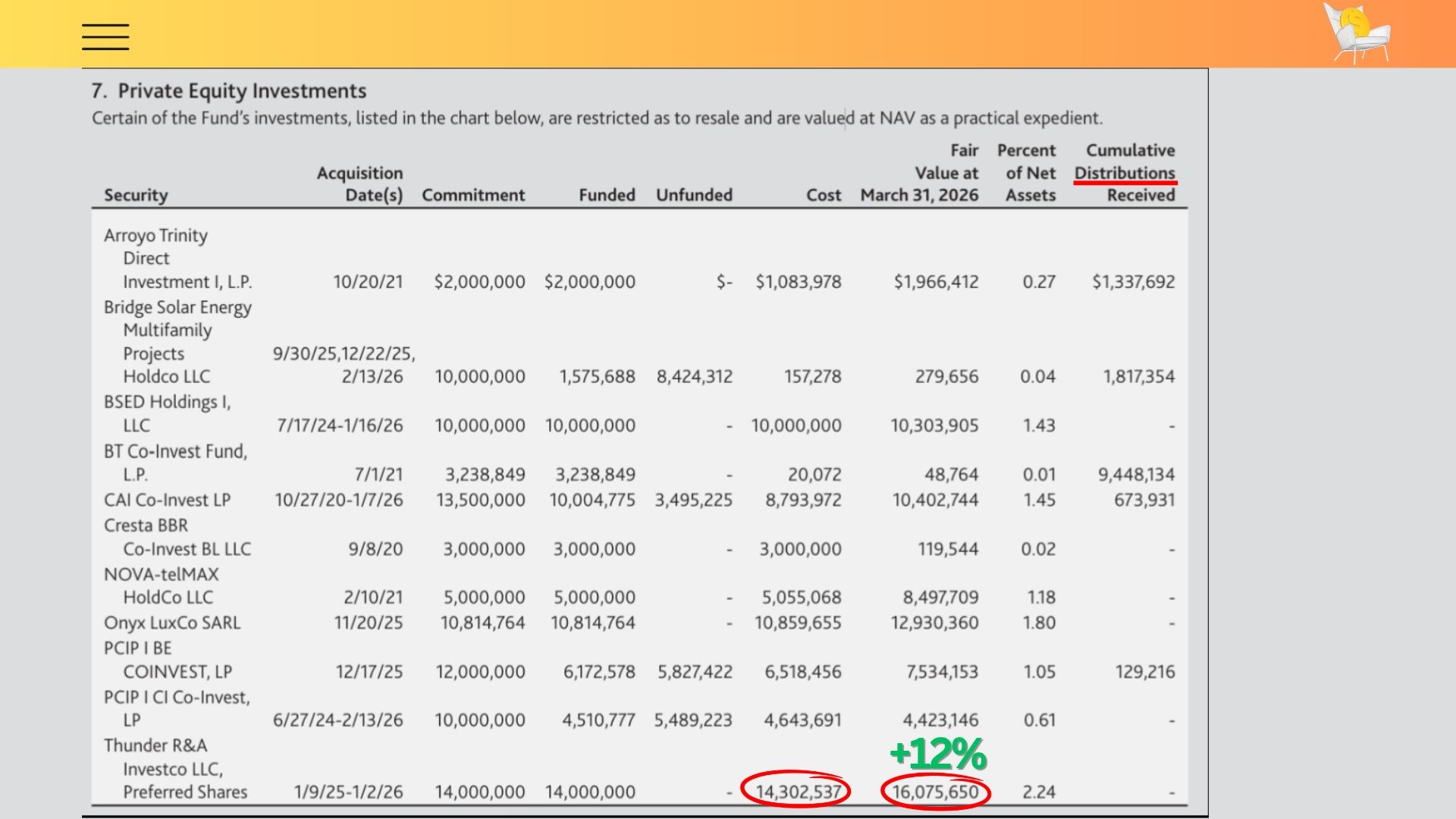
That private exposure is a double-edged sword. It adds less-transparent assets, but it also creates the possibility of outsized gains if those companies are acquired or go public.
Performance and the Sustainability Question
Performance has been respectable, but not strong enough to make me fully comfortable with a 12% of NAV payout. Over the 2021–2025 stretch, ASGI’s annualized NAV total return was solid, but still below the level needed to sustain that distribution indefinitely.
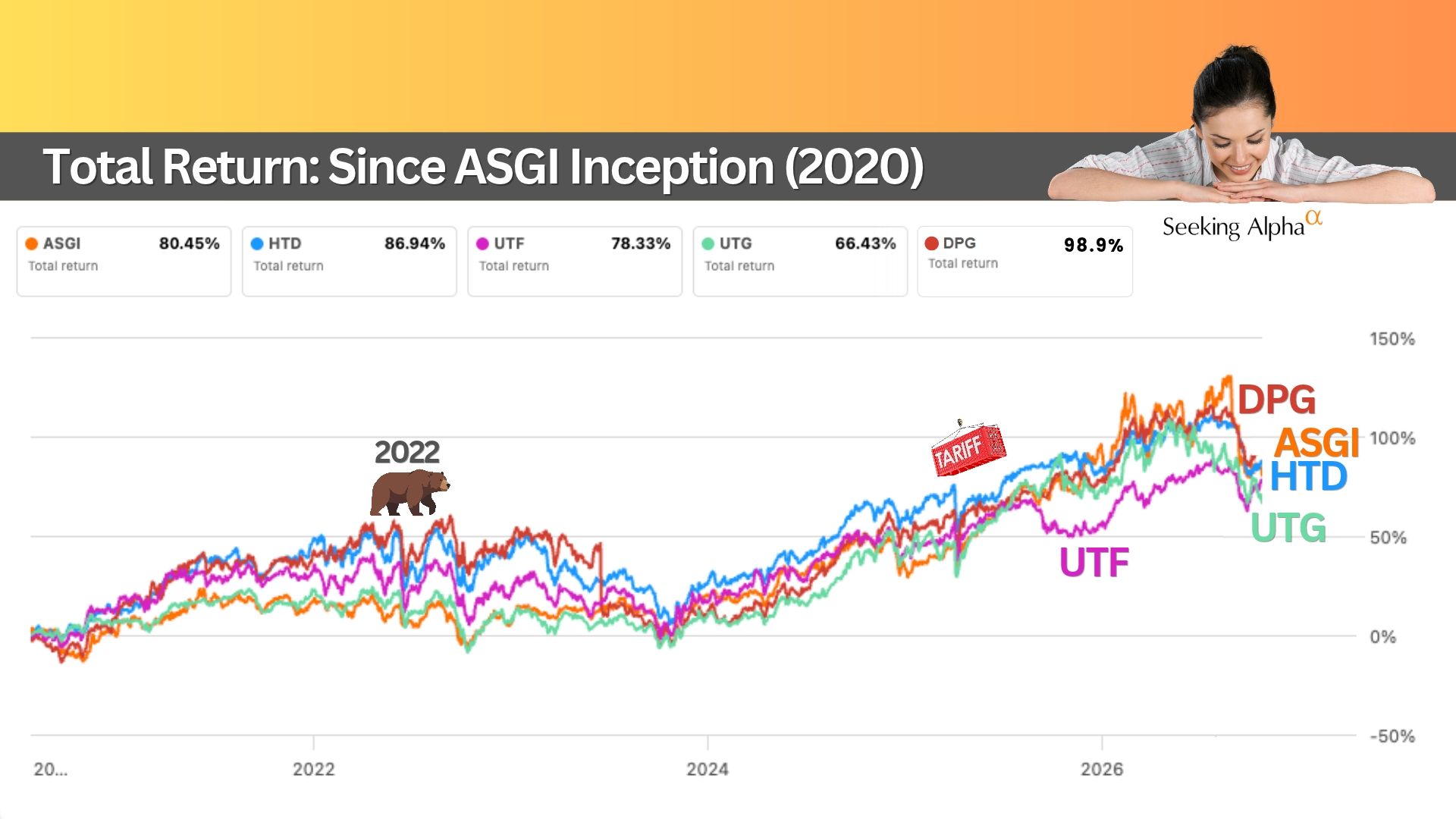
That is why I’m buying it again only at a discount of at least 5%. Right now, with the fund near an 8% discount, the setup looks much better than it did when investors were paying a premium.
My Take
I’m buying ASGI back, but with a small position.
The discount is attractive, the rights offering is behind us, and I still like the global infrastructure theme. But I do not treat the entire yield as fully spendable income. In my mind, ASGI is more like an 8% spend-and-reinvest-the-rest holding.
So yes, I’m buying back in—but cautiously. The opportunity is real, yet the 12% of NAV distribution policy still leaves me with one eyebrow raised.
To learn more, click here for the full Review.
Want to see how these funds fit into a real-world retirement strategy? I share my full portfolio and monthly updates for free, here: Armchair Insider. If you want to learn from other Income Investors (I do!), check out the Armchair Insider Lounge.
(original publishing date: October 29th, 2026)