
 Stock Analysis
 General
 Library
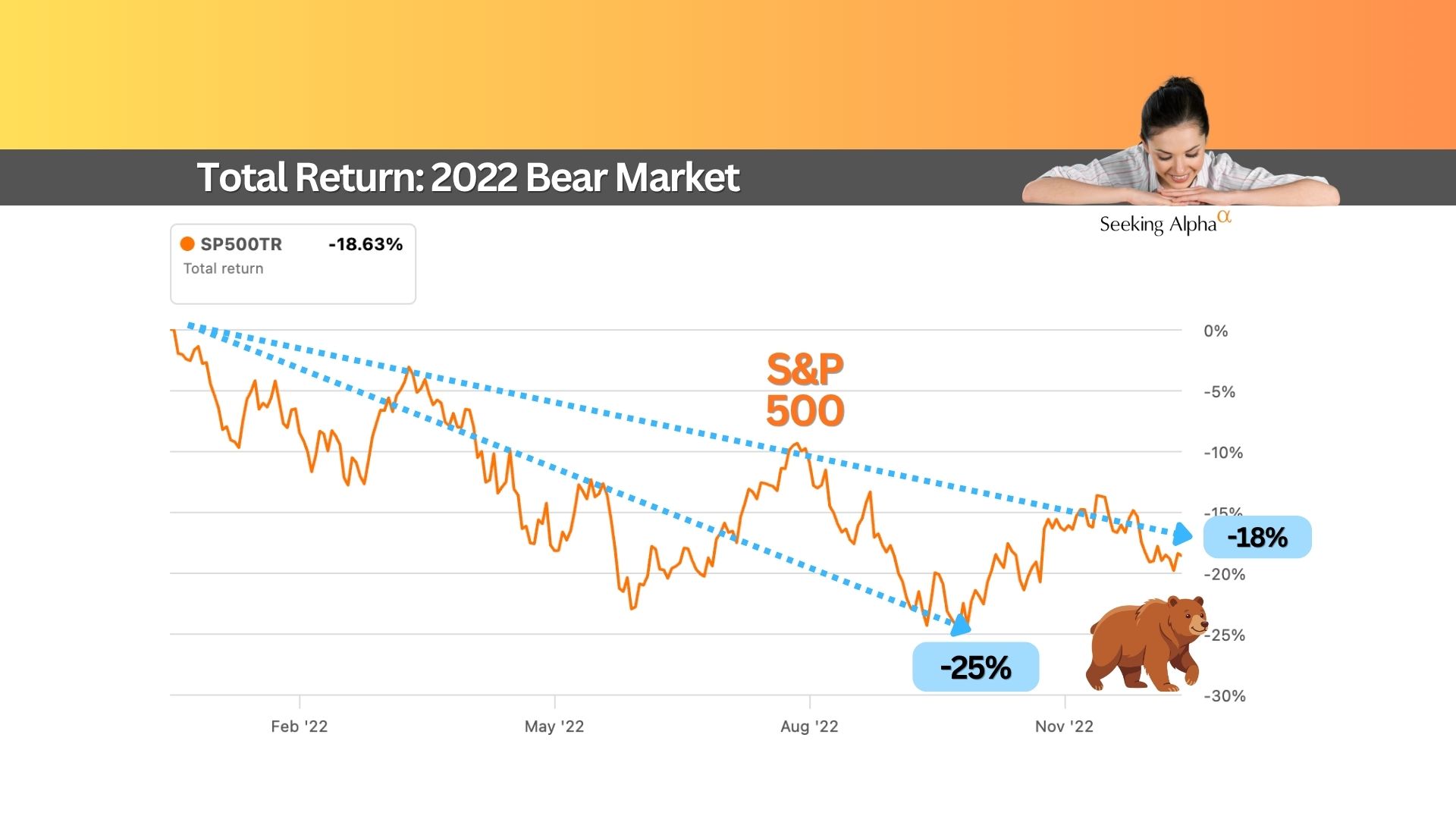
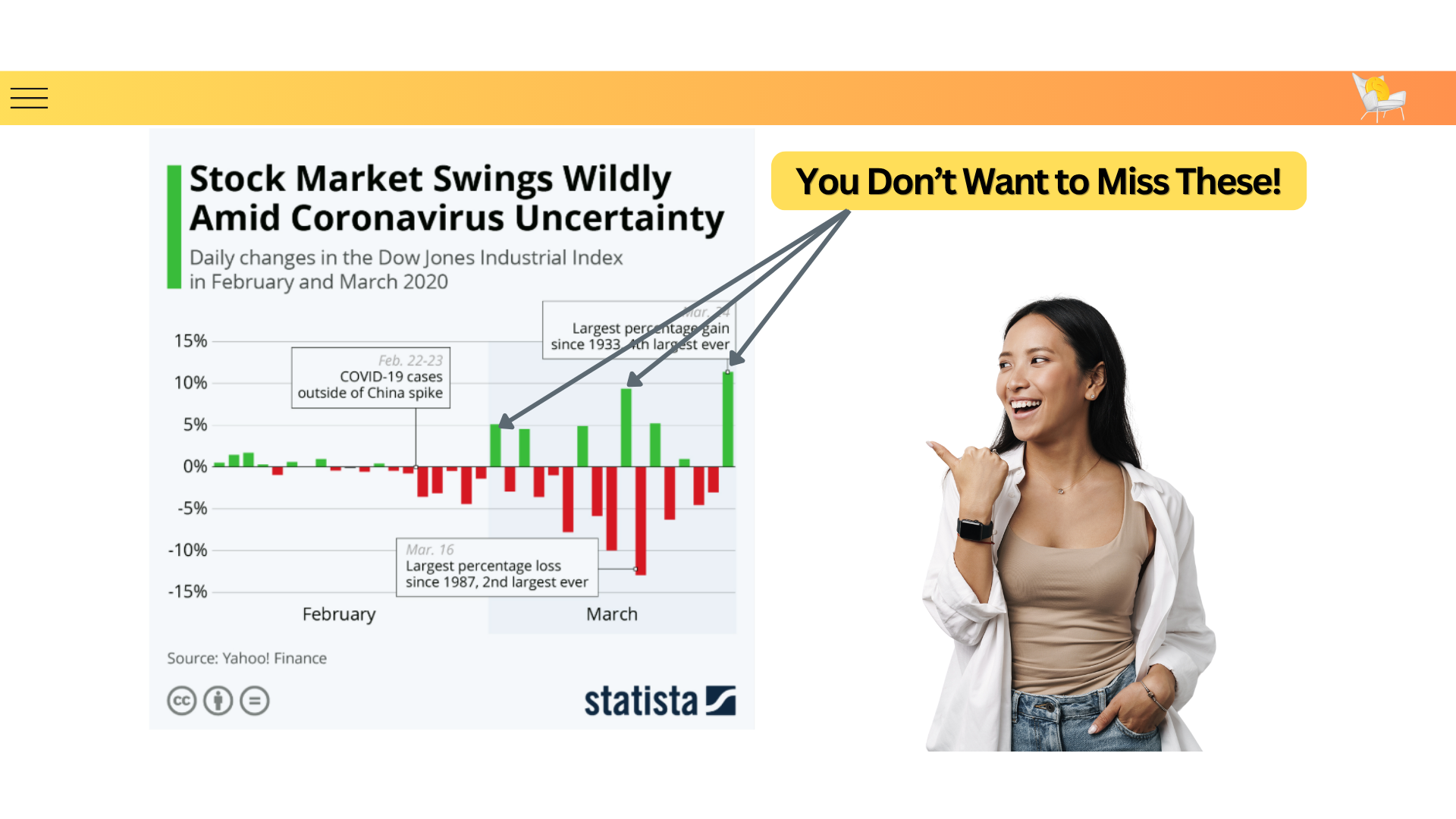
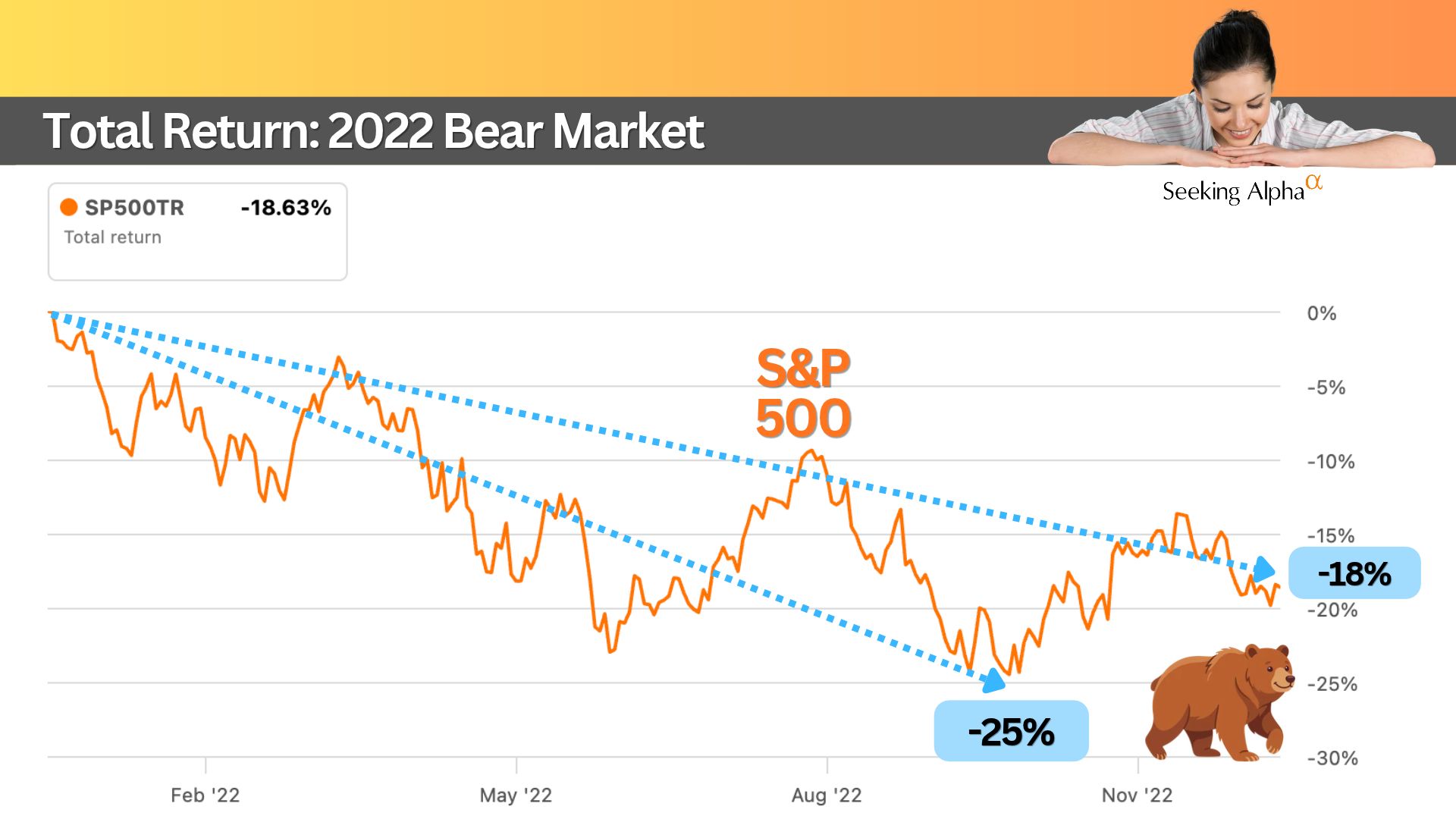
If the stock market falls 20% and stays down for a year, what happens to an income portfolio? That is one of the most important questions for retirees who prefer living off distributions instead of selling shares.
My portfolio currently yields about 11%, while I spend around 8%, leaving a cushion of roughly 3% for reinvestment. To stress test that setup, I looked at a bear-market scenario where the S&P 500 falls 20% and does not rebound quickly. The goal was simple: would the income still hold up well enough to support spending?
Starting With a Bear-Market Scenario
The first estimate came from ChatGPT Plus. Its initial assumption was that my portfolio would fall about 15%—less than the S&P 500—and that income would drop around 7%.
That sounded plausible at first, but some of the fund-level assumptions looked too pessimistic. For example, it assumed CEFS would cut income by 8%, even though 2022 offered a real-world comparison and CEFS did not actually reduce its regular payout during that difficult year.
What 2022 Suggests About Income
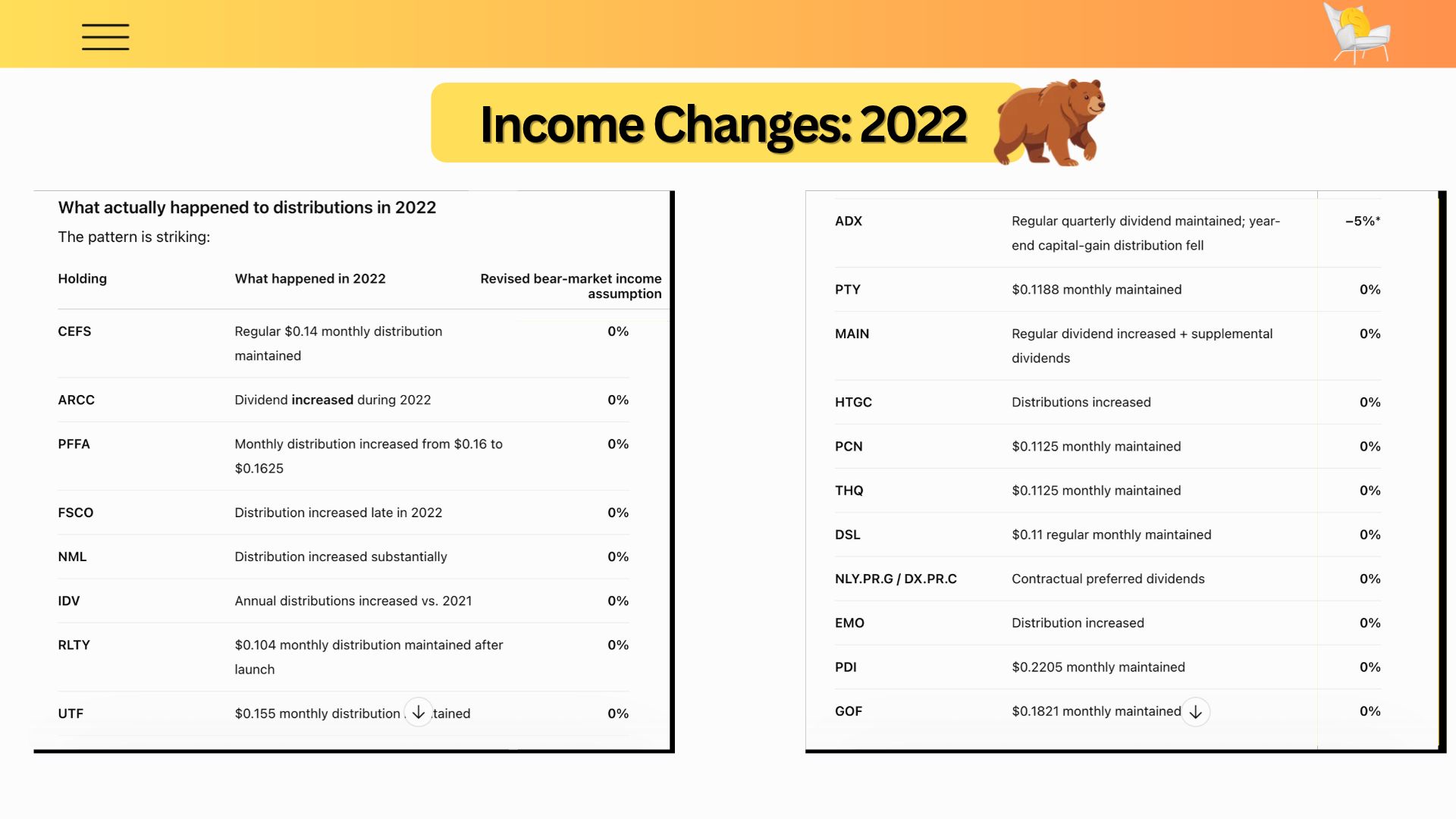
So I asked AI to incorporate actual 2022 distribution history for funds that already existed back then. That changed the picture materially.
A surprising number of holdings showed no income decline at all. CEFS maintained its regular monthly payout. ARCC, PFFA, MAIN, and several others also held up well. ADX looked weaker on the surface, but the difference was mainly due to a very large special distribution in the prior year, not a deterioration in its regular payout.
Covered Call Funds Are the Biggest Variable
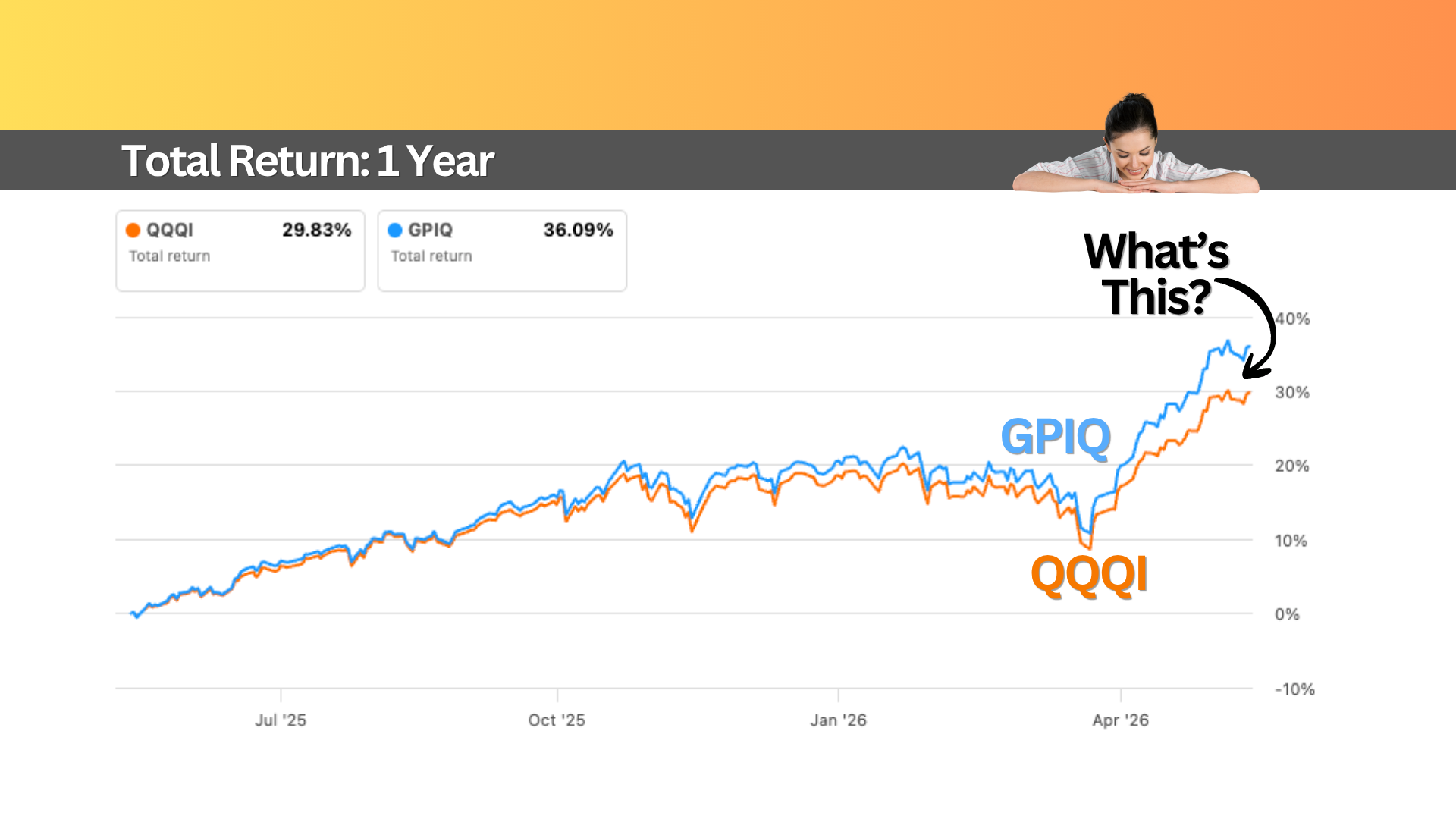
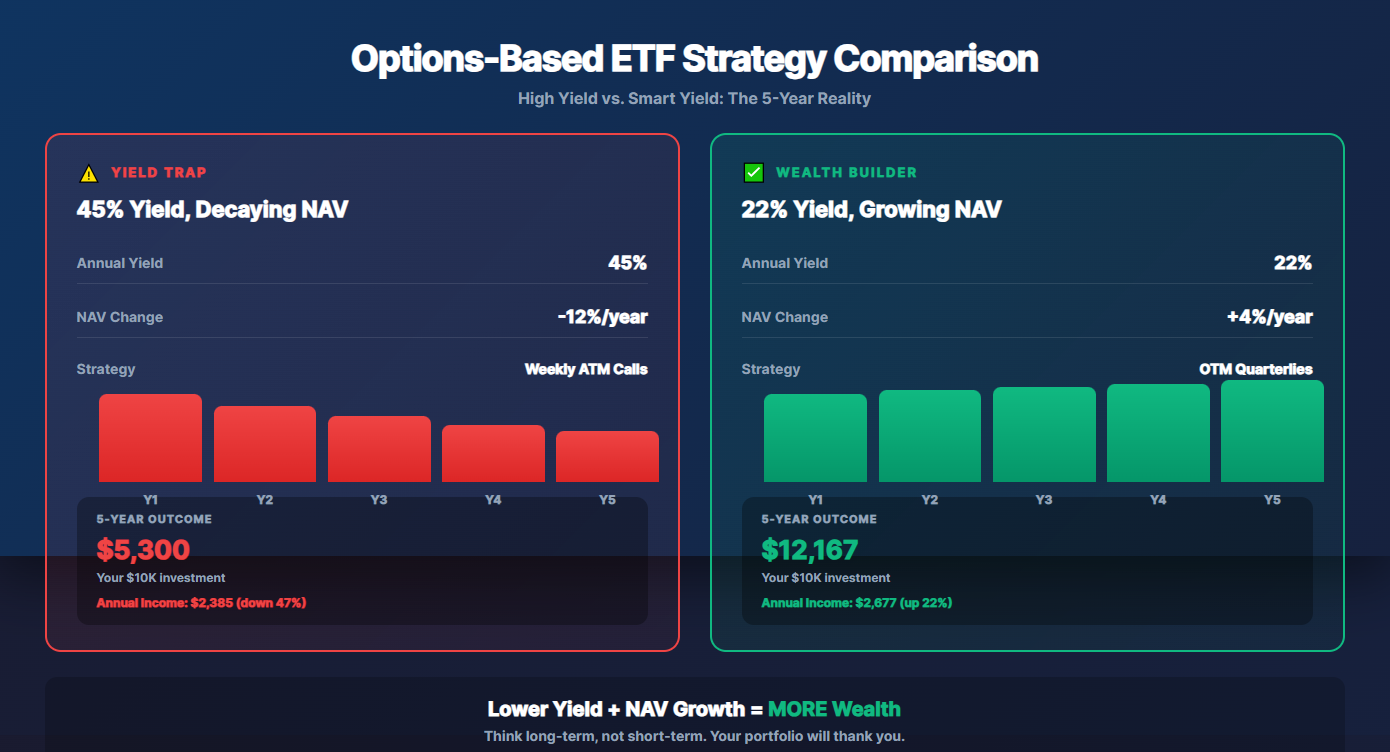
The main uncertainty came from covered call funds such as GPIX, GPIQ, and QDVO. Their distributions are linked partly to the value of the underlying portfolio, but also to option premiums. In a bear market, a smaller asset base can reduce income, yet higher volatility can push option premiums up.
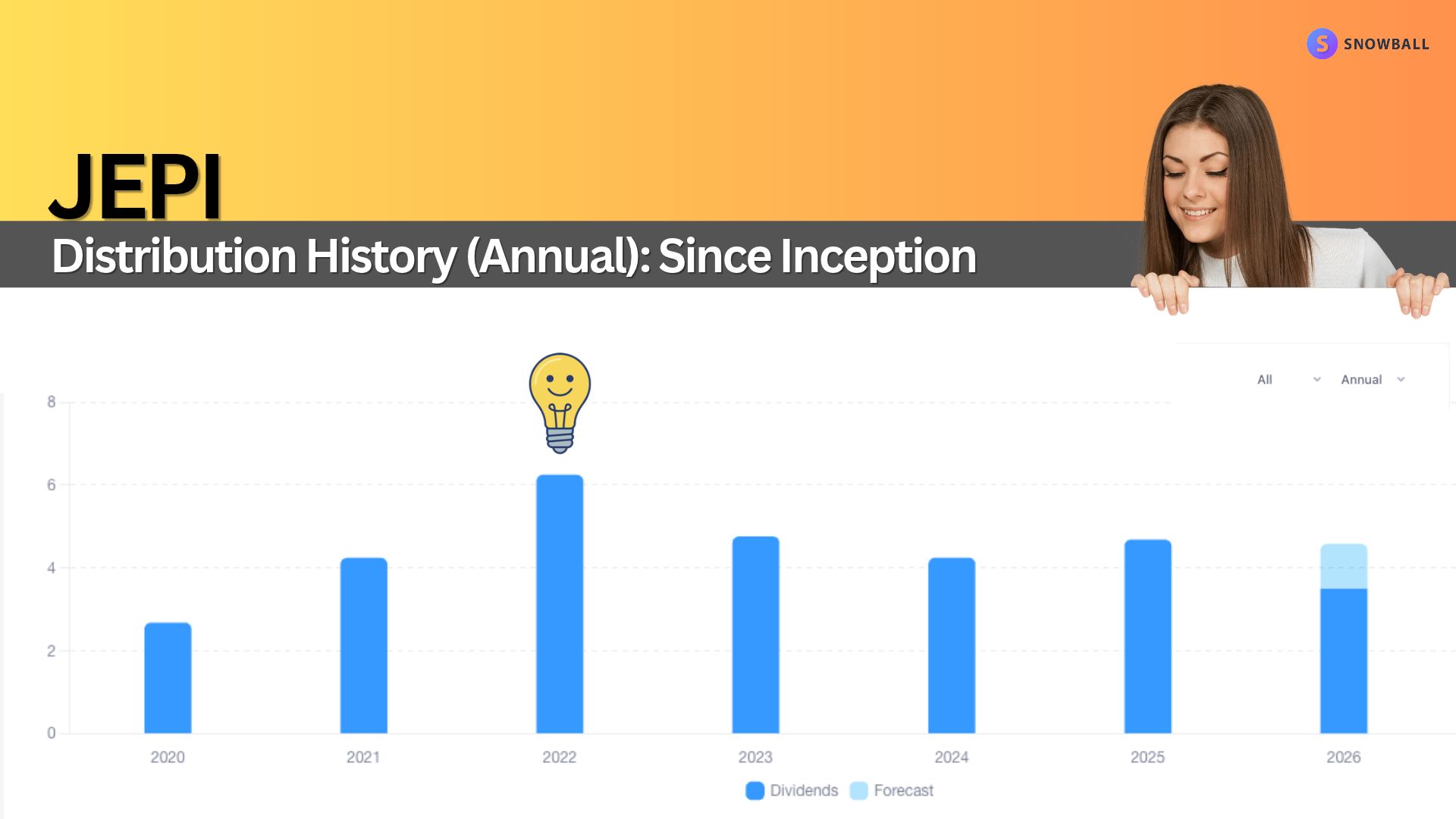
That is why the outcome is not straightforward. In fact, some older covered call funds did surprisingly well during 2022. JEPI is a good example: its annual distributions actually rose to a high during that bear market.
Diversifiers Matter Too
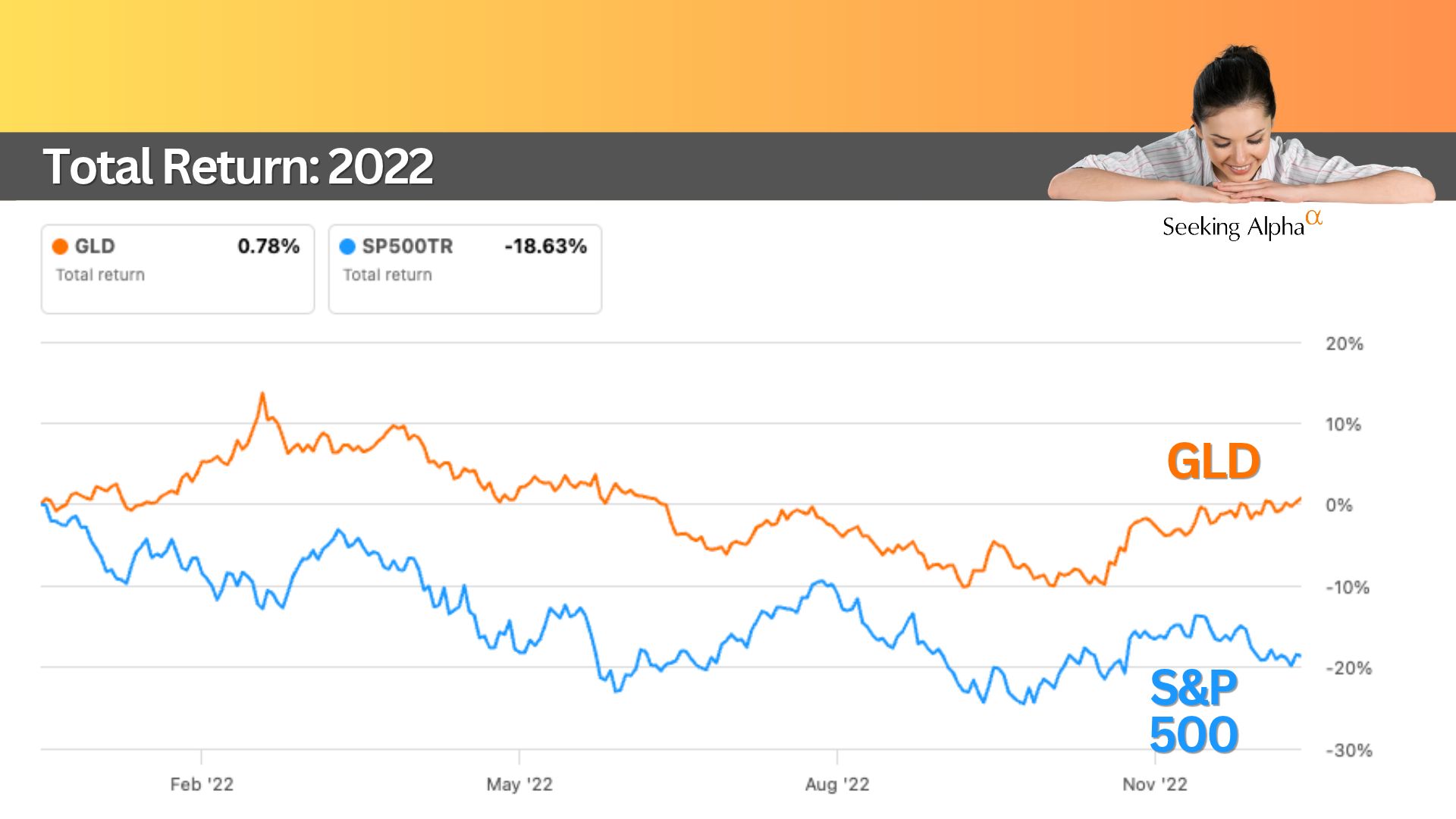
Gold also helped the stress test. While equities struggled in 2022, gold held up far better than the S&P 500. That supports the idea that holdings like KGLD can provide useful diversification in a downturn.
My Take
After adjusting the assumptions, the final estimate was much more encouraging: portfolio value still fell about 15%, but portfolio income dropped only around 3.6%. That means a yield of 11.16% became about 10.7% on the starting value. On a $1 million portfolio, annual income would fall from about $111,600 to roughly $107,600.
That is the key takeaway. In a bear market, portfolio value can decline sharply while income declines much less. For an income investor, that difference matters a lot. It means the lifestyle impact may be manageable, even when headline market losses look ugly.
To learn more, click here for the full Review.
Want to see how these funds fit into a real-world retirement strategy? I share my full portfolio and monthly updates for free, here: Armchair Insider. If you want to learn from other Income Investors (I do!), check out the Armchair Insider Lounge.