

 Stock Analysis
 General
 Library
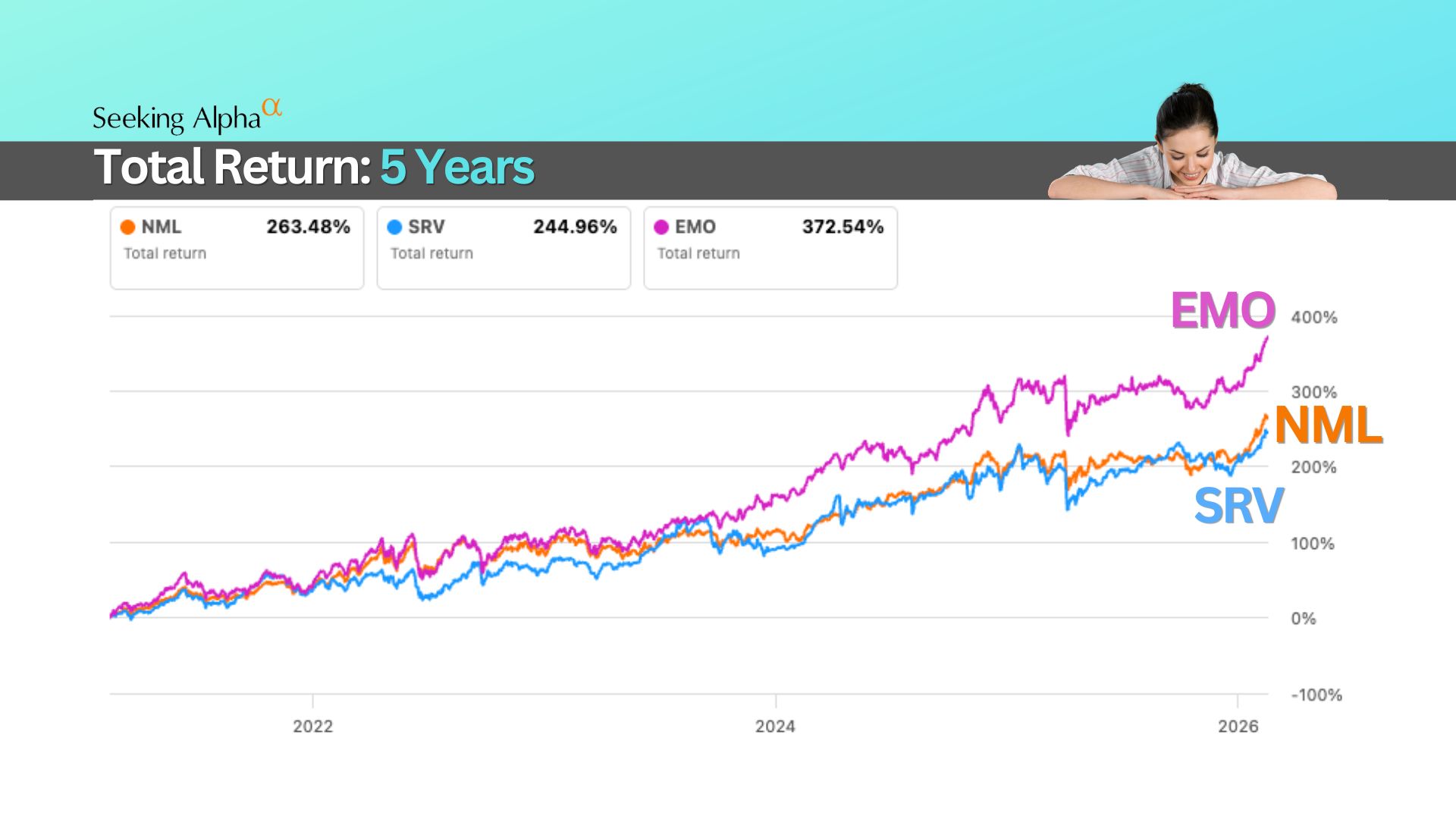
Midstream energy funds have quietly delivered strong returns over the past five years.
I bought NML in July 2025 when it was yielding about 8%, and since then the price has appreciated enough that the yield has dropped closer to 7%.
That’s a good problem to have.
But it also means I’m now looking to add another Midstream income fund, ideally one yielding more than 7%.
Why Midstreams Appeal to Income Investors
Midstream companies specialize in processing, transporting, and storing oil and natural gas.
Much of this infrastructure consists of large pipeline networks, which is why the sector is often simply called “pipelines.”
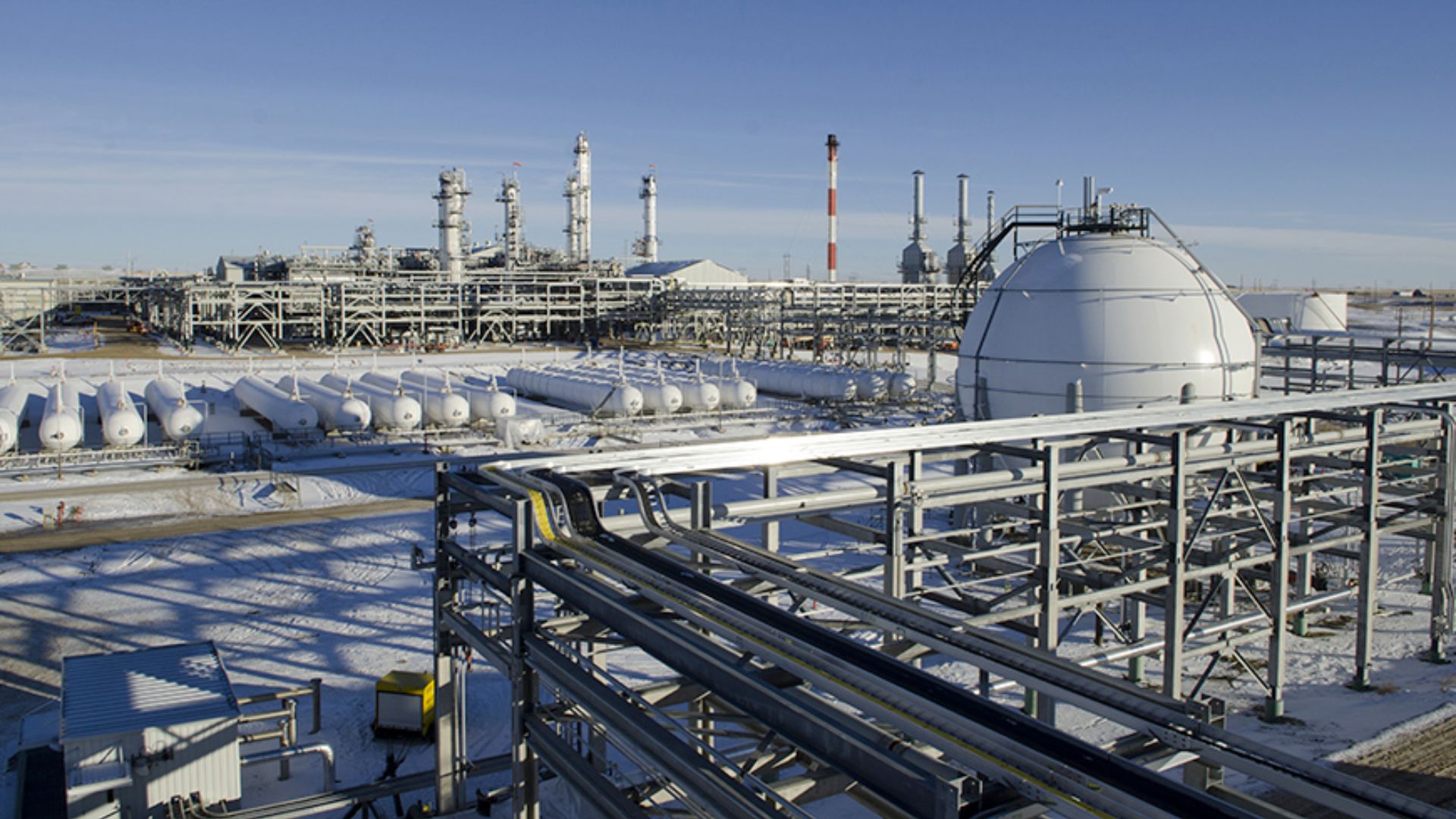
A useful way to think about Midstreams is like a toll road. They earn revenue by charging energy companies to move oil or gas through their infrastructure.
This means they can generate relatively stable cash flow regardless of whether energy prices are rising or falling.
One drawback for investors is that many Midstream companies are structured as Master Limited Partnerships (MLPs), which require filing a K-1 tax form.
Midstream funds provide a simpler solution. They offer diversification and exposure to the sector without the K-1 paperwork.
Narrowing Down the List
I began with a list of 10 Midstream funds.
Rather than analyzing every holding in every portfolio, I used a few shortcuts to narrow the list.
First, I eliminated the newest funds.
Three of them — EIPI, MDST, and MLPI — are less than two years old. They’ve had promising starts, but it’s much harder to evaluate performance over five years than over one.
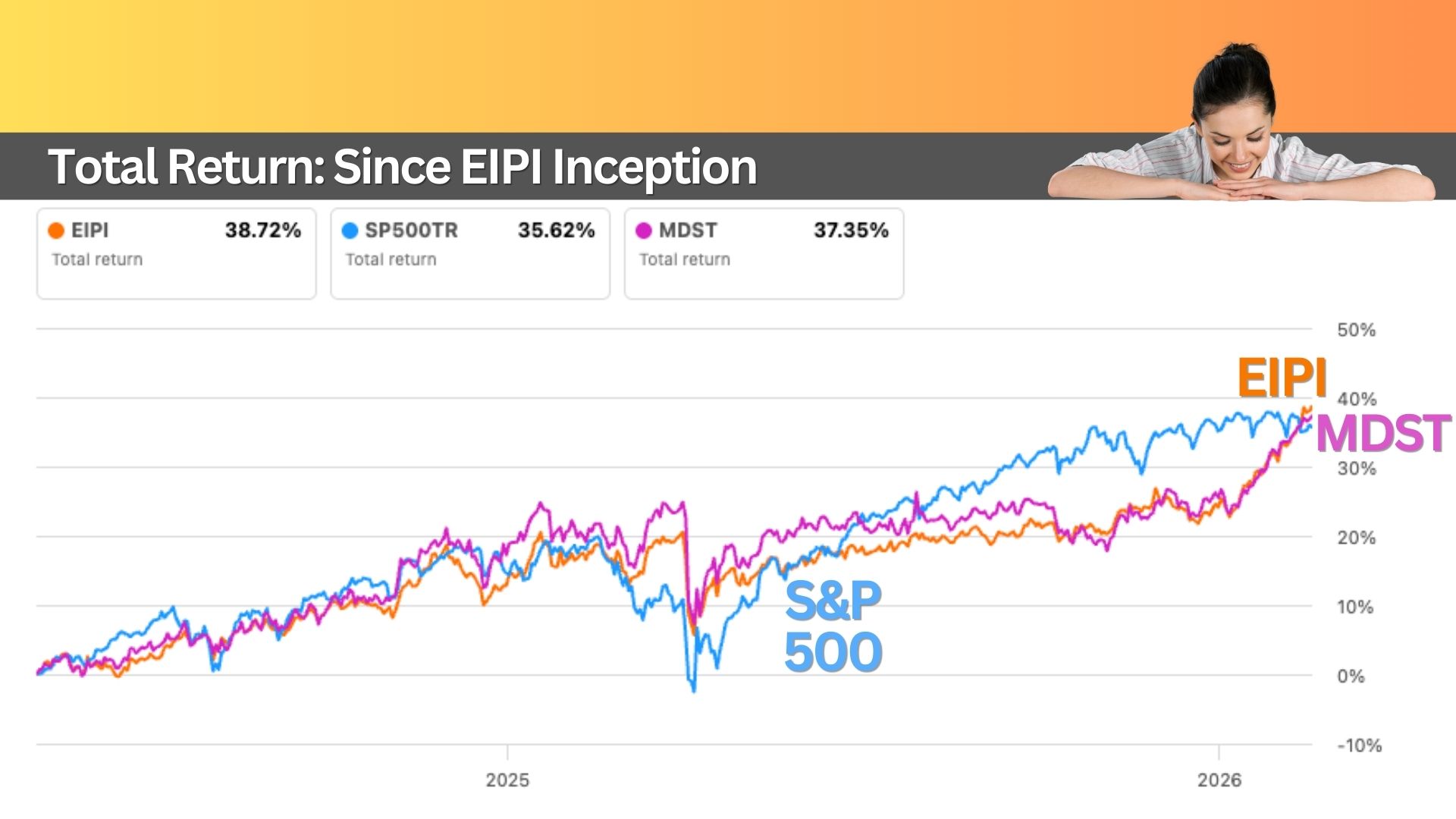
That leaves seven funds with longer histories.
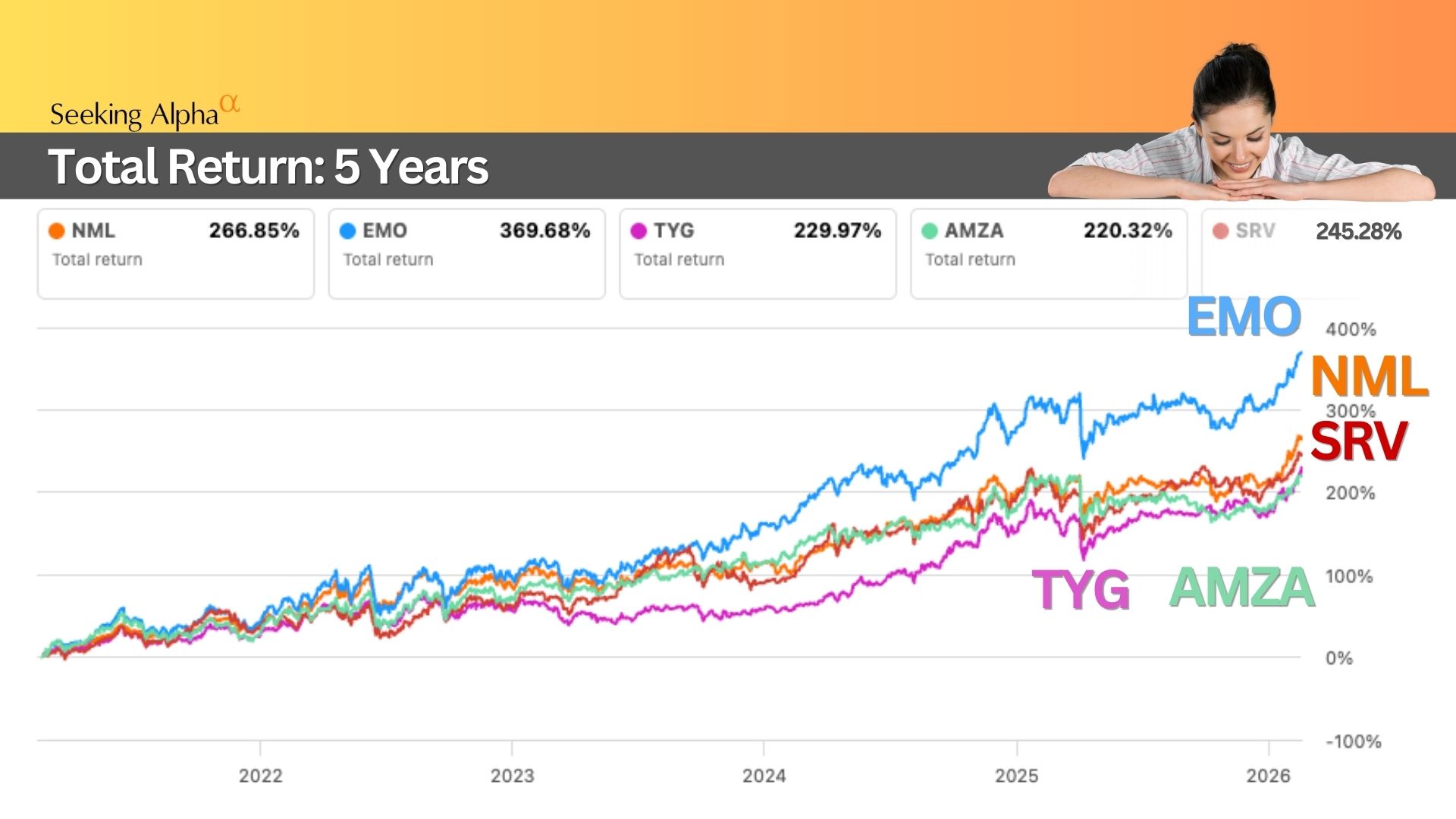
Next, I compared five-year total returns.
This timeframe matters because the Midstream sector went through a major transformation between 2014 and 2020, when the shale boom, OPEC price wars, and the pandemic created extreme volatility in energy markets.
The industry that exists today is very different from the one that existed a decade ago.
Two funds lagged the group significantly:
AMLP, despite being the largest Midstream ETF with more than $11 billion in assets.
And KYN, another large fund with more than $2 billion under management.
The Final Three
After removing the 2 lowest performers over the past 5 years, TYG and AMZA, three funds remained:
NML (which I already own)
SRV
EMO
Over the past five years, EMO has been the strongest performer of the group.
The next question was whether that performance has pushed the price too high.
One way to check is by comparing each fund’s price to its Net Asset Value (NAV).
Surprisingly, none of the three funds trade at a premium.
SRV trades at roughly a 4.5% discount to NAV.
NML trades around a 10.5% discount.
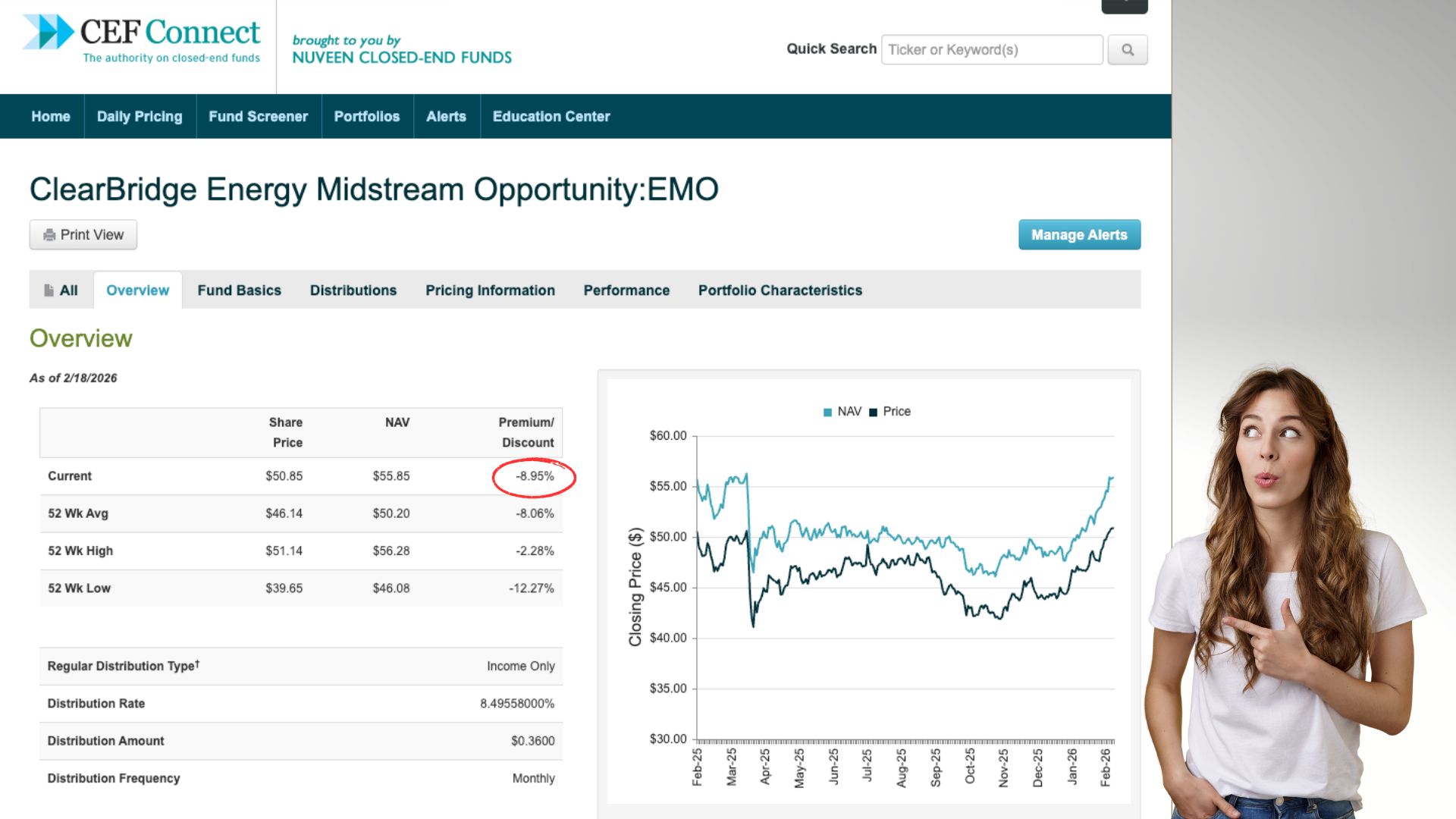
EMO trades at roughly a 9% discount.
Given its performance, I expected EMO to be the most expensive. Instead, it still trades below the value of its underlying assets.
The Decision
I plan to keep my position in NML.
But for a new Midstream investment, EMO stands out.
It has delivered the strongest recent performance, still trades at a discount to NAV, and adds diversification to my portfolio.
Another small bonus is that one of EMO’s largest holdings is MPLX, one of the most consistent operators in the Midstream sector.
My Take
Midstream funds are less risky today than they were a decade ago, but energy will always remain cyclical.
Even so, there are several reasons I still want exposure:
Midstreams are not highly correlated with the broader stock market. Global energy demand continues to grow. Midstream operators tend to be less volatile than upstream energy companies.
For income investors seeking strong yields and diversification, Midstreams remain an interesting part of the market.
To learn more, click here for the full Review.
Want to see how these funds fit into a real-world retirement strategy? I share my full portfolio and monthly updates for free, here: Armchair Insider. If you want to learn from other Income Investors (I do!), check out the Armchair Insider Lounge.