

 Stock Analysis
 General
 Library

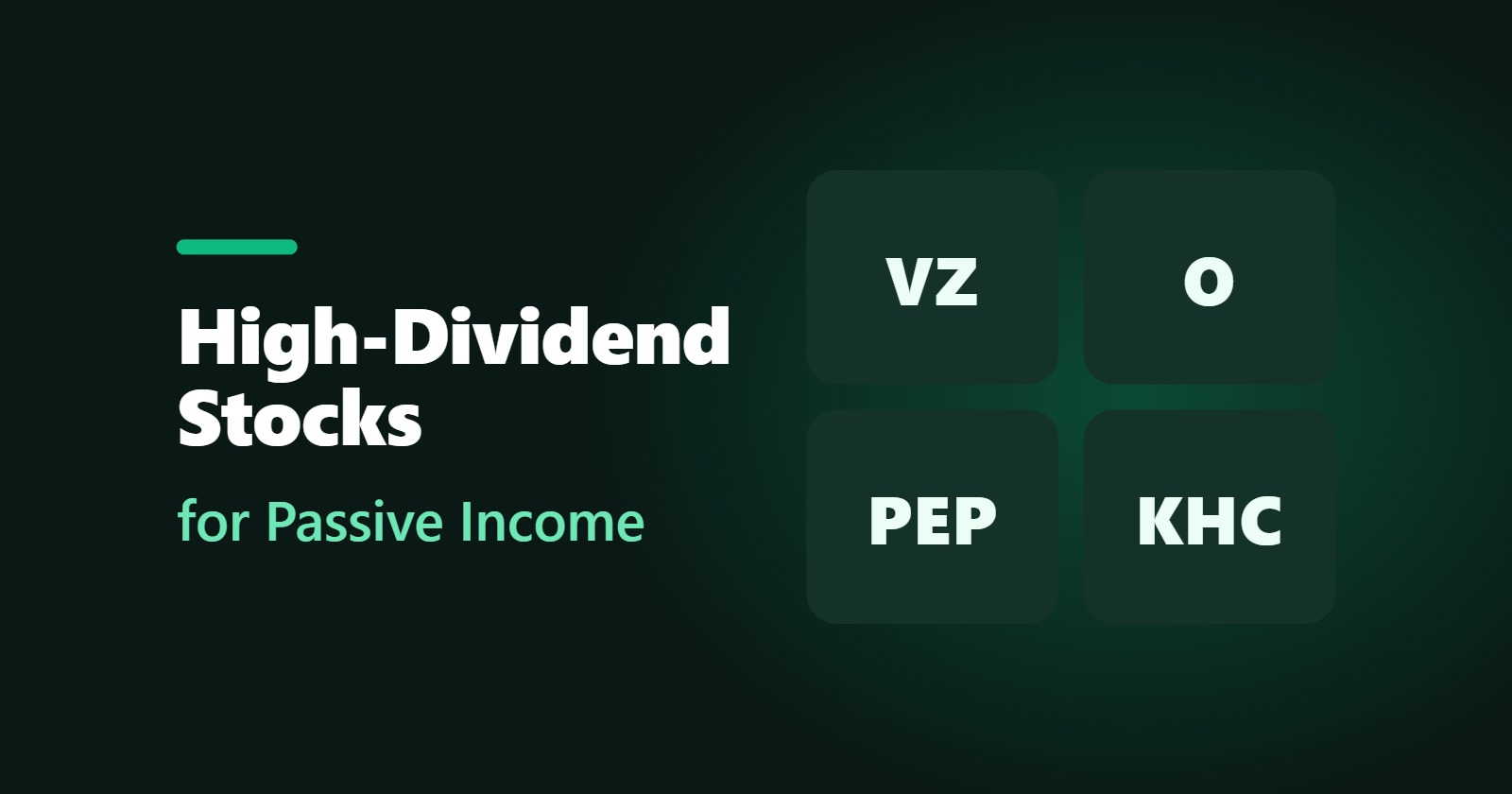
The 4%-plus yielders Morningstar's analysts recommend most often—and how well each payout is actually covered.
For many investors, the appeal of dividend stocks is simple: regular cash that arrives whether or not you sell anything. The higher the yield, the more income each dollar invested produces—at least on paper.
The catch is that a high yield is often the market's way of signaling doubt. A stock can yield 7% because the business is steady and undervalued, or because investors expect a dividend cut. So we started with stocks Morningstar's analysts have specifically recommended for income, then kept only those still yielding a lot today.
How We Built This List
We reviewed nine Morningstar articles on high-yield and income stocks published between 2024 and November 2026, including its annual lists of undervalued dividend stocks, its best-dividend-stock roundups, and its picks for passive income. Then we:
counted every time a US-listed stock appeared as a recommended pick;
kept only stocks with a current dividend yield of at least 4%, well above the yield of the S&P 500;
broke ties in favor of the stock featured most recently;
refreshed every data point and checked each company's latest dividend announcements.
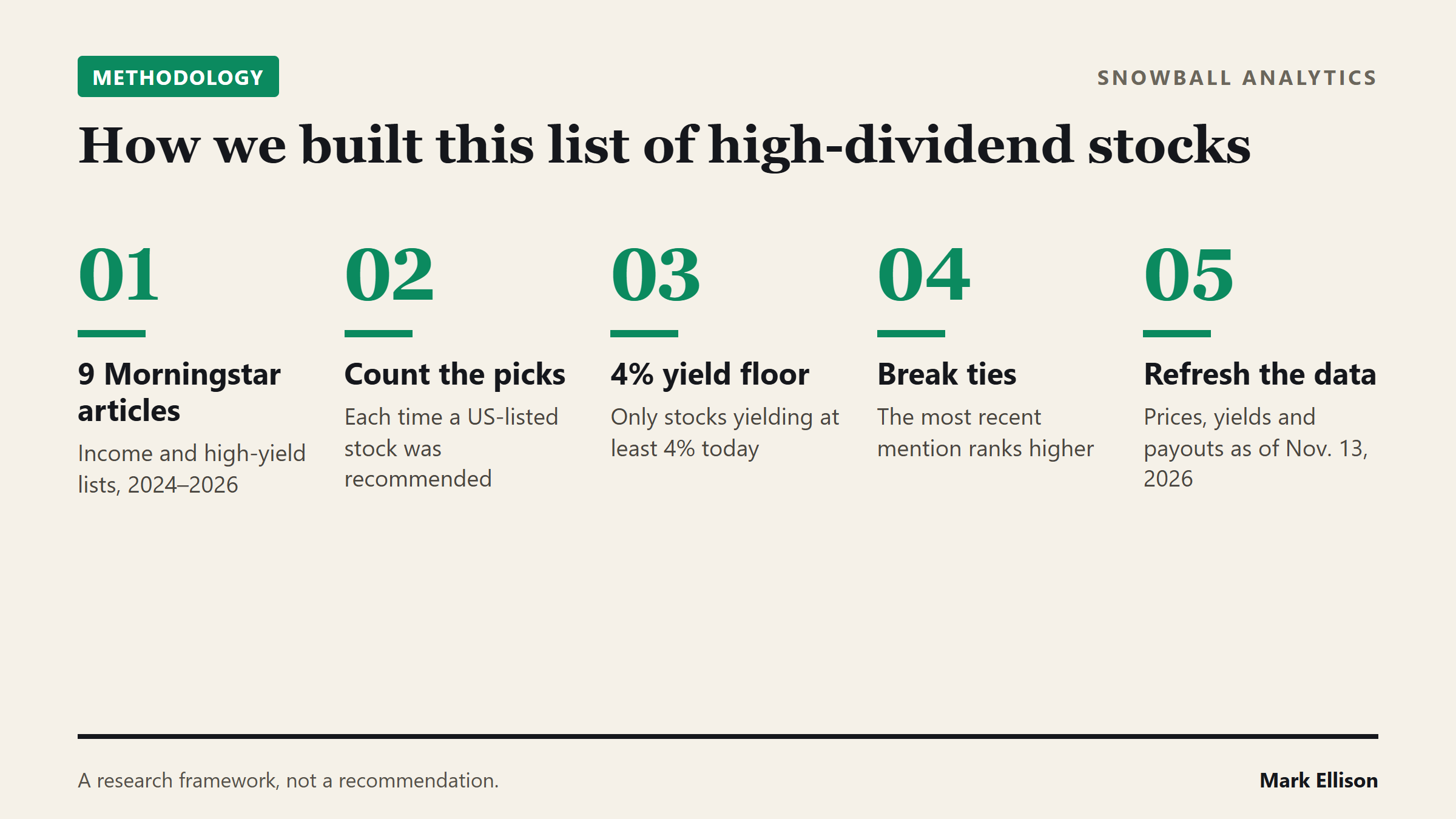
How the list was built. A research framework, not a recommendation.
Four of these names—Verizon, Realty Income, PepsiCo, and Clorox—also appear in our list of the 10 best dividend stocks for 2026. Here we look at them through a narrower lens: how much income they pay today and how secure that income looks.
Prices, yields, and payout ratios are as of November 13, 2026, from Snowball Analytics. Morningstar ratings and fair value estimates come from the most recent publicly available Morningstar article for each company, with the date noted. This list summarizes third-party research for educational purposes; it is not a recommendation to buy, sell, or hold any of these stocks.
Top High-Dividend Stocks for Passive Income
Verizon Communications (VZ)
Realty Income (O)
PepsiCo (PEP)
Kraft Heinz (KHC)
Healthpeak Properties (DOC)
Clorox (CLX)
Energy Transfer (ET)
Bristol-Myers Squibb (BMY)
FirstEnergy (FE)
Pfizer (PFE)
1. Verizon Communications (VZ)
Featured in Morningstar lists: 5 times
Dividend yield: 6.08%
Annual dividend per share: $2.83 (paid quarterly)
Payout ratio: about 71% of earnings
Dividend record: 20 consecutive years of increases
Morningstar view: Narrow moat; about 14% below its $54 fair value estimate (estimate as of Sept. 25, 2026)
Verizon is the most frequently recommended high-yield stock in Morningstar's coverage, appearing in every one of its annual undervalued-dividend-stock lists we reviewed. Morningstar chief US market strategist David Sekera has argued that the US wireless market is settling into a three-player oligopoly, which should ease price competition and support margins over time.
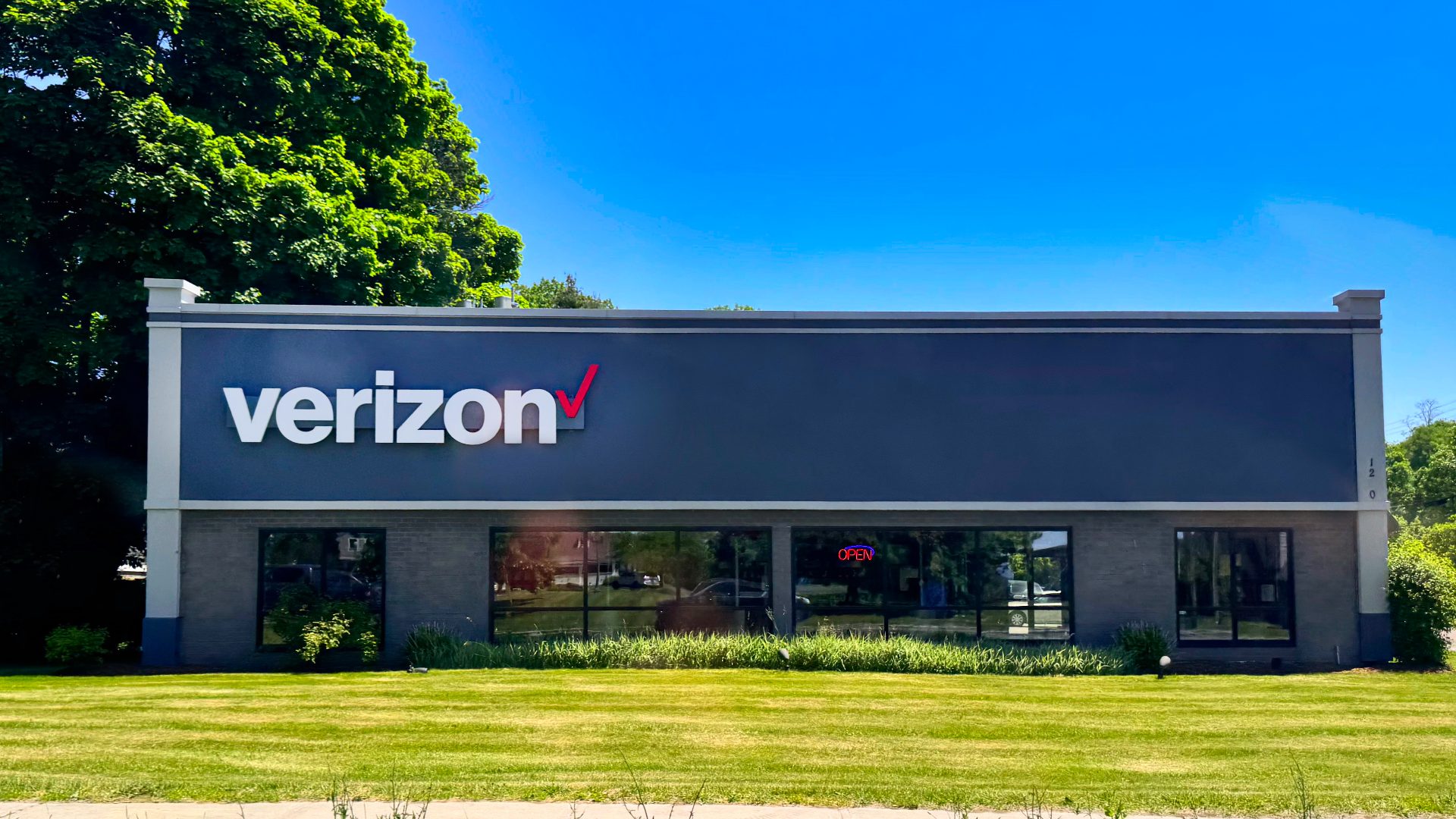
A Verizon retail store in Burlington, Vermont. Photo: Harrison Keely / Wikimedia Commons, CC BY 4.0
The latest numbers support the income case. In the third quarter, Verizon added 406,000 postpaid phone subscribers and raised its full-year targets for earnings and free cash flow. Through the first nine months of 2026, it returned $12.8 billion to shareholders, $8.8 billion of it in dividends. In January, it raised its quarterly dividend to $0.7075, its 20th consecutive annual increase. The main thing to watch is debt, which remains high.
See Verizon's dividend history and payout data on Snowball Analytics →
2. Realty Income (O)
Featured in Morningstar lists: 4 times
Dividend yield: 5.54%
Annual dividend per share: $3.29 (paid monthly)
Payout ratio: about 73% of earnings
Dividend record: 677 consecutive monthly dividends; 137 increases since its 1994 NYSE listing
Morningstar view: About 18% below its $72 fair value estimate (estimate as of July 24, 2026)
Realty Income is built around regular income: the REIT pays every month, and on November 10 it announced its 137th dividend increase, lifting the monthly payout to $0.274 per share. Its tenants—grocery, convenience, and dollar stores among them—sign long-term net leases that make rental income unusually predictable. In Morningstar senior analyst Kevin Brown's view, that makes its dividend one of the more stable sources of income for investors, though like any dividend it is not guaranteed.
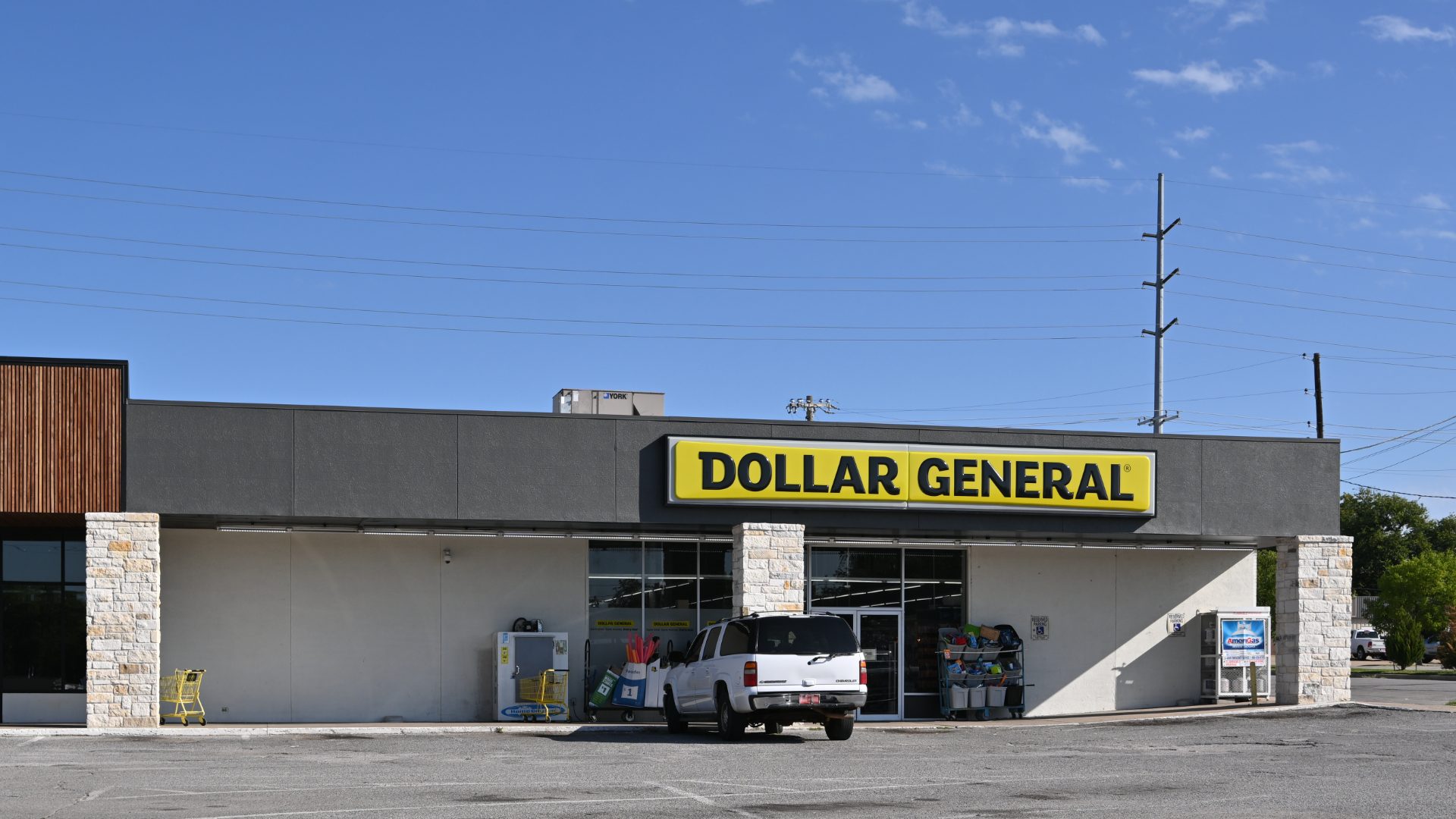
Dollar General, one of Realty Income's largest tenants. Photo: G. Edward Johnson / Wikimedia Commons, CC BY 4.0
The trade-off is slow growth, around 3% a year over the past five years. Third-quarter adjusted funds from operations, the key cash-flow measure for REITs, rose 3.7% to $1.12 per share. REIT dividends are generally taxed as ordinary income rather than at the lower qualified-dividend rate.
See Realty Income's dividend history and payout data on Snowball Analytics →
3. PepsiCo (PEP)
Featured in Morningstar lists: 4 times
Dividend yield: 4.16%
Annual dividend per share: $5.92 (paid quarterly)
Payout ratio: about 89% of trailing earnings
Dividend record: 54 consecutive years of increases (dividend king)
Morningstar view: Wide moat; about 16% below its $169 fair value estimate (estimate as of Sept. 25, 2026)
PepsiCo offers something rare among high-yield stocks: a dividend that has also grown at a healthy clip, about 6.5% a year over the past five years. Its 54-year record of increases makes it one of the longest-running dividend growers in the market, built on brands like Pepsi, Lay's, Doritos, and Gatorade.
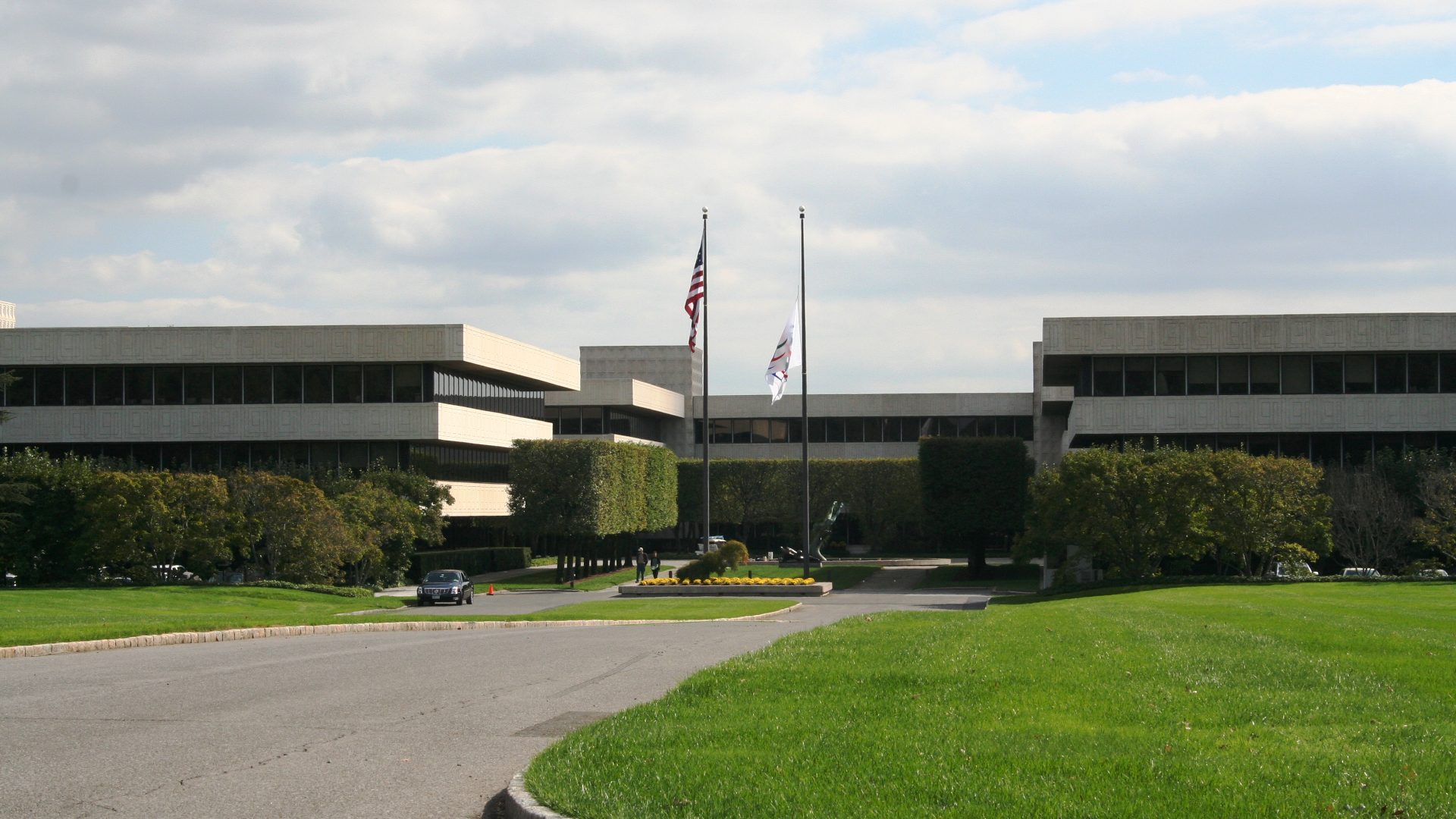
PepsiCo headquarters in Purchase, New York. Photo: Peter Bond from Philadelphia, USA / Wikimedia Commons, CC BY-SA 2.0
Its yield is high partly because the stock has struggled. Shoppers have pulled back on snacks and soda, and in October the company cut its 2026 earnings-growth outlook to 2.5%–3.5%. The payout ratio on trailing earnings is now close to 90%, though Morningstar senior analyst Kristoffer Inton expects it to settle in the low 70s over the next decade as earnings recover.
See PepsiCo's dividend history and payout data on Snowball Analytics →
4. Kraft Heinz (KHC)
Featured in Morningstar lists: 3 times
Dividend yield: 6.54%
Annual dividend per share: $1.60 (paid quarterly)
Dividend record: Unchanged at $0.40 per quarter since 2019
Morningstar view: Narrow moat; 5 stars and about 40% below fair value (as of July 16, 2026)
Kraft Heinz is the highest-yielding traditional stock on our list and was among Morningstar's most undervalued picks in mid-2026. On Morningstar's July podcast, Sekera said the firm was "very confident" the company would not cut its dividend anytime soon, and management has named sustaining the dividend a capital-allocation priority.
Heinz Tomato Ketchup, one of Kraft Heinz's best-known brands. Photo: Wikimedia Commons (public domain)
Income investors should know what they're getting, though. The dividend hasn't grown since it was cut by 36% in 2019, and the business is still shrinking: third-quarter organic sales fell 1.1%. Plans announced in 2025 to split the company in two have been put on hold by new CEO Steve Cahillane, who is redirecting money into a $600 million investment plan. Through the first nine months of 2026, Kraft Heinz generated $2.4 billion in free cash flow and paid $1.4 billion in dividends, so the payout is currently covered by cash.
See Kraft Heinz's dividend history and payout data on Snowball Analytics →
5. Healthpeak Properties (DOC)
Featured in Morningstar lists: 3 times
Dividend yield: 6.06%
Annual dividend per share: $1.22 (paid monthly)
Payout: about 69% of 2026 funds from operations (company guidance midpoint)
Dividend record: Unchanged in 2025 and 2026
Morningstar view: No moat; 4 stars and about 16% below fair value (as of July 16, 2026)
Healthpeak is a healthcare REIT that owns outpatient medical buildings, life-science labs, and senior housing. Like Realty Income, it pays monthly, which makes it easy to fit into an income budget. Sekera has favored REITs whose tenants are more defensive, and healthcare demand tends to hold up regardless of the economy.
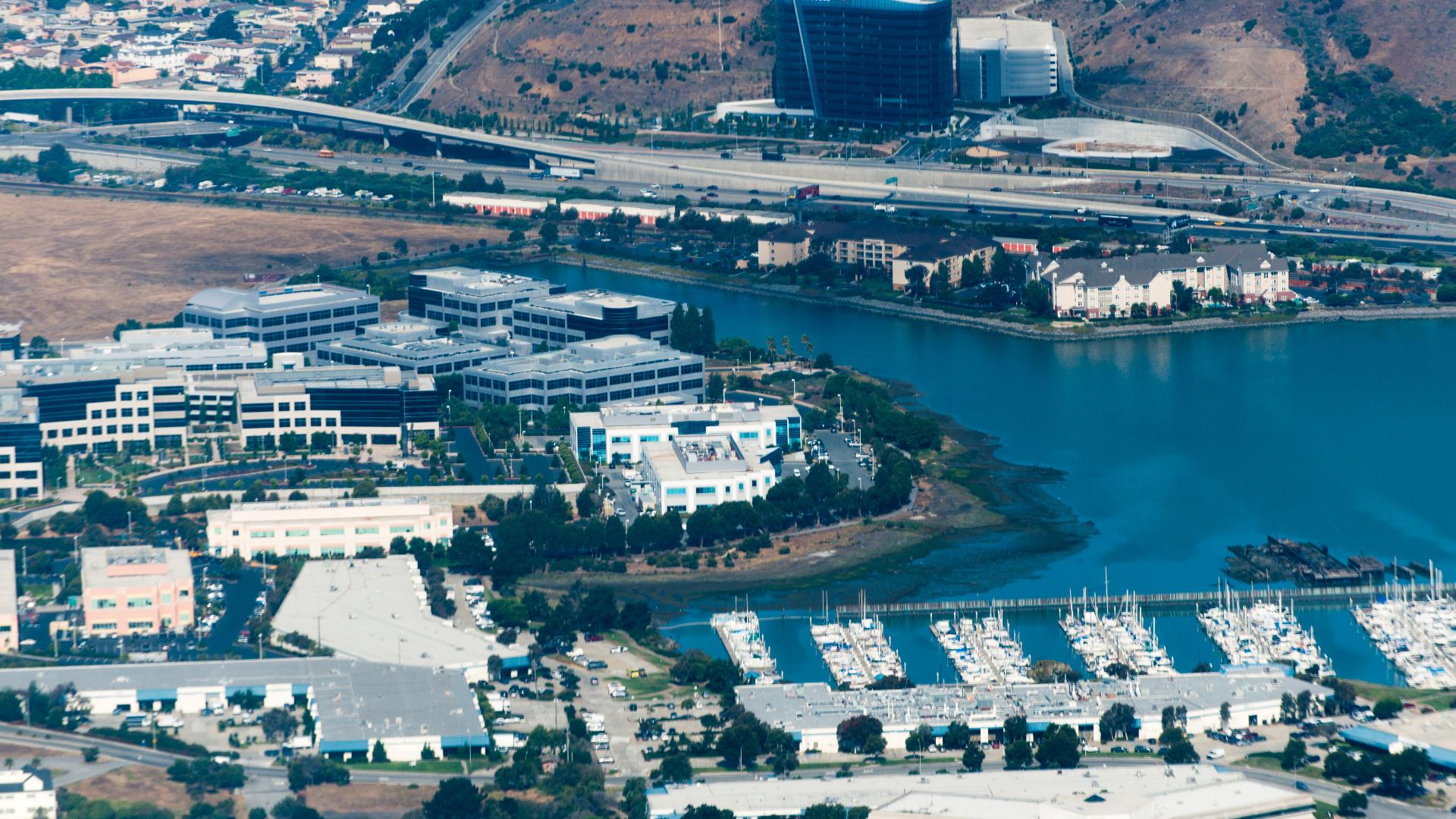
Oyster Point in South San Francisco, home to Healthpeak life-science campuses. Photo: Wikimedia Commons (public domain)
Healthpeak has been reshaping itself in 2026. In March, it took its senior-housing business public as a separate REIT, Janus Living, while keeping a majority stake, and in July it sold a 49% interest in an outpatient medical portfolio to Brookfield. In November, it raised its full-year guidance for funds from operations. The dividend itself has been flat, so investors here are being paid for yield rather than growth.
See Healthpeak's dividend history and payout data on Snowball Analytics →
6. Clorox (CLX)
Featured in Morningstar lists: 3 times
Dividend yield: 4.62%
Annual dividend per share: $5.00 (paid quarterly)
Payout ratio: about 89% of trailing earnings
Dividend record: Dividend aristocrat; raised to $1.25 per quarter in July 2026
Morningstar view: Wide moat; about 30% below its $154 fair value estimate (estimate as of Sept. 10, 2026)
Clorox is the most deeply discounted name on this list relative to Morningstar's fair value estimate, and its yield reflects years of setbacks: post-pandemic volume declines, cost inflation, a 2023 cyberattack, and a difficult systems overhaul. Morningstar director Erin Lash expects mid-single-digit dividend growth over the next decade, with the payout ratio easing toward 60%.
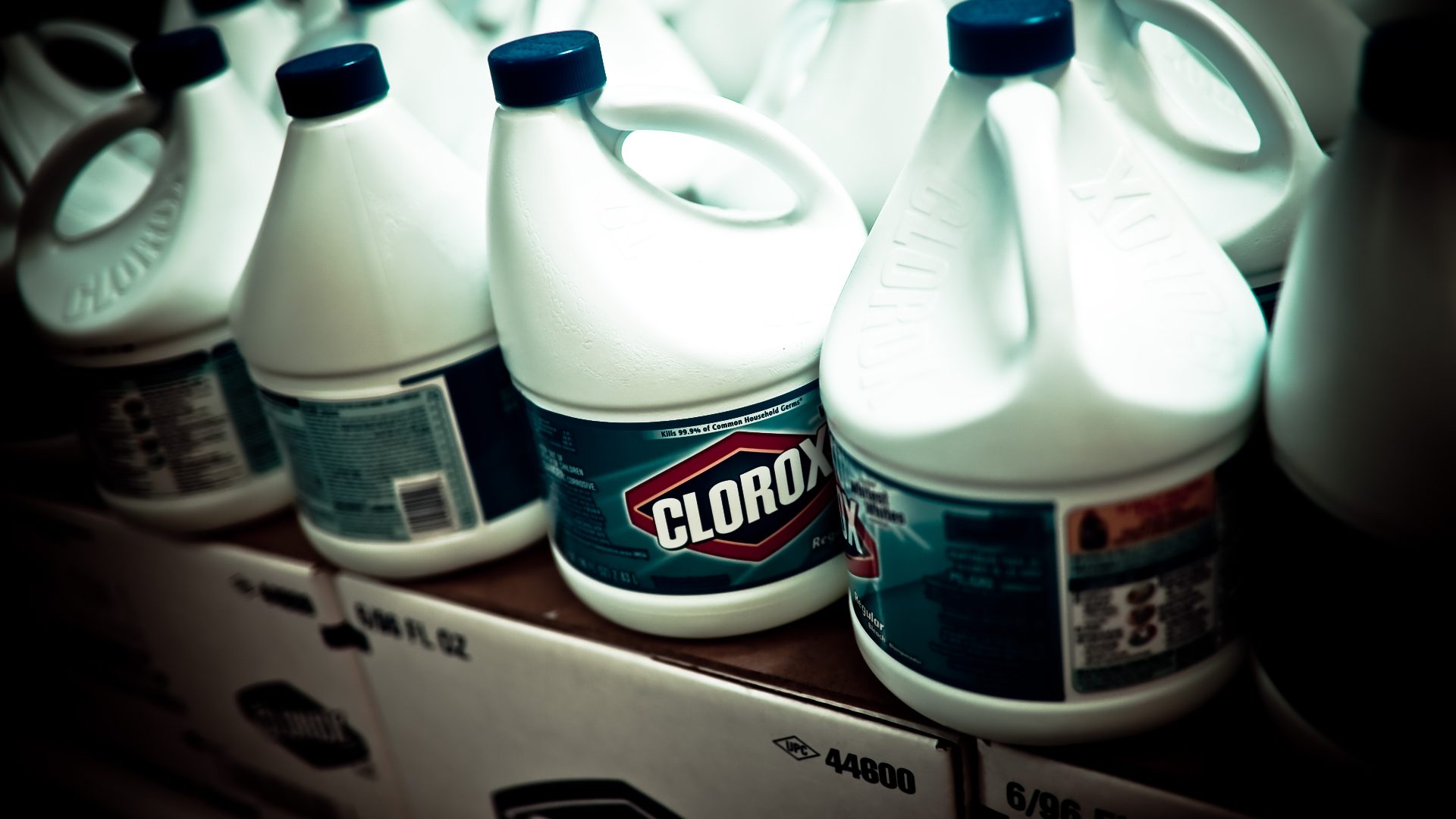
Clorox bleach on a store shelf. Photo: Vox Efx from Baltimore, United States / Wikimedia Commons, CC BY 2.0
The company's latest quarter showed sales up 33%, helped by its acquisition of Purell maker GOJO Industries, but management now expects full-year earnings closer to the low end of its range because of higher inflation. July's dividend raise was a modest 0.8%. A new CEO, Fabian Garcia, takes over in January 2027.
See Clorox's dividend history and payout data on Snowball Analytics →
7. Energy Transfer (ET)
Featured in Morningstar lists: 2 times
Distribution yield: 7.06%
Annual distribution per unit: $1.37 (paid quarterly)
Distribution coverage: about 2.1 times in the third quarter (distributable cash flow vs. distributions)
Distribution record: 20 consecutive quarterly increases
Morningstar view: No moat; 4 stars and about 17% below fair value (as of July 16, 2026)
Energy Transfer has the highest yield on our list. It's a pipeline operator that earns fees on the oil, natural gas, and natural gas liquids moving through its network. As Sekera has pointed out, those fees depend more on volumes than on commodity prices, which makes its cash flow steadier than many investors assume.
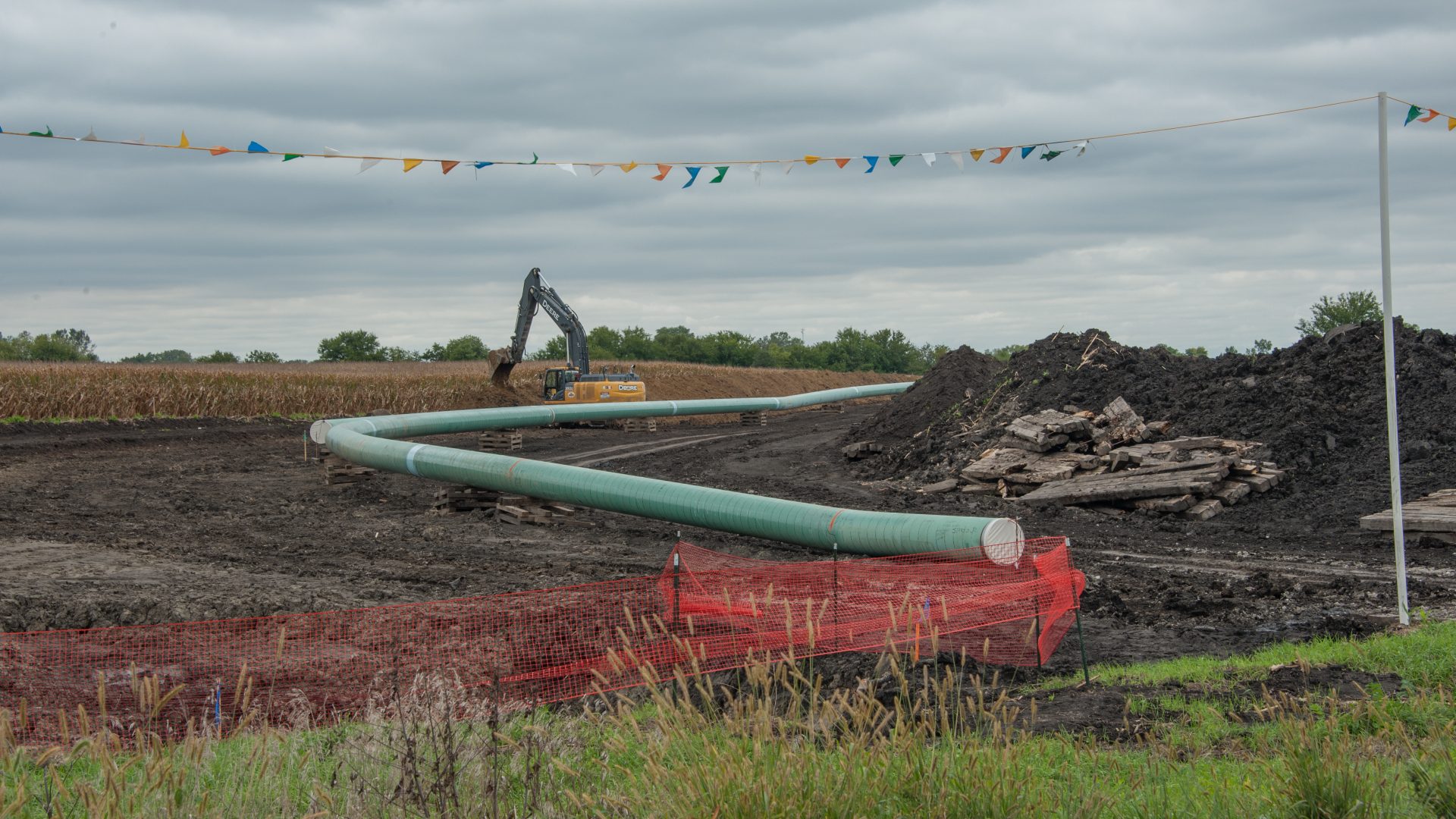
Construction of the Dakota Access Pipeline, operated by Energy Transfer, in central Iowa. Photo: Carl Wycoff from Nevada, USA / Wikimedia Commons, CC BY 2.0
The numbers are strong right now. Adjusted EBITDA rose 31% in the third quarter, the company raised its full-year outlook, and distributable cash flow covered the distribution roughly twice over. Management targets 3%–5% annual distribution growth. Two important caveats: Energy Transfer is a master limited partnership, so investors receive a Schedule K-1 tax form instead of a 1099, which can make tax season more complicated. And it halved its distribution in 2020, so its current growth streak began only in 2021.
See Energy Transfer's distribution history on Snowball Analytics →
8. Bristol-Myers Squibb (BMY)
Featured in Morningstar lists: 2 times
Dividend yield: 4.04%
Annual dividend per share: $2.52 (paid quarterly)
Payout ratio: about 55% of trailing earnings; under 40% of 2026 adjusted earnings guidance
Dividend record: 17 consecutive years of increases; dividends paid for 94 years
Morningstar view: Wide moat; analysts consider the dividend well covered for the next several years (as of Nov. 2, 2026)
Bristol-Myers Squibb has one of the most comfortable payout ratios on this list, and it's the most recent addition to Morningstar's dividend picks: the firm named it one of the best dividend stocks to own in early November. Morningstar credits its wide moat to patent-protected drugs, an entrenched salesforce, and scale.
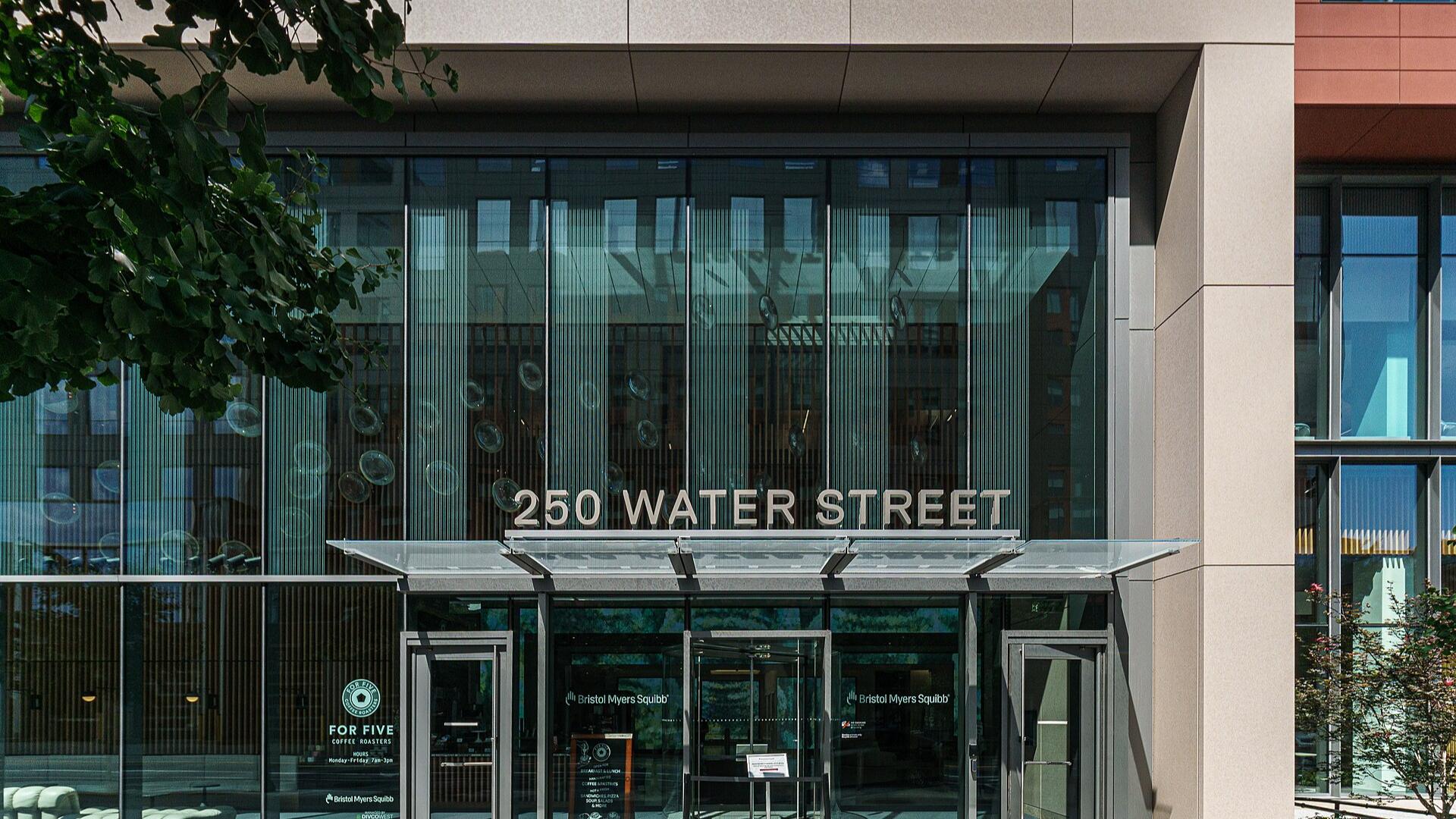
Bristol Myers Squibb at 250 Water Street, Cambridge, Massachusetts. Photo: Kenneth C. Zirkel / Wikimedia Commons, CC BY-SA 4.0
The challenge is the patent cliff. Sales of older drugs are falling quickly as generics arrive—Revlimid revenue dropped 47% in the third quarter—while newer products grew 12%. Morningstar expects those newer therapies to soften the blow. Dividend growth has been slow, with the most recent increase just 1.6%, but the company has now raised its payout for 17 straight years.
See Bristol-Myers Squibb's dividend history and payout data on Snowball Analytics →
9. FirstEnergy (FE)
Featured in Morningstar lists: 2 times
Dividend yield: 4.00%
Annual dividend per share: $1.86 (paid quarterly)
Payout ratio: about 68% of 2026 core earnings guidance
Dividend record: Raised 4.5% in February 2026
Morningstar view: Narrow moat; about 5% below its $49 fair value estimate (estimate as of May 2026)
FirstEnergy is a regulated electric utility serving customers across Ohio, Pennsylvania, New Jersey, and neighboring states. Because regulators set its rates, earnings are relatively predictable. The company targets paying out 60%–70% of core earnings, and Morningstar senior analyst Andrew Bischof expects the payout to sit at the lower end of that range as FirstEnergy retains more cash to fund growth.

FirstEnergy's headquarters tower in Akron, Ohio. Photo: Wikimedia Commons (public domain)
That growth is substantial: FirstEnergy plans to invest $36 billion in its grid from 2026 to 2030 and expects core earnings to grow near the top of its 6%–8% annual target. The risks are regulatory—several rate cases are pending, and affordability is under scrutiny in some states. At about 4%, it has the lowest yield on this list and sits right at our cutoff.
See FirstEnergy's dividend history and payout data on Snowball Analytics →
10. Pfizer (PFE)
Featured in Morningstar lists: 1 time (tie broken by most recent mention)
Dividend yield: 5.97%
Annual dividend per share: $1.72 (paid quarterly)
Payout: above 100% of 2026 adjusted earnings guidance, but covered by free cash flow
Dividend record: 352 consecutive quarterly dividends; unchanged at $0.43 since early 2025
Morningstar view: Narrow moat; 4 stars and about 10% below its $32 fair value estimate (estimate as of Sept. 25, 2026)
Pfizer rounds out our list. Morningstar director Karen Andersen thinks the company is well positioned to return to growth after near-term headwinds and notes its very strong financial position. Pfizer has said it is committed to maintaining and, over the longer term, growing its dividend.

The Spiral in New York City, home of Pfizer's headquarters. Photo: Kidfly182 / Wikimedia Commons, CC BY 4.0
This is also the payout that requires the most scrutiny. Several major drugs, including Eliquis, Ibrance, Xeljanz, and Xtandi, lose patent protection over the next few years, and the dividend now exceeds this year's expected adjusted earnings. It is still covered by free cash flow, and Pfizer hasn't raised it since early 2025. Its 2027 guidance, expected in mid-December, will be the next important checkpoint for income investors.
See Pfizer's dividend history and payout data on Snowball Analytics →
Top High-Dividend Stocks at a Glance
CompanyTickerYieldPaidDividend trendMorningstar mentions | |||||
Verizon | VZ | 6.08% | Quarterly | Rising (20 years) | 5 |
Realty Income | O | 5.54% | Monthly | Rising (137 raises) | 4 |
PepsiCo | PEP | 4.16% | Quarterly | Rising (54 years) | 4 |
Kraft Heinz | KHC | 6.54% | Quarterly | Flat since 2019 | 3 |
Healthpeak | DOC | 6.06% | Monthly | Flat | 3 |
Clorox | CLX | 4.62% | Quarterly | Rising (slowly) | 3 |
Energy Transfer | ET | 7.06% | Quarterly | Rising (since 2021) | 2 |
Bristol-Myers Squibb | BMY | 4.04% | Quarterly | Rising (17 years) | 2 |
FirstEnergy | FE | 4.00% | Quarterly | Rising | 2 |
Pfizer | PFE | 5.97% | Quarterly | Flat since 2025 | 1 |
Yields as of November 13, 2026, from Snowball Analytics. Yields change with stock prices and dividend decisions and are not a forecast of future income.
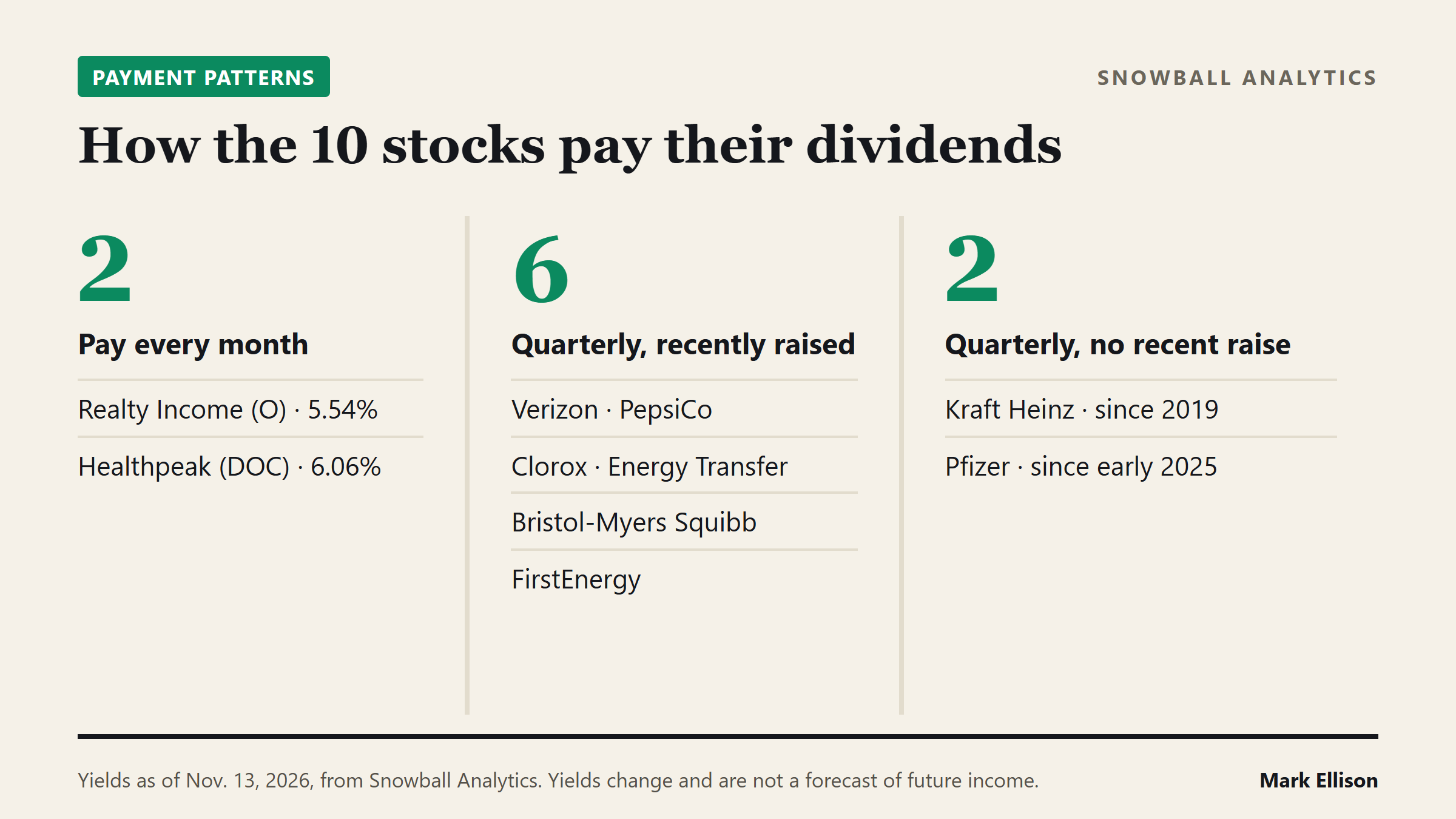
Yields as of Nov. 13, 2026, from Snowball Analytics. Yields change and are not a forecast of future income.
Risks to Keep in Mind
High-yield stocks can be a useful source of income, but they come with specific risks:
Yield can signal trouble. A yield rises when a stock price falls. Several names here yield more than 6% partly because investors are worried about slowing growth, patent expirations, or debt.
Flat dividends lose ground to inflation. Kraft Heinz, Healthpeak, and Pfizer haven't raised their payouts recently. A flat dividend buys a little less each year.
Coverage matters more than yield. Pfizer's dividend currently exceeds its expected adjusted earnings, while Bristol-Myers Squibb pays out well under half. Checking payout ratios and free cash flow says more about safety than the yield itself.
Structure affects taxes. REIT dividends are generally taxed as ordinary income, and MLPs like Energy Transfer issue K-1 forms rather than 1099s.
Dividends can be cut. Kraft Heinz cut its dividend in 2019 and Energy Transfer in 2020. A long record helps, but nothing guarantees future payments.
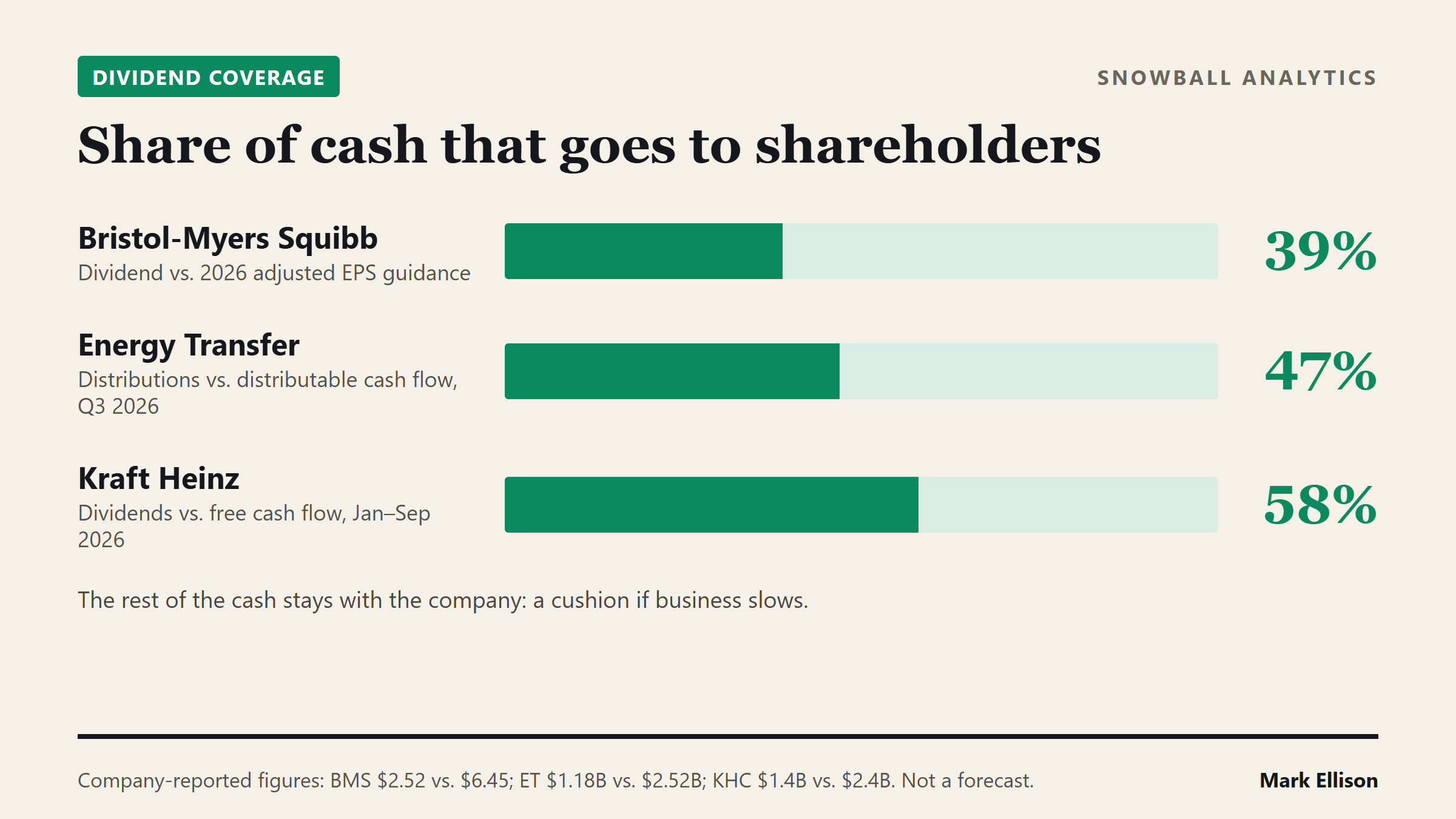
Based on company-reported figures for 2026. Not a forecast.
Keeping Track of Your Dividend Income
Income from a mix of monthly and quarterly payers can be hard to follow in a brokerage statement. A portfolio tracker such as Snowball Analytics can automate much of that, with a dividend calendar and dividend analytics across your brokerage accounts. You can also add these stocks to a watchlist and follow their payout history and payout ratios before deciding anything.
Not financial advice. This article is provided for informational and educational purposes only. It is not financial advice, investment advice, or a recommendation to buy, sell, or hold any security, and it does not take into account your personal financial situation or goals.
The stocks named above are examples drawn from third-party research, including Morningstar analyst opinions, and reflect publicly available information as of the dates shown; prices, yields, ratings, and estimates change frequently. Dividends and distributions are not guaranteed and can be reduced or eliminated at any time. Past performance and past dividend payments do not guarantee future results, and all investing involves risk, including the possible loss of principal. Tax treatment of dividends and distributions depends on your situation; that's a question for your tax adviser. Do your own research or consult a qualified financial professional before making investment decisions. Snowball Analytics is a portfolio-tracking tool and is not a registered investment adviser or broker-dealer.
About the Author
Mark Ellison writes about dividend investing and long-term portfolio building for Snowball Analytics. He focuses on what makes income durable—payout ratios, dividend-growth track records, and the business quality behind them—and on turning analyst research into lists everyday investors can actually use.