

 Stock Analysis
 General
 Library
I didn’t grow up rich. I didn’t win the lottery. And for most of my career, I’ve never had a massive salary that made wealth inevitable.
Like many people, I spent years treating money as something that just “happened” to me. I paid bills when they arrived, spent what was left in my checking account, and hoped for the best at the end of the month. It wasn’t a disaster, but it wasn’t freedom either. It was a treadmill.
But my finances changed—completely—not because my income doubled overnight, but because I fundamentally rewired how I think and act around money.
The shift wasn’t magic. It was mechanical. I adopted three specific habits that moved me from reactive to proactive. These weren’t complicated investment strategies or risky stock picks; they were small shifts in behavior that compounded into massive results.
If this way of thinking about money resonates with you, I write regularly at Smart Money Talk — short, practical notes on money habits, markets, and long-term thinking.
Here are the 3 simple habits that transformed my financial life.
1. I Started Tracking Every Dollar
For years, I operated on financial intuition. I “kind of” knew where my money went. I knew roughly how much rent was, roughly how much I spent on groceries, and roughly how much I had left for fun.
But “roughly” is the enemy of wealth.
I decided to stop guessing and start knowing. I made a commitment to write down every single expense—no matter how small. That $4 coffee? Tracked. The $12 subscription I forgot I had? Tracked. The impulse buy at the gas station? Tracked.
Why This Changed Everything
At first, it felt tedious. It felt like homework. But then, something powerful happened: I stopped bleeding money.
When you force yourself to log a purchase, you introduce a moment of friction. You have to acknowledge the spending. Suddenly, I saw patterns I had been blind to. I saw waste I didn’t know existed. I realized I was spending hundreds of dollars a month on things that brought me zero long-term joy.
The Lesson: What gets measured gets managed.
You don’t need a fancy accountant. You can use an app like Mint or YNAB, a simple Excel spreadsheet, or even a pen and paper. The tool doesn’t matter; the awareness does. Just start. Every dollar you track is one step closer to control.
2. I Read About Money Every Week
We go to school for nearly two decades to learn history, biology, and algebra, but most of us never take a single class on how to manage the money we’ll spend our lives earning.
I realized I didn’t need a finance degree to be good with money—I just needed wisdom.
So, I made a simple rule for myself: Consume one piece of financial content per week. It could be one chapter of a book, one podcast episode, or one thoughtful article on money mindset.
This habit completely rewired my brain. It removed the fear and mystery surrounding investing. It made wealth feel doable rather than impossible.
The Books That Rewired My Brain
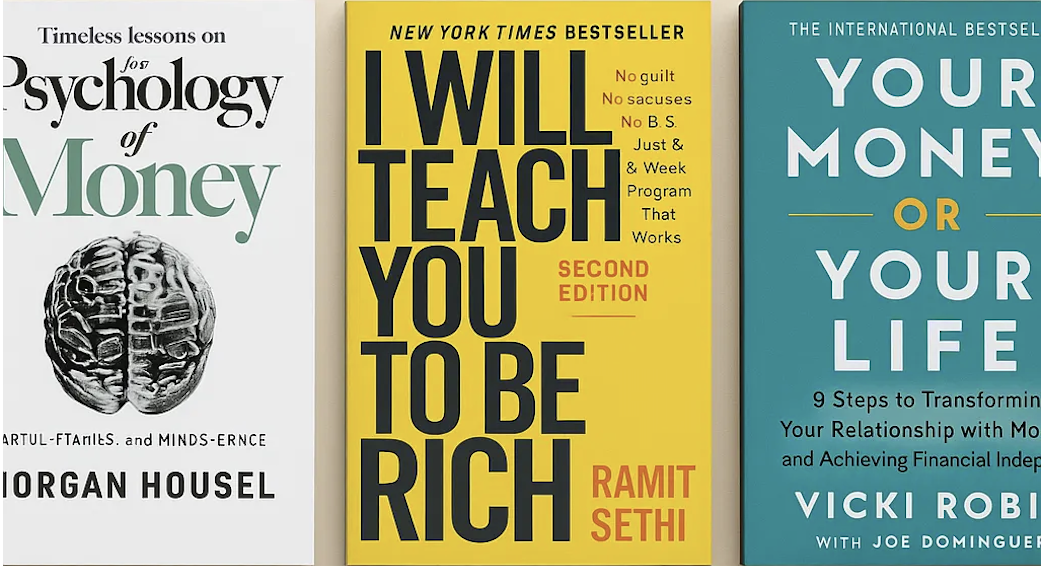
If you don’t know where to start, these are the three books that truly changed the way I think:
 The Psychology of Money by Morgan Housel
This isn’t about math; it’s about behavior. Housel brilliantly explains that doing well with money has a little to do with how smart you are and a lot to do with how you behave.- I Will Teach You To Be Rich by Ramit Sethi
Forget the clickbait title. This book is practical, bold, and refreshingly real. It’s perfect for beginners who want a system, not just theory. - Your Money or Your Life by Vicki Robin
This book helps you redefine what “enough” means. It stops you from looking at money as currency and starts helping you see it as “life energy.”
 Prefer Listening? Try Audible Free for 30 Days
If you’re more of an audiobook person—or want to build better habits during commutes or workouts—these books are available on Audible.
 Start a free 30-day Audible trial and get your first audiobook free
I still go back to these resources today—not just to learn, but to recenter my mindset when the noise of the market gets too loud.
3. I Automate and Forget
If you rely on willpower to save money, you will eventually fail.
We are human. We get tired, we get stressed, and we get tempted. Relying on discipline to transfer money to savings at the end of the month is a losing strategy because, usually, there is no money left at the end of the month.
I learned that discipline is hard, but automation is easy.
The System
I set up a “pay yourself first” system. The moment my paycheck hits my account, my bank automatically routes the money where it needs to go:
A specific percentage goes directly to savings.
A specific percentage goes directly to investments.
The rest stays in my checking account for bills and guilt-free spending.
I don’t have to decide to be good with money this month. The decision was made once, years ago, and the system executes it every single month.
This one shift alone—setting up auto-transfers—created more wealth than any stock pick or side hustle ever could. It removed me from the equation, and that was the secret.
 Smart Money Talk Takeaway
Money isn’t just about the numbers on a screen. It’s about habits. It is about the small, unsexy decisions you make on a Tuesday afternoon that determine where you’ll be in ten years.
These three habits—tracking, learning, and automating—are free. They are simple. And they are available to you right now.
You don’t have to do all three at once. Start with one. Maybe today you download a tracking app. Maybe you order one of the books I mentioned. Or maybe you log into your bank and set up a $50 recurring transfer to savings.
Start with one action. Stick with it. The momentum will follow.
If you’re ready to take control of your finances, one simple action at a time, then you’re already on the right track. Remember: this isn’t about perfection or quick wins. It’s about building a stronger financial future.
What is one money habit that changed your life? I’d love to hear your story in the comments.
Disclosure: Some links in this post are affiliate links. If you choose to make a purchase, I may earn a small commission at no extra cost to you.